Fisher Wallace Laboratories of New York has filed a citizen’s petition with the U.S. FDA regarding the agency’s proposed class III designation for cranial electrotherapy stimulators (CES) for treatment of depression. The company argued that the agency disallowed evidence at an advisory hearing regarding this therapy provided by direct rather than alternating current, but also that the FDA had reneged on an earlier decision to classify these devices as class II devices.
The latest global regulatory news, changes and updates affecting medical devices and technologies, including: Brainsway, National Government Services, Wisconsin Physician Services.
Health and Human Services (HHS) Secretary Alex Azar was peppered with questions about the Trump administration’s budget proposal for fiscal 2021 during a Feb. 13 Senate hearing. However, another theme that resonated during the hearing was Senate legislation addressing drug prices. Azar addressed the issue of price caps, while noting that the bill “leaves plenty of room” for both ample profit margins and innovation in drug development.
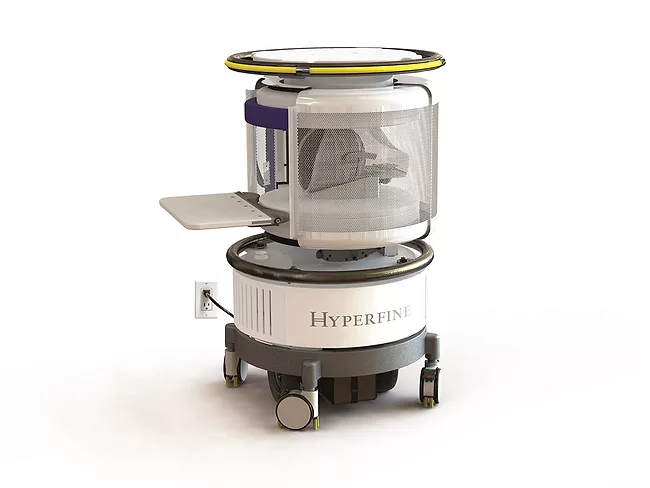
Guilford, Conn.-based Hyperfine Research Inc. has received the U.S. FDA’s nod for a bedside magnetic resonance imaging (MRI) system and is eyeing this summer for shipments. The portable system can be wheeled directly to the patient’s bedside and plugs into a standard electrical wall outlet.
The latest mutation to the coronavirus, dubbed COVID-19, has sparked a reaction by many national governments, but the expense associated with development of vaccines and diagnostics is considerable. Ron Klain, who served as the Obama administration’s coordinator for the response to the Ebola virus, said during an Aspen Institute seminar that drug makers took a hit in their efforts to develop a vaccine for the Ebola virus, and thus there is a need to de-risk these and other development efforts in the private sector.
The Dec. 9, 2019, FDA draft guidance spelling out performance criteria for magnetic resonance coils seemed to take up a relatively simple matter, but industry’s response suggested otherwise. The Medical Imaging & Technology Alliance (MITA) recommended that the agency undertake nearly two dozen changes to the draft, including a change to the title to indicate that the scope of the guidance is limited to receive-only MRI coils.
Palo Alto, Calif.-based Varian Medical Systems Inc. has won the U.S. FDA’s nod for its Ethos therapy, an artificial intelligence (AI)-driven holistic solution that is aiming to transform cancer care. This solution is designed to deliver an entire adaptive treatment in a typical 15-minute slot and is intended to put the patient at the center of care, noted Chris Toth, president of Varian Oncology Systems.
 RSS
RSS