Shares of Eyegate Pharmaceuticals Inc. (NASDAQ:EYEG) rose 54.8% to $7.09 Friday on news that its ocular bandage gel (OBG) proved superior to standard of care in healing corneal wounds following photorefractive keratectomy (PRK) surgery. The pivotal top-line data will allow the Waltham, Mass.-based company to submit a de novo application to the FDA for commercialization in the first half of 2020, said CEO Stephen From. If approved, the OBG eye drop would be the first product indicated to repair corneal epithelial defects, as well as the first prescription hyaluronic acid (HA) eye drop in the U.S., creating new competition for widely used bandage contact lenses (BCL).
Patient engagement has become more than a buzzword for the FDA and drug and device developers. But for payers, not so much. When valuing new drugs and devices, payers often undervalue or ignore what they may consider convenience updates, giving little to no consideration to the difference a seemingly minor improvement could make to patients debilitated by fatigue, pain, the burden of treatment and the burden of a disease itself.
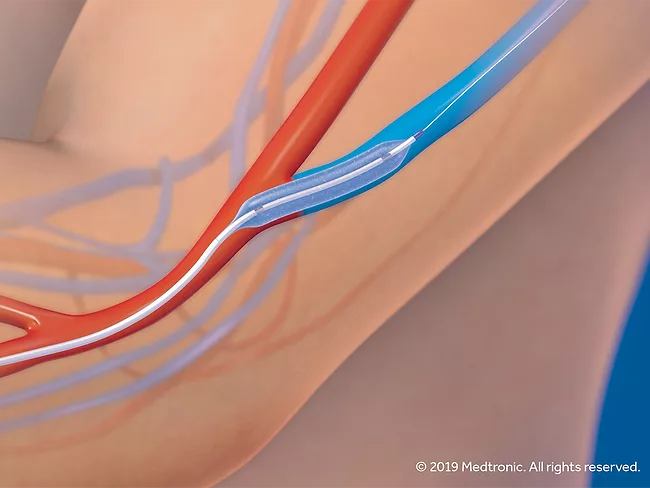
The U.S. FDA has given Medtronic plc a green light for its In.Pact AV drug-coated balloon, the second application for the Dublin-based company’s In.Pact DCB platform. The paclitaxel-coated balloon is now indicated for the treatment failing arteriovenous (AV) access in patients undergoing dialysis due to end-stage renal disease (ESRD). In.Pact AV leverages technology from Medtronic’s In.Pact Admiral DCB, which first snagged FDA approval in 2015 for treatment of superficial femoral artery (SFA) lesions above the knee.
The FDA’s safety and performance-based pathway for 510(k) devices promises to streamline premarket filings, and the FDA’s Jason Ryans said on a recent webinar that any changes to the related product-specific guidances would be applicable only prospectively. Ryan made no mention of a grace period for impending applications, however, suggesting that any such devices may have to be reworked or resubmitted into a more conventional premarket channel if they do not meet the new requirements.
Rochester, N.Y.-based Carestream Health Inc. has won the FDA’s nod for its Dual-Energy imaging technology and Focus 35C detector with Image Suite software. The company plans a global launch of the Focus 35C by the end of the year, with U.S. rollout of Dual-Energy early next year.
Stephen Hahn of the MD Anderson Cancer Center generally managed to avoid any controversy in the Nov. 20 Senate confirmation hearing for the FDA commissioner’s job, stating for instance that he is “open to all science and data that could potentially support” drug reimportation as a solution to the drug pricing problem.
The U.S. FDA has granted breakthrough device designation for Bioventrix Inc.’s Revivent Tc Transcatheter Ventricular Enhancement System for heart failure following a heart attack. The system is designed to exclude scar tissue that has formed on the left ventricle in a procedure that is less invasive than current medical options and better than drug therapy, allowing healthy heart tissue to function more efficiently. The left ventricle is the heart’s pumping chamber, and scarring can prevent it from contracting and providing the steady circulation of blood that the body needs.

 RSS
RSS