New York-based startup 3Dbio Therapeutics snagged a rare pediatric disease designation from the U.S. FDA for Aurinovo, its investigational combination product for reconstruction of the outer ear in patients with microtia. The product offers an alternative to established treatments, none of which enable patients to regain an auricle comprising living tissue other than rib grafts, which are associated with significant donor site morbidity.
PERTH, Australia – Industry was supportive of most of the changes proposed by Australia’s Therapeutic Goods Administration (TGA) for custom-made and 3D-printed devices. However, the comments also indicated that the current regulatory requirements for custom-made devices are not well understood. The agency stressed that increasing use of 3D printing for medical applications is raising questions about the adequacy of the current medical device regulatory framework to mitigate risks to patients.
Toronto-based Moleculight Inc. has received U.S. FDA 510(k) clearance for its i:X hand-held fluorescence imaging device for use in detecting bacteria in wounds at the point of care. The milestone comes a little over a year after the agency granted de novo clearance for the device in August 2018 and lends additional credence to the device’s benefits in wound evaluation and management. “The granting of our 510(k) clearance by the FDA for the i:X hand-held fluorescence imaging device is very exciting and is a further validation of the growing clinical evidence supporting the utility of our imaging platform,” said Anil Amlani, Moleculight’s CEO.
The patent lawsuit of Athena v. Mayo revisits previous case law where patent subject matter eligibility is concerned, and numerous parties have weighed in urging the Supreme Court to hear the case. However, the U.S. Solicitor General has not responded with its own friend-of-the-court brief, an omission that would seem to take some of the pressure off the Supreme Court to hear the case.
The U.S. FDA has granted investigational device exemption approval for the use of Personal Genome Diagnostics Inc.’s (PGDx) elio tissue complete assay in a Merck & Co. Inc. trial of a Keytruda (pembrolizumab)-based combination therapy. Specifically, the assay will be used during the trial to analyze genomic markers to direct patient enrollment and stratification.
The impending resumption of the 2.3% tax on medical devices has industry actively seeking at least a new suspension. Now, the Tax Foundation, of Washington, has issued a report saying that the tax would cost more than 21,000 Americans their jobs and impose a $1.7 billion hit on the U.S. economy.
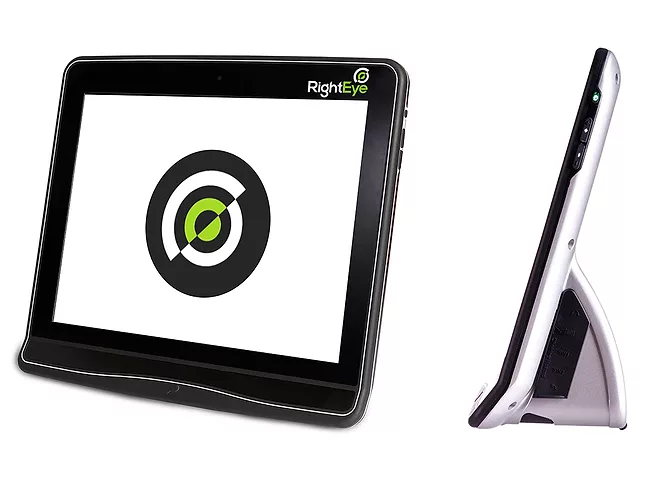
The U.S. FDA has granted breakthrough device designation for Righteye LLC’s eye movement-tracking vision system as a test for Parkinson’s disease. Developed by researchers at PADRECC and Virginia Commonwealth University with funding from the Michael J. Fox Foundation, and licensed to Righteye in 2016, the test requires patients to sit in front of an all-in-one tablet-looking device and follow a series of moving targets. The goal is to identify ocular tremors, a persistent issue with Parkinson’s patients that prevents steady fixation on objects and images. The noninvasive test, which measures an individual’s ability to follow objects on a screen, could help doctors not only confirm the difficult-to-diagnose disease, but also detect it at earlier stages.

 RSS
RSS