In just one quarter, 14 med-tech companies overall, nearly half the number in 2020, debuted on public markets around the world, and venture capital (VC) financings for the industry have hit a five-year record. The IPOs raised a total of $3.7 billion, a more than 15-fold increase from last year’s first quarter, whereas 107 VC rounds brought in 77% more, or $4.1 billion, in the first quarter (Q1) of 2021.
The latest global regulatory news, changes and updates affecting medical devices and technologies, including: Medtronic recalls electrophysiology units over battery depletion; ASCA labs listed by FDA.
Regulatory snapshots, including global submissions and approvals, clinical trial approvals and other regulatory decisions and designations: Cosmo, Lucira Health, Masimo, Medtronic, Myhomedoc, Thermo Fisher Scientific.
Med-tech happenings, including deals and partnerships, grants, preclinical data and other news in brief: Angiodynamics, Avantor Performance Materials, Diasorin, Luminex, Mediphos Diagnostics Belux, Respicardia, Technomed, Zoll Medical.
Keeping you up to date on recent developments in cardiology, including: Rheumatic aortic stenosis responds well to TAVR vs. SAVR; Cardiac MR may improve correct diagnosis of left ventricular non-compaction; Better management needed for infarct patients with mechanical complications.
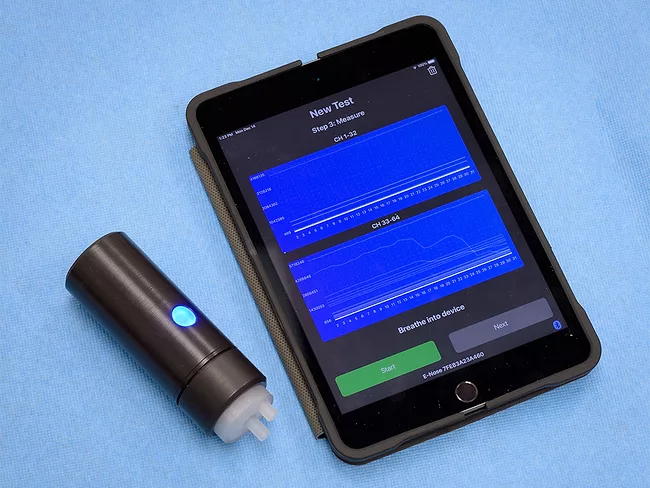
NASA is ready to begin testing the E-Nose COVID-19 screening device prototype developed by subcontractor Variable Inc., of Chattanooga, Tenn. NASA received $3.8 million from the Department of Health and Human Services to enhance E-Nose, which was originally developed to measure air quality inside spacecraft. The updated version is intended to facilitate screening for SARS-CoV-2 by "sniffing out" the signature volatile organic compounds (VOCs) in the breath of infected individuals.
The authors of a recent journal article see problems with the FDA’s approach to premarket review of artificial intelligence (AI) algorithms, including an undue reliance on single-site algorithm development. Regulatory attorney Brad Thompson told BioWorld, however, that hospital administrators want algorithms that maximize accuracy for their populations and are not averse to in-house development of just such an algorithm, thus creating a source of tension between what hospitals want and what the FDA expects.
 RSS
RSS