Regulatory snapshots, including global submissions and approvals, clinical trial approvals and other regulatory decisions and designations: Acutus Medical, Hemanext, Lumiradx.
PERTH, Australia – In the aftermath of the COVID-19 pandemic, Australia is shoring up its national supply of medical products and making it a national priority to drive economic recovery and ensure future resilience. The objective of the government’s modern manufacturing strategy is to build scale and capture income in high-value areas of manufacturing where Australia either has established competitive strength or emerging priorities.
Microsoft Corp. will purchase Nuance Communications Inc. for $19.7 billion in cash in a move that demonstrates a massive commitment to building out the Microsoft Cloud for Healthcare reported in late 2020. The acquisition, which is expected to close by the end of 2021, doubles the Redmond, Wash.-based company’s total addressable market in the health care provider space, bringing it to nearly $500 billion. The size of the transaction is notable even for a company with the active acquisition history of Microsoft.
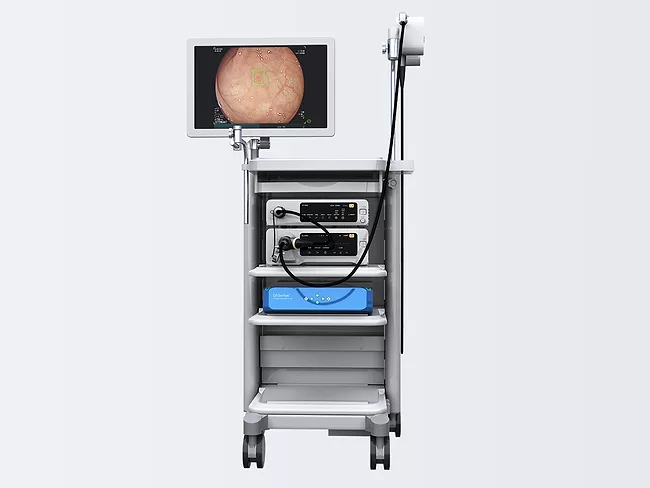
Cosmo Artificial Intelligence Ltd. received the FDA’s nod for its GI Genius intelligent endoscopy system. The device – the first of its kind, according to the agency – uses artificial intelligence (AI)-based on machine learning to improve the detection of lesions during colonoscopy. It will be rolled out in the U.S. by Medtronic plc, which has exclusive worldwide distribution rights.
The Biden administration has released an exceedingly brief budget framework for fiscal year 2022 that includes $6.5 billion for an advanced research program at the NIH, which mimics a similar program at the Department of Defense (DoD). Beyond that, there is a clear indication that the CDC would see an uptick in monies, but the proposal offers no numbers for the FDA budget, making this one of the skinnier budget proposals to come out of the White House in recent memory.
LONDON – A large scale prospective study has shown that increased blood plasma viscosity is correlated with disease severity and the likelihood of progression to organ failure, in patients who are hospitalized with COVID-19 infections. Researchers at Addenbrooke’s Hospital in Cambridge, U.K. suggest this could be an easy but sensitive way to quickly triage patients admitted to hospital with symptoms of COVID-19.

 RSS
RSS