The Advanced Medical Technology Association (Advamed) and the Biotechnology Innovation Organization (BIO) have teamed up on a friend-of-the-court brief for the U.S. Supreme Court’s upcoming hearing on twin cases that examine the question of a defendant’s state of mind when filing claims with federal health programs. Advamed and BIO argue that the existing judicial approach is critical to ensuring that companies in the life sciences are not subject to treble damages when acting reasonably in connection with products reimbursed by federal health programs, adding that an overturn of existing judicial practice would stifle innovation at the cost of patient access to life-saving medical therapies.
Positive results from Limflow SA’s PROMISE II U.S. pivotal trial show its Limflow system for transcatheter arterialization of deep veins (TADV) led to sustained amputation-free survival and wound healing in patients with chronic limb-threatening ischemia (CLTI), a severe form of peripheral artery disease. According to the Paris-based company, 76% of CLTI patients who received Limflow therapy were able to avoid an otherwise life-saving major amputation.
Mercy Bioanalytics Inc. stepped into the increasingly competitive early cancer detection field with a $41 million series A financing round to support its Halo liquid biopsy platform. Novalis Lifesciences led the oversubscribed round with participation from Sozo Ventures, Hatteras Venture Partners, Iselect Fund, American Cancer Society BrightEdge and Broadway Angels, an all-women venture capital group. Laboratory Corp. of America Holdings, Bruker Corp. and existing investors also contributed to the round.
The granting of breakthrough device designation from the U.S. FDA to Pixium Vision SA for its Prima system was a boon for the company as its share price jumped more than 300% following the news. The price increase was “validation from the public market and investors” that the Prima system, for dry age-related macular degeneration (AMD), has the potential to get regulatory approval, Lloyd Diamond, CEO of Pixium, told BioWorld.
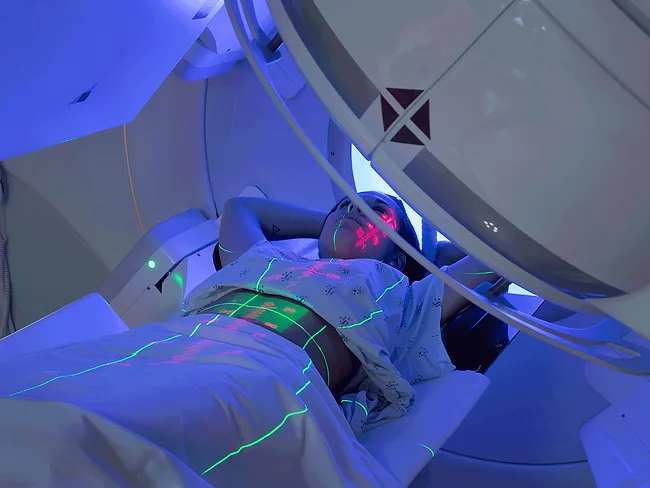
If its challenges can be overcome, radioligand therapy is poised to change the way many cancers are treated. It is also likely to become an example of how scientific advances, once they are translated successfully, can enable further insights in a bench-to-bedside-to-bench loop. David Piwnica-Worms, professor and chair of cancer systems imaging at The University of Texas MD Anderson Cancer Center, predicted that as radioligand therapy expands, many questions will be answered about both radiation biology and the interaction of radiation with the immune system more specifically.
After spending decades developing targeted chemotherapy and bringing a dozen or so compounds into the clinic, Fusion Pharmaceuticals Inc. Chief Scientific Officer Christopher Leamon switched careers to focus on radio-oncology because he saw the need for “a really strong bomb to target cancer to get it to respond.” That was radiotherapy, said Leamon, who was one of the scientific founders of Endocyte Inc., which Novartis AG acquired.
Global interest in radiopharmaceuticals is growing, and some big deals in the space have sparked interest in the last few years. Novartis AG has spent about $6 billion in acquisitions and is seen as the global leader.
Philips RS North America LLC, formerly known as Respironics Inc., has agreed to pay more than $24 million to settle allegations that the company violated the False Claims Act in relation to CPAP equipment, another hit on the company which has been dealing with a stream of FDA recalls for these products. The allegations include that Philips RS provided durable medical equipment suppliers physician prescribing data to help these suppliers market their inventory, an unusual vector for violation of the FCA.
France is tightening access to the reimbursed health care market for digital medical devices. The national Digital Healthcare Agency (ANS) reported that a standard interoperability and safety system for digital medical devices is coming into force.
 RSS
RSS