Clinical updates, including trial initiations, enrollment status and data readouts and publications: Allosource, Durin Technologies, Masimo, Proteomedix.
The Biden administration released a blueprint for the U.S. federal government’s fiscal 2024 budget year on March 9, which includes additional funding for pandemic preparedness. However, the White House has signaled its intent to drill down on drug prices with an increase in the scope of the number of drugs subject to Medicare price negotiations along with a 67% increase in the Advanced Research Projects Agency–Health (ARPA-H) to $2.5 billion, a boost that is sure to draw cheers from companies in the life sciences.
Startup Metsystem ApS received €500,000 (US$529,080) from Denmark’s Bioinnovation Institute (BII) that will allow the company to conduct trials to validate its personalized prognosis platform for cancer metastasis. An organ-specific assessment of the metastasis potential of a patient’s primary tumor would enable clinicians to better balance the trade-off between providing the potentially life-extending benefit of preventative chemotherapy to those at higher risk and avoiding the adverse effects from chemotherapy in those who are unlikely to need it.
Precision oncology startup Prana Thoracic Inc. closed a $3 million series A financing round aimed at advancing its minimally invasive lung tissue excision device for early treatment of lung cancer. The series A funds and a prior $3 million award from the Cancer Prevention & Research Institute of Texas are earmarked for product development and to support first-in-human clinical studies.
The FDA’s emergency use authorization (EUA) program for rapid antigen tests for the COVID-19 pandemic is coming to an end, but few rapid antigen test makers have laid out clear plans regarding the post-public health emergency world. Quidelortho Corp. managed to beat the competition to the non-EUA market for these tests with a grant of de novo petition for its Sofia rapid antigen test, which now provides other tests with a predicate device, thus ensuring that this will not be the last such test to reach the U.S. market.
Johnson & Johnson’s Biosense Webster division reported that its Qdot Micro diagnostic and ablation deflectable tip catheter secured approval for marketing in China from the National Medical Products Administration where options for treating arrhythmias are seeing growing demand. A radiofrequency (RF) ablation catheter, Qdot Micro reduced total ablation procedure time by nearly 90 minutes.
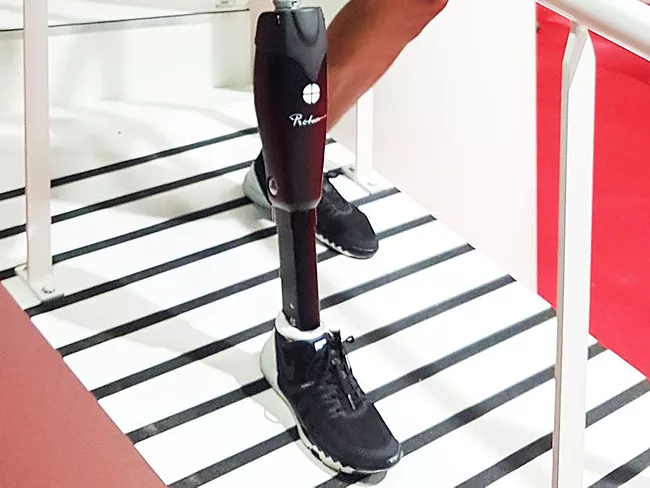
Proteor SAS is launching the Synsys bionic leg, a sensor-equipped microprocessor-controlled knee-ankle-foot prosthetic leg for above-the-knee amputees. This new generation prosthesis coordinates knee and ankle movements simultaneously as an extension of the hip, enabling smoother, more natural movement on a variety of surfaces.
The European Council applied its seal of approval to a proposal to extend the deadlines for the Medical Device Regulation (MDR), providing industry some critical breathing room to obtain certification for devices brought to market under the legacy Medical Device Directive (MDD).

 RSS
RSS