“It’s now law,” U.S. President Joe Biden said after he signed H.R. 5376 Aug. 16. His signature made Medicare drug pricing negotiations a near-term reality, along with new inflationary rebates, new caps on annual out-of-pocket drug spending and monthly insulin copays for Medicare beneficiaries, and tax changes that could affect the bottom line for several multinational drug and device companies beginning next year.
As biopharma and med-tech companies grapple with restrictive data privacy laws in the EU and China while trying to meet the demand for greater diversity reflective of the U.S. population, there’s been more of an interest in conducting clinical trials in the U.S., Stacy Amin, a partner at Morrison & Foerster LLP, told BioWorld.
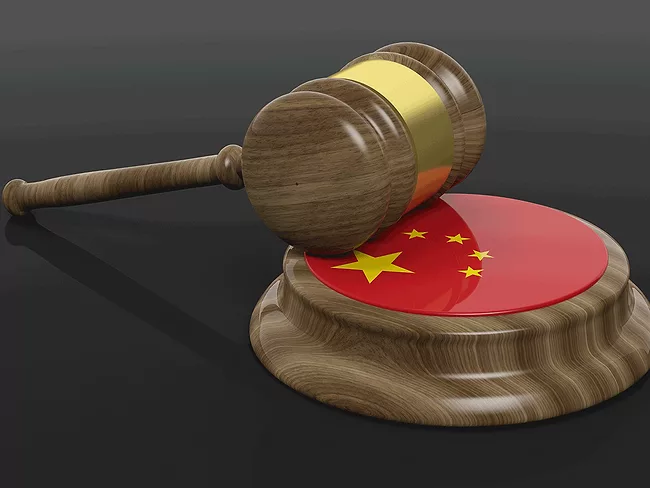
Despite new laws and enforcement efforts, protecting intellectual property (IP) rights in China remains a big challenge for companies based in the U.S. and other countries. A case in point is China’s new patent law that came into effect in June 2021.
As expected, the U.S. House of Representatives passed, on a 220-207 party-line vote, a legislative package Aug. 12 that, for the first time, allows Medicare to directly negotiate some prescription drug prices, while imposing severe penalties and an excise tax on companies that refuse to negotiate or don’t comply with the government price.
Despite new laws and enforcement efforts, protecting intellectual property (IP) rights in China remains a big challenge for companies based in the U.S. and other countries. A case in point is China’s new patent law that came into effect in June 2021. The law provides for patent term extensions and adjustments, an important consideration for the biopharma industry since the launch of drugs in China could be hampered by long regulatory review times.
As biopharma and med-tech companies grapple with restrictive data privacy laws in the EU and China while trying to meet the demand for greater diversity reflective of the U.S. population, there’s been more of an interest in conducting clinical trials in the U.S., Stacy Amin, a partner at Morrison & Foerster LLP, told BioWorld.
An investor’s wish to know more about the total landscape of a drug candidate is not enough, on its own, to make a company’s disclosures about the drug and its development materially misleading. So said the U.S. Court of Appeals for the First Circuit in affirming the dismissal of a shareholder suit against Karyopharm Therapeutics Inc. and its executive officers.
Within a few weeks, government price negotiations for some prescription drugs, as well as limits on annual price increases, could be the law of the land in the U.S. With the Senate passing a slimmed-down version of H.R. 5376 through reconciliation Aug. 7, the House is expected to make a brief return Friday from its August recess to vote on the changes and conference the differences between its bill and the Senate version. Then it’s on to the president’s desk for the signature that will enact the package of health care, tax and climate provisions.
Amylyx Pharmaceuticals Inc. got good news when the Institute for Clinical and Economic Review posted a revised evidence report Aug. 4 that assessed the comparative clinical effectiveness and value of the company’s AMX-0035 and Mitsubishi Tanabe Pharma America Inc.’s Radicava (edaravone) in treating amyotrophic lateral sclerosis.
No one denies that fewer new drugs will be a consequence of the Medicare drug pricing provisions the Democrats are trying to push through the U.S. Congress ahead of the midterm election campaign season. Less attention has been paid to the negative impact on drug-device combinations and new diagnostics that accompany innovative treatments.