U.S. lawmakers have been busy writing to government agencies demanding answers and explanations on a range of issues, including drug shortages, gain-of-function research and thickets of duplicative patents that extend patent protection well beyond 20 years for some prescription drugs.
During the first round of discussion at its two-day hearing on a World Trade Organization proposal to expand the intellectual property (IP) waiver from COVID-19 vaccines to diagnostics and therapies, the U.S. International Trade Commission (USITC) got an earful from both sides of the debate.
A lot of eyes and ears were tuned to the U.S. Supreme Court’s March 27 argument in Amgen Inc. v. Sanofi SA with its focus on how much enablement is necessary in broad genus patent claims.
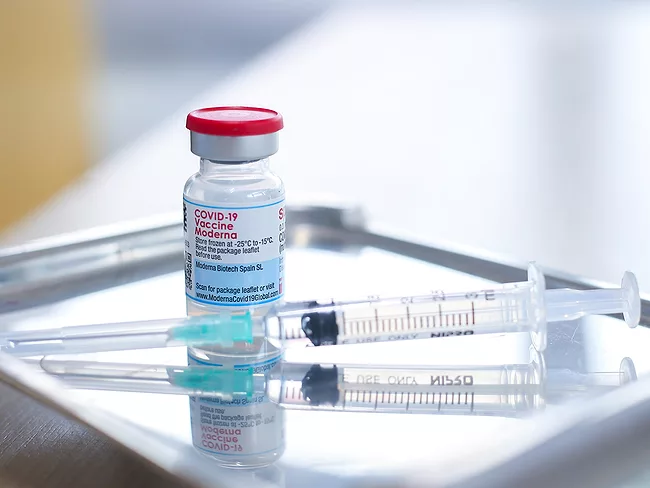
While Moderna Inc. CEO Stéphane Bancel was the one on the hot seat at a March 22 hearing before the U.S. Senate Health, Education, Labor and Pensions (HELP) Committee, biopharma profitability in general, and capitalism itself, came under fire as committee Chair Bernie Sanders (I-Vt.) railed about corporate greed in the sector.
Citing significant implications for patients with advanced Parkinson’s disease, as well as the broader public interest that’s at stake, the U.S. FTC filed an amicus brief in Sage Chemical Inc.’s district court challenge of Supernus Pharmaceuticals Inc.’s strategies to block generic competition of its injectable Parkinson’s drug, Apokyn (apomorphine).
The dominoes are falling on European clinical trials as the unintended consequences of the EU’s In Vitro Diagnostics Regulation take hold. Last year’s implementation of the regulation has resulted in the delay of up to 160 drug trials to date, with as many as 420 trials expected to be delayed over the next three years, according to an EFPIA member survey.
While U.S. policymakers focus on drug prices, mandatory federal spending on Medicare and Medicaid for 2010 through 2020 was actually 9% lower than what the Congressional Budget Office (CBO) projected in 2010. One of the “significant sources” the CBO cited for its off-the-mark projection was less-than-anticipated spending for Medicare Part D prescription drugs due to new generic competition and fewer new brand drugs being launched. In light of reality, the CBO has lowered its long-term projection of health spending through 2033.
Citing “serious breaches” of its code of practice, the Association of the British Pharmaceutical Industry (ABPI) suspended the membership of Novo Nordisk A/S in the trade organization for two years. The suspension marks the eighth time in 40 years that the association has invoked such sanctions.
Citing clinical trial data backed by real-world data, members of the U.S. FDA’s Antimicrobial Drugs Advisory Committee voted overwhelmingly, 16-1, March 16 that the overall benefit-risk assessment is favorable for the use of Pfizer Inc.’s Paxlovid to treat mild to moderate COVID-19 in adults who are at high risk for progression to severe COVID-19, including hospitalization or death.
Pfizer Inc.’s Paxlovid has become such a part of the COVID-19 treatment scene in the U.S. that it’s easy to forget it’s only authorized for emergency use. That could soon change. The FDA is convening its Antimicrobial Drugs Advisory Committee March 16 to consider Pfizer’s NDA for the co-packaged nirmatrelvir and ritonavir treatment.