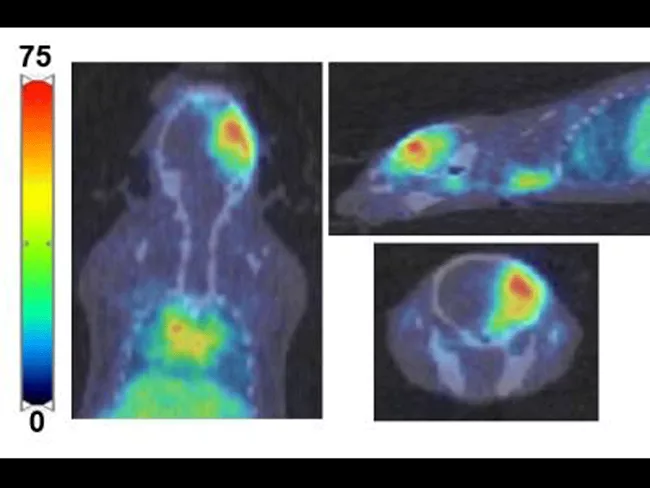
Researchers at the University of Sydney have uncovered a mechanism that may explain why glioblastoma returns after treatment, and the world-first discovery offers new clues for future therapies. Glioblastoma is one of the deadliest brain cancers, accounting for about half of all brain tumors, with a median survival rate of just 15 months. Despite surgery and chemotherapy, more than 1,250 clinical trials over the past 20 years have struggled to improve survival rates.
Insilico Medicine Inc. plans to raise HK$2.27 billion (US$292 million) in its IPO on the Hong Kong Securities Exchange to advance its clinical pipeline and invest further in generative AI and automated laboratories.
Radiopharm Theranostics Ltd.’s radiotracer RAD-101 met the primary endpoint in 92% of patients in the phase IIb imaging trial in brain metastases, according to interim results. To date, 11 of the 12 patients treated with RAD-101 (F18-Pivalate) achieved concordance with MRI (the primary endpoint) as assessed by PET imaging of brain metastases. The results showed significant and selective tumor uptake, and images confirm metabolic activity in brain metastases compared to equivocal MRI findings.
Experience gained in the Asia-Pacific region is helping shape the Menarini Group’s global strategy as the Italian pharmaceutical company looks to emerging markets to drive long-term, sustainable growth.
China unveiled its first Commercial Health Insurance Innovative Drug List (CIIDL), reimbursing 19 high-value innovative drugs, including all five domestically developed CAR T therapies as well as treatments for rare diseases and Alzheimer's disease.
China’s clinical trial volume has surged to nearly U.S. scale and now tops Europe, sitting at about 80% of U.S. levels and roughly 10% above the EU in 2024.
China’s clinical trial volume has surged to nearly U.S. scale and now tops Europe, sitting at about 80% of U.S. levels and roughly 10% above the EU in 2024.
Experience gained in the Asia-Pacific region is helping shape the Menarini Group’s global strategy as the Italian pharmaceutical company looks to emerging markets to drive long-term, sustainable growth.
China unveiled its first Commercial Health Insurance Innovative Drug List (CIIDL), reimbursing 19 high-value innovative drugs, including all five domestically developed CAR T therapies as well as treatments for rare diseases and Alzheimer's disease.
Kazia Therapeutics Ltd. raised AU$50 million (US$33.15 million) in a private placement of equity securities to advance lead candidate paxalisib, a brain-penetrant dual PI3K/mTOR inhibitor in clinical trials for brain cancer and advanced breast cancer.