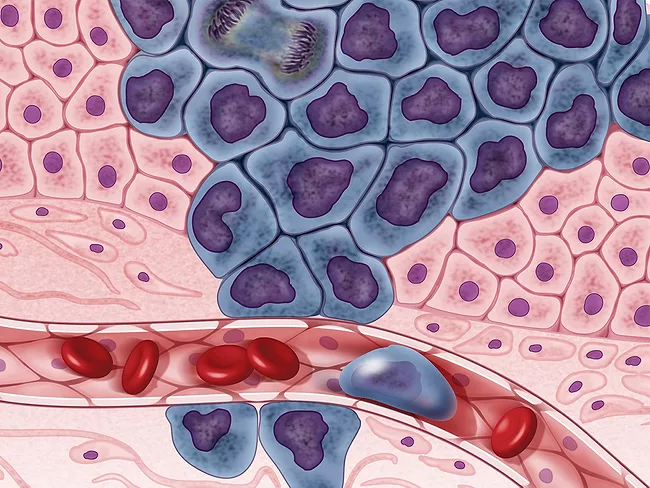
A new study has unveiled the signaling cascade involved in the progression of brain metastasis from breast cancer. A family of connexins participates in the process that regulate the expression of laminins that favor metastatic cells to colonize the brain.
The design of genetically modified exosomes that combine multiple targets killed cancer cells and conferred immunity against them. Scientists at the University of Southern California (USC) applied bioengineering techniques to introduce up to four antitumor functions in the same type of extracellular vesicles and destroy EGFR-positive triple-negative breast cancer (TNBC) tumor cells.
A new vaccine that uses the native-like HIV-1 envelope (Env) trimer CH505 and a Toll-like receptor (TLR) 7/8 agonist adjuvant, successfully evaluated in macaques, generated potent polyclonal neutralizing antibodies (nAbs) and a high protection against the infection of the homologous simian-human immunodeficiency virus (SHIV).
Surviving apoptosis after administration of a drug triggered a previously unknown evolutionary process that gave tumor cells greater resistance to subsequent therapies. A cancer cell that does not die gets stronger. Cancer reappears with those cells that escape death thanks to a mechanism that, at the same time, offers a potential therapeutic target. According to a study led by St. Jude Children's Research Hospital in collaboration with the University of Glasgow and University of Oxford, the alternative to the cell death program is a stress response pathway that generates a persister cell phenotype not described before.
A brief pulse of rapamycin before the onset of aging extended lifespan by triggering lasting increases in autophagy. The authors called this phenomenon "rapamycin memory." Elevated autophagy was accompanied by increased levels of LManV and lysozyme in fruit flies, in intestinal enterocytes in female fly models, and its Man2B1 homologue in mice. In mice, a 3-month treatment in early adulthood had the same effect as chronic treatment, even 6 months after rapamycin was withdrawn. In the study published in the Aug. 29, 2022, issue of Nature Aging and led by researchers at the Max Planck Institute, scientists showed that the lifespan-increasing response to rapamycin treatment decreased with the age at which treatment is started.
Communication between adipose tissue and the brain increases the risk of cognitive impairment in patients with insulin resistance through extracellular vesicles (EVs) containing microRNAs (miRNAs). Neurons could be damaged when these nucleotides reach the hippocampus guided by membrane proteins in prediabetic overweight people.
Analyzing RNA from blood platelets detected up to 18 different cancers, at early as well as late stages, with a specificity of 99% in asymptomatic controls. The specificity for symptomatic controls, including those who had inflammatory diseases, cardiovascular disease, or benign tumors, was 78%.
Treatment with injections of gonadotropin-releasing hormone (GnRH), indicated to prevent sexual maturation deficits in Down syndrome, also reduced cognitive function impairment associated with Down syndrome, also called trisomy 21. With age, about three-quarters of people with Down syndrome develop Alzheimer's disease. They also lose their sense of smell. Both circumstances could improve with pulse doses of GnRH, according to a study led by the French National Institute of Health and Medical Research (Inserm) and the University of Lausanne (UNIL) published in the Sept. 1, 2022, issue of Science.
Treatment with injections of gonadotropin-releasing hormone, indicated to prevent sexual maturation deficits in Down syndrome, also reduced cognitive function impairment associated Down syndrome, also called trisomy 21.
In the largest study to date for Crohn's disease, researchers from the Wellcome Sanger Institute and the Broad Institute of MIT and Harvard identified rare variants of 10 genes associated with this pathology. The researchers sequenced the exomes of 110,000 people, 30,000 patients with Crohn's and 80,000 without this condition, with the participation of a hundred international scientific institutions.