Gene editing technologies are moving forward in preclinical development with innovative strategies designed to treat diseases at their root and even reverse them.
Gene editing technologies are moving forward in preclinical development with innovative strategies designed to treat diseases at their root and even reverse them. However, many approaches still struggle to reach target cells or tissues – either they fail to arrive, or their efficacy is low. In vivo therapies face numerous challenges, but despite these hurdles, 2025 has marked a year of remarkable progress.
Gene editing technologies are moving forward in preclinical development with innovative strategies designed to treat diseases at their root and even reverse them. However, many approaches still struggle to reach target cells or tissues – either they fail to arrive, or their efficacy is low. In vivo therapies face numerous challenges, but despite these hurdles, 2025 has marked a year of remarkable progress.
BioWorld’s 2022 end-of-year highlights included a toast to the future – of universal vaccines. Even before SARS-CoV-2 vaccines were developed in record time and saved countless lives during the COVID-19 pandemic, vaccines were a rare bright spot in the fight against infectious diseases. Bacteria are becoming multidrug resistant far faster than new classes of antibiotics are being developed, viral spillover events and vector ranges are increasing, and climate change is helping bacteria and fungi alike breach human thermal protections against infections.
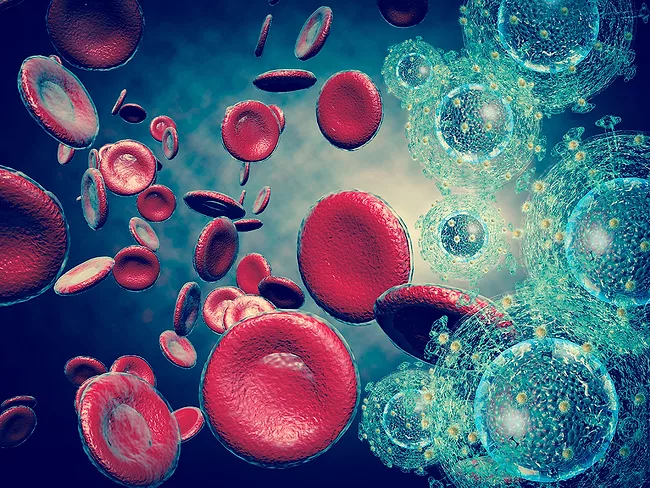
Advances in antiretroviral therapy (ART) now allow people living with HIV to lead normal lives with undetectable and nontransmissible levels of the virus in their blood. Yet that reality is limited to those with access to treatment. More than 40 million people worldwide live with HIV, with over a million new infections and hundreds of thousands of deaths each year, underscoring that major challenges remain.
Gene editing can repair mutations that prematurely halt protein synthesis, resulting in incomplete peptides that cause various diseases. However, other approaches achieve the same effect without altering the genome. Startup Alltrna Inc. has developed a strategy based on transfer RNA to bypass the premature stop codons that end early protein translation. The company already has a first clinical candidate that could treat metabolic diseases such as methylmalonemia or phenylketonuria.
Gene editing can repair mutations that prematurely halt protein synthesis, resulting in incomplete peptides that cause various diseases. However, other approaches achieve the same effect without altering the genome. Startup Alltrna Inc. has developed a strategy based on transfer RNA (tRNA) to bypass the premature stop codons that end early protein translation. The company already has a first clinical candidate that could treat metabolic diseases such as methylmalonemia (MMA) or phenylketonuria (PKU).
2025 has been the most challenging year in the efforts to fight HIV since at least the advent of antiretroviral therapy. In a report on “Overcoming disruption, transforming the AIDS response,” released last week ahead of World AIDS Day on Dec. 1, the Joint United Nations Program on HIV/AIDS (UNAIDS) described “a global system in shock” by sharply reduced funding from the U.S. and other wealthy nations. Scientifically, for now, progress is ongoing.
“I love the idea of ‘micropublications’ (preparing one now),” the neurobiologist Oded Rechavi commented on social media in July. The term clearly suggests a short article, and although the publishing model has been around for more than a decade, not everyone is familiar with this type of scientific communication. What are they? What’s their impact? Rechavi, a professor at the School of Biochemistry, Neurobiology and Biophysics at Tel Aviv University, was pointing to an emerging discussion among scientists, the search for alternative formats for their work.
A 24‑week pregnant woman fears for her unborn baby, who is developing with a sacrococcygeal teratoma so large and vascularized that it nearly surpasses the size of the fetus itself. Faced with this threat, surgeons operate inside the uterus in an open procedure that partially exposes the baby to remove the tumor and give the baby a chance to survive until birth. According to scientists presenting at the American Society of Gene & Cell Therapy's special meeting on Breakthroughs in Targeted In Vivo Gene Editing, this could be avoided.