With a waiting list of some 90,000 people, startup company Charco Neurotech Ltd. is seeing growing demand for its Cue1 device which has shown to reduce the symptoms of Parkinson’s disease in patients suffering from the condition. The Cue1 is a non-invasive device that can literally change the day-to-day lives of people living with Parkinson's, Lucy Jung, CEO and co-founder of Charco, told BioWorld.
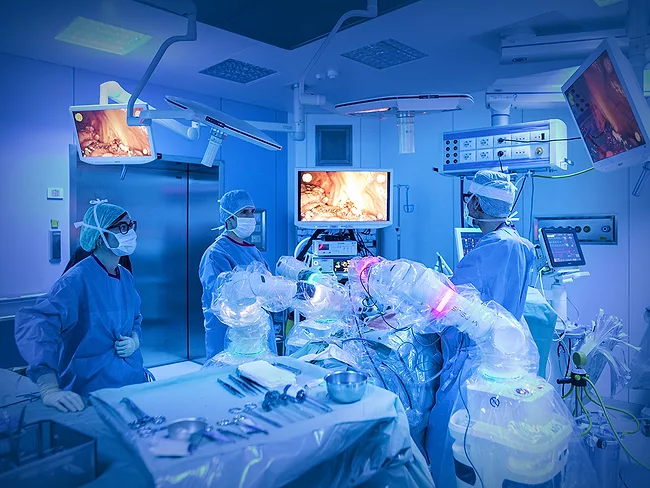
CMR Surgical Ltd. raised $165 million in financing from its existing investors that will allow the company to continue to innovate its portable robotic surgery system, Versius, and grow its position in existing and new markets. The latest financing takes CMR’s total capital raised since its founding to over $1 billion. The Versius surgical robotic system is now in over 20 markets and the company has become the second largest soft tissue surgical robotics company globally, after Intuitive Surgical Inc.
Israeli startup Briya Ltd. raised $11.5 million in series A financing which will support the expansion of its health care data exchange platform across Europe and the U.S. The round was led by Team8, and included existing investors Insight Partners, and Amiti Ventures, and was joined by the George Kaiser Family Foundation.
Stimvia s.r.o. (previously Tesla Medical s.r.o.) is in the process of securing $10 million in investment in a series A financing round that will allow the company to conduct a pivotal clinical study addressing overactive bladder, using Uris, its neuromodulation system, CEO Lukas Doskocil told BioWorld.
Insightec Ltd. broadened its CE mark approval for the Exablate Neuro, a focused ultrasound platform which treats essential tremors, to allow patients to have their second side treated. With some 60 million people estimated to be affected by essential tremor globally, Insightec hopes that with both sides treated, patients will have full body relief from tremor and therefore be able to resume everyday activities.
An international team of researchers have developed a new blood test that could detect Parkinson’s disease earlier than current methods. The test, a real-time PCR-based assay, called Mito Dnadx, uses blood to identify damage to mitochondrial DNA (mtDNA) caused by the neurodegenerative condition. Based on the findings published in the journal Science Translational Medicine, the test could allow rapid, noninvasive and accurate identification of Parkinson’s disease (PD) before it causes much damage to the nervous system.
The U.K. government continues to pump money into research projects focusing on the use of artificial intelligence (AI) in health care as it looks to technology to help diagnose and treat patients. It provided £2 million (US$2.5 million) in funding to test innovative ways to tackle cancers with poor survival rates.
Limaca Medical Ltd. received U.S. FDA 510(k) clearance for its Precision for gastrointestinal (GI) endoscopic ultrasound (EUS) biopsy device which the company said allows for faster, more efficient and safer collection of tumor tissue samples. The approval follows the receipt of breakthrough device designation, and the deployment of the device into the U.S. market should lead to more efficient and effective diagnosis of GI cancers.
Gradient Denervation Technologies SAS closed a €14 million (US$15 million) series A financing round that will help the company with the ongoing clinical development and evaluation of its ultrasound-based catheter device to treat pulmonary hypertension. The financing round was led by Asabys Partners, with participation from Thuja Capital and founding investor Sofinnova Partners.
Nemaura Medical Inc. recently raised $6.5 million in non-dilutive funding through a clean debt facility with no warrants or convertible elements. The funding came from its existing lender and is expected to fund Nemaura’s ongoing efforts to commercialize its daily disposable, wearable glucose sensors.