
BioWorld. Link to homepage.

Clarivate
  • BioWorld
  • BioWorld Science
  • BioWorld Asia
  • Data Snapshots
    • Biopharma
    • Medical technology
    • Infographics: Dynamic digital data analysis
    • Index insights
    • NME Digest
  • Special reports
    • Infographics: Dynamic digital data analysis
    • BCI
    • Ebola outbreak
    • Hantavirus
    • Trump administration impacts
    • Med-tech outlook 2026
    • Under threat: mRNA vaccine research
    • BioWorld at 35
    • Biopharma M&A scorecard
    • Bioworld 2025 review
    • BioWorld MedTech 2025 review
    • BioWorld Science 2025 review
    • Women's health
    • China's GLP-1 landscape
    • PFA re-energizes afib market
    • China CAR T
    • Alzheimer's disease
    • Coronavirus
    • More reports can be found here

BioWorld. Link to homepage.

  • Sign In
  • Sign Out
  • My Account
Subscribe
BioWorld - Wednesday, July 29, 2026
Home » Blogs » BioWorld MedTech Perspectives » Is the idea of memory transfer too sci-fi for sci-fi?

BioWorld MedTech Perspectives
BioWorld MedTech Perspectives RSS FeedRSS

Medical technology / 3D printing / NIH

Is the idea of memory transfer too sci-fi for sci-fi?

Feb. 12, 2015
By Amanda Pedersen

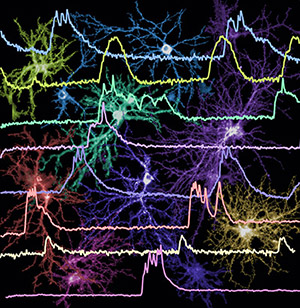
Scientists funded by the NIH BRAIN Initiative will develop tools to simultaneously watch the unique firing patterns of many neurons in hopes of classifying them based on physical characteristics and functional characteristics, such as patterns of electrical activity. Credit: Vincent Pieribone, John B. Pierce Laboratory.

It’s truly a futuristic world we live in with technology that not so long ago was only seen in science fiction. Last year, as part of a three-part series Medical Device Daily published, I explored 3-D printing and the potential for that technology, which enables us to make solid objects from a digital file, to change the medical landscape.

Another rapidly emerging area that sci-fi fans should appreciate is neurotechnology. During the annual J.P. Morgan Healthcare Conference in San Francisco last month, Francis Collins, director of the National Institutes of Health, highlighted the Brain Research through Advancing Innovative Neurotechnologies (BRAIN) Initiative. The BRAIN Initiative, announced in April 2013 by President Obama, is a joint effort between four federal agencies – NIH, the National Science Foundation, the FDA, and the Defense Advanced Research Projects Agency. The “dream team” of neuroscientists involved in the effort is led by Cori Bargmann of The Rockefeller University and Bill Newsome of Stanford University.

According to Collins, Bargmann and Newsome spent a solid year trying to map out a series of steps over a 10-year period to advance science to the point of understanding how all brain’s circuits do what they do. “Such things as processing information, such things as laying down a memory and retrieving it. These are fundamentally important functions, but they don’t happen one neuron at a time, they take circuits and it’s the circuits that we want to understand and currently do not,” Collins said.

But the part that really caught my attention was Collins' mention of a workshop that took place to explore the ethics of things like transferring memories from one person to the next, which is, he said, “a thinkable thought.” But, he quickly added, “we better be sure that we know what we’re doing.”

In the weeks that have passed since hearing Collins speak about the BRAIN Initiative during J.P. Morgan, I haven’t been able to get that thought out of my head. Transferring memories from one person to another? And the country’s top neuroscientists believe that is actually a “thinkable thought.”

I’ve tried to imagine how such a thing would even be possible. Would it be like loading memories onto a flash drive and then sharing them with another person’s brain, similar to the way data files can be shared via a thumb drive and USB port? Or would we simply, by that point in time, be capable of accessing parts of our brain that we’ve never been able to access before, enabling some sort of telepathic transfer of memories? Or maybe it would be similar to a bio-feedback game I once played with my son at the WonderWorks amusement park in Panama City Beach, Florida called Mind Ball.

Mind Ball is designed to test mind capacities and is based on EEG technology. Each player wears a headband with electrodes that records and evaluates brain activity and the objective is to use calmness and relaxation to mentally gain control over a small ball. Perhaps in the future we’ll be able to put one of these EEG headbands on and allow it to record and transfer our memories to the person wearing the other headband?

However the capability may unfold, at this point in time the idea seems almost too sci-fi for sci-fi. But then again, not that long ago I would have said the same thing about 3-D printed body parts.

Popular Stories

  • Today's news in brief

    BioWorld
    BioWorld briefs for July 28, 2026.
  • News in brief

    BioWorld Asia
    BioWorld Asia briefs for July 28, 2026
  • Drug capsule spilling onto brain

    Brain-penetrant NLRP3 inhibitor shows promise in Parkinson’s

    BioWorld Science
    Researchers from Changchun Genescience Pharmaceuticals Co. Ltd. described the discovery and preclinical profile of an NLRP3 inhibitor with favorable brain...
  • EMA logo on mobile screen, vials, syringes

    Daybu readthrough in EU? Zevra’s NPC bid flounders

    BioWorld
    Zevra Therapeutics Inc. will try to follow in the footsteps of Acadia Pharmaceuticals Inc. with Rett syndrome drug Daybu (trofinetide) by asking the EMA’s...
  • Business pipeline illustration

    Transcripta Bio raises funding to advance neuro pipeline

    BioWorld Science
    Transcripta Bio Inc. has raised $24 million since its series A to fund IND-enabling studies across its portfolio and support clinical preparation in its autism...
  • BioWorld
    • Today's news
    • Analysis and data insight
    • Clinical
    • Data Snapshots
    • Deals and M&A
    • Financings
    • Medical technology
    • Newco news
    • Opinion
    • Regulatory
  • BioWorld Science
    • Today's news
    • Biomarkers
    • Cancer
    • Conferences
    • Endocrine/metabolic
    • Immune
    • Infection
    • Neurology/psychiatric
    • NME Digest
    • Patents
  • BioWorld Asia
    • Today's news
    • Analysis and data insight
    • Australia
    • China
    • Clinical
    • Deals and M&A
    • Financings
    • Newco news
    • Regulatory
    • Science
  • More
    • About
    • Advertise with BioWorld
    • Archives
    • Article reprints and permissions
    • Contact us
    • Cookie policy
    • Copyright notice
    • Data methodology
    • Infographics: Dynamic digital data analysis
    • Index insights
    • Podcasts
    • Privacy policy
    • Share your news with BioWorld
    • Staff
    • Terms of use
    • Topic alerts
    • Videos
Follow Us

Copyright ©2026. All Rights Reserved. Design, CMS, Hosting & Web Development :: ePublishing