Having already hit the primary endpoint of overall response rate in the phase II/III Companion-002 study testing the bispecific antibody tovecimig in biliary tract cancer, Compass Therapeutics Inc. rolled out new data from the same experiment and plans to meet with the U.S. FDA to discuss a BLA. Shares of the Boston-based firm (NASDAQ:CMPX) closed April 27 at $1.79, down about 64%, or $3.23, as Wall Street sifted the results.
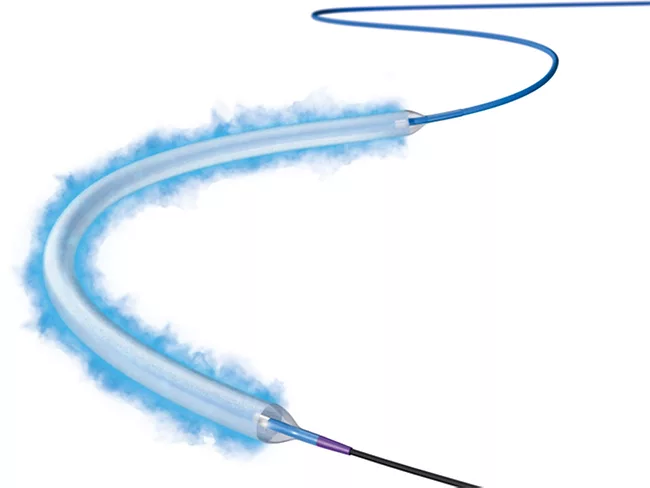
Cordis Corp. has quite a bit to crow about in this latter part of October 2025 with the unveiling of results of two studies that back the Miami Lakes, Fla.-based company’s Selution SLR drug-eluting balloon (DEB) for both de novo coronary artery stenosis and in-stent restenosis.
A new entry in the peer-reviewed literature on Boston Scientific’s Agent drug-coated balloon seems to call into question whether in-stent restenosis should be treated with another stent, a discussion that could torque practice away from the stent-in-stent approach and toward the use of drug-coated balloons.
French biotech Pep-Therapy SAS is in the midst of raising a €20 million (US$21.62 million) round and, at the same time, prospecting for potential partners after winning FDA orphan drug designation for its bifunctional peptide Pep-010 in the treatment of pancreatic cancer. Pep-010 currently is moving to the conclusion of a phase Ib trial and the new money will fund phase II development.
The contest between the two main classes of antiproliferatives for circulatory system use continues as seen in a presentation at this year’s Transcatheter Cardiovascular Therapeutics.
Hong Kong’s Hutchmed (China) Ltd. reported mixed phase III results of fruquintinib as a second-line combination therapy for advanced gastric cancer on Feb. 6, with the oral vascular endothelial growth factor receptor inhibitor hitting just one co-primary endpoint.
Hong Kong’s Hutchmed (China) Ltd. reported mixed phase III results of fruquintinib as a second-line combination therapy for advanced gastric cancer on Feb. 6, with the oral vascular endothelial growth factor receptor inhibitor hitting just one co-primary endpoint.
The controversy over the use of paclitaxel (PTX) in devices used to treat peripheral artery disease (PAD) has taken roughly half a decade to unwind as regulatory agencies across the globe stand down their restrictions on the use of these devices.
Five long years after the publication of the now-notorious Katsanos paper, the U.S. FDA has issued a final determination about whether devices indicated for treatment of peripheral artery disease carry the threat of excess mortality when using paclitaxel as an antiproliferative.
Boston Scientific Corp. said that three-year primary patency and the four-year freedom from target lesion revascularization (TLR) rate for patients treated with the Ranger drug-coated balloon (DCB), in the Ranger II superficial femoral artery (SFA) study, are the best ever reported data for randomized trials using DCBs.