Timothy Leary is dead, but he could be on the outside looking in with a smile on his face as U.S. President Donald Trump’s latest executive order (EO) fuels a surge in investment in companies researching and developing psychedelic drugs to treat mental health issues. The EO, Accelerating medical treatments for serious mental illness, is intended to address the increasing burden of suicide and serious mental illness, which impacts more than 14 million Americans.
Despite key vacancies, ongoing staffing challenges and policy issues at the U.S. CDC, FDA and NIH, some of the regulatory churn that roiled those agencies in the first year of the second Trump administration is settling a bit, at least in terms of the number of executive orders (EOs) coming out of the Oval Office.
U.S. NIH Director Jay Bhattacharya will be a lot busier in the days and weeks ahead. As if helming the NIH isn’t enough, Bhattacharya has been tapped to also serve as acting director of the CDC, an administration official confirmed to BioWorld.
U.S. President Donald Trump unveiled his “Great Healthcare Plan” Jan. 15, an initiative he said would slash prescription drug prices, maximize price transparency in the health care system and hold big insurance companies accountable.
Perhaps the biggest indicator of U.S. President Donald Trump’s activism in his second term is the 225 executive orders (EOs) he issued in 2025. The pace of those orders seems to have slowed, with “only” 16 released in the last quarter of the year. Four of the recent EOs could impact drug and device companies in a myriad of ways.
Then there were three. With the administration’s Dec. 19 announcement of most-favored-nation (MFN) pricing deals with nine more biopharmas, only three of the 17 companies on the receiving end of U.S. President Donald Trump’s July 31 MFN ultimatum have yet to finalize terms with the White House – Abbvie Inc., Johnson & Johnson (J&J) and Regeneron Pharmaceuticals Inc.
The budget impasse between Democrats and Republicans on Capitol Hill has implications for a wide range of federal government operations, including at the U.S. FDA, which is absorbing another round of layoffs and cannot accept new premarket filings that require user fee submissions.
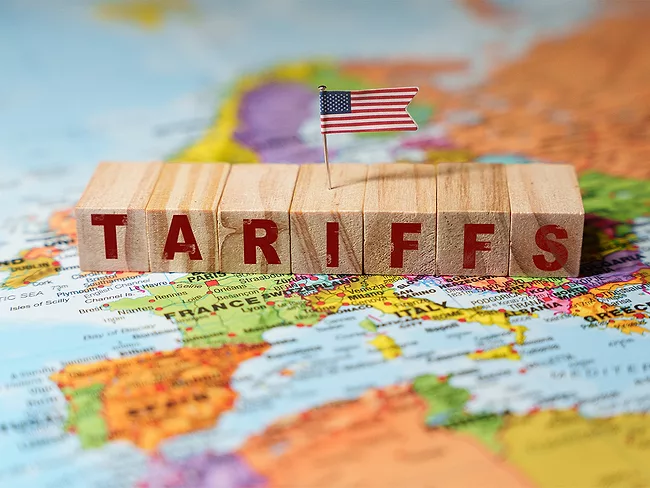
The threat of tariffs on imports of branded drugs is about to be realized after U.S. President Donald Trump announced a 100% import duty will apply beginning Oct. 1. However, the flurry of recent announcements by pharma companies of investments in U.S. manufacturing plants may have paid off, with the president saying in his announcement on Truth Social that the 100% rate will be enforced “unless a company is building their manufacturing plant in America.”
The threat of tariffs on imports of branded drugs is about to be realized after U.S. President Donald Trump announced a 100% import duty will apply beginning Oct. 1. However, the flurry of recent announcements by pharma companies of investments in U.S. manufacturing plants may have paid off, with the president saying in his announcement on Truth Social that the 100% rate will be enforced “unless a company is building their manufacturing plant in America.”
The Trump administration has launched an investigation into the national security effects of imports of medical equipment, devices, consumables and equipment, laying the groundwork for a potential increase in tariffs targeting the industry. A separate investigation into robotics and industrial machinery began the same day. Med-tech stocks dropped significantly in response to the news as investors fear increased tariffs on the sector. In April, the administration initiated a similar review of the pharmaceutical industry and in August threatened 200% tariffs on that sector.