Mirroring results reported in a phase IIb study, Apnimed Inc.’s first of two pivotal trials testing AD-109 as an oral therapy in obstructive sleep apnea hit primary and secondary endpoints. Should similar findings emerge from a second phase III trial, expected to read out in a couple of months, the privately held firm anticipates a U.S. NDA filing in early 2026.
Litigation between companies in the med-tech space often revolves around patents, but the ongoing series of lawsuits between Philips Respironics Inc. and Soclean Inc. are directed toward the interaction between CPAP machines and CPAP cleaning systems.
The U.S. FDA caught up with four makers of CPAP cleaning machines in the form of warning letters advising the manufacturers that the claims made for their systems fall under the definition of a regulated medical device. In two of these warning letters, the FDA said it had been in touch with the manufacturer for at least two years, indicating that the agency has been steadily working on enforcement activities in this space for some time.
Researchers from the University of Chicago and Northwestern University have filed for protection of an mobile application to track individualized patient needs, engagement in continuous positive airway pressure machine use, and the correlation of risk behaviors to determine sleep apnea treatment progress.
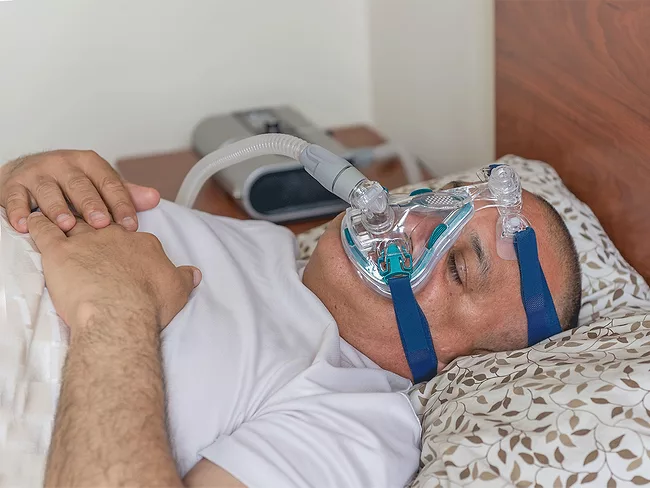
The U.S. FDA has received a citizen petition to grant over-the-counter status to continuous positive airway pressure (CPAP) machines, an oddly timed petition given a recent enforcement action against one of the prime movers in the CPAP space.
Royal Philips NV has come to terms over class-action litigation in which plaintiffs alleged that particulate matter in continuous positive airway pressure (CPAP) machines has proven harmful to their health, bringing the matter to a $1.1 billion conclusion. Despite the 10-figure sum, news of the April 29 settlement sent the company’s share prices up by roughly a third in early morning trading, suggesting that investors had already baked their expectations of the settlement into their thinking about the company’s future.
Royal Philips NV agreed with the U.S. FDA to the terms of a consent decree focused on its Respironics business, following the recall of millions of its devices over the last few years. Although the details of the decree are being finalized, Philips said it will halt the sales of new continuous positive airway pressure (CPAP) and bilevel positive airway pressure (BiPAP) sleep therapy machines as well as other respiratory care devices in the U.S. until the conditions of the decree are met.
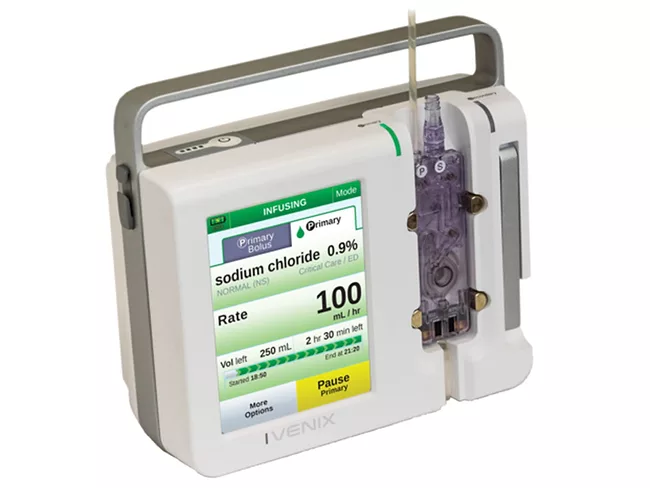
The U.S. FDA has announced a class I recall of Iveninx large-volume infusion pumps made by Fresenius Kabi USA of Lake Zurich, Ill., due to a mechanical issue with fluid valve pins that could cause the pumps to shut down. Fresenius is rolling out a remediation plan for more than 900 pumps affected by the recall, which to date has been associated with no reports of injury or death.
Philips Respironics Inc.’s nightmares with its Dreamstation continuous positive airway pressure (CPAP) line of products continued with a fresh warning from the U.S. FDA of reports involving thermal issues with a newer iteration of the machine, some of which cited patient injuries.