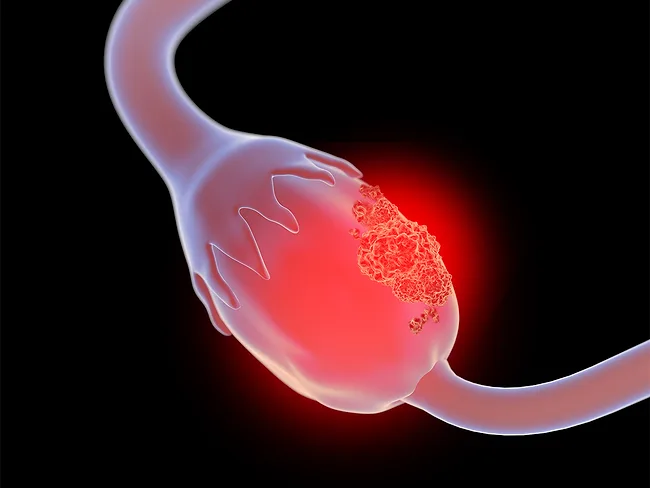
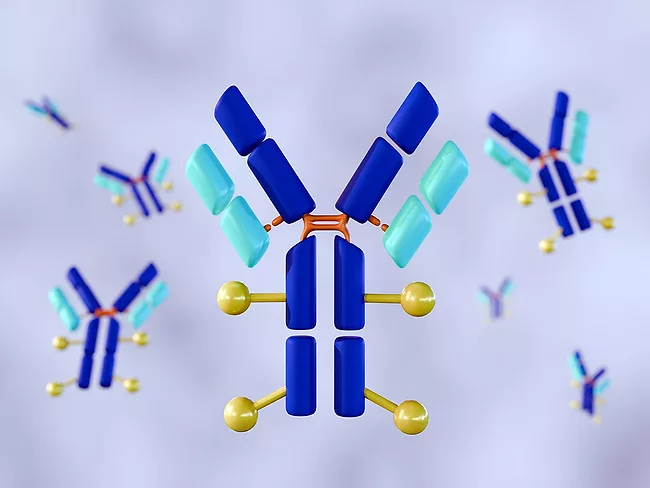
In a recently published study, researchers from the Institute of Biomedical Research of Salamanca and collaborators investigated the potential of CD98hc as a novel antibody-drug conjugate (ADC) target in ovarian cancer. CD98hc, encoded by the SLC3A2 gene, is a transmembrane glycoprotein involved in amino acid transport, cell adhesion and signal transduction, among other biological activities.
Ovarian clear-cell carcinoma is a cancer characterized by inherent resistance to platinum-based therapies and lacks an effective targeted therapeutic approach. On the other hand, chaperone-mediated autophagy is a lysosomal degradation mechanism to stabilize cellular homeostasis during stressful scenarios, but its role in modulating platinum response in ovarian cancer is not well understood.
Harnessing an oncolytic signal and redirecting it against the tumor itself could be developed as a selective strategy for certain cancer types, as occurs with ErbB hyperactivity, a form of signaling that drives many carcinomas. Inspired by this idea, scientists at Stanford University have engineered a virus that replicates only in ErbB-hyperactive ovarian cancer cells. This allowed them to precisely kill this specific tumor population, achieving greater efficacy and safety than previous oncolytic viruses.
Mesothelin (MSLN) is a highly expressed protein in several cancer types but with limited expression in normal tissues. Simcere Pharmaceutical Co. Ltd. has presented preclinical data on the characterization of SCR-A019, an antibody-drug conjugate (ADC) carrying a topoisomerase 1 inhibitor payload and an antibody that binds to membrane Mesothelin (MSLN) over soluble MSLN and has shown robust antitumor efficacy in several cell-derived xenograft models.
Metis Techbio Co. Ltd. is seeking a potential HK$2.11 billion (US$270 million) raise through a stock sale May 13, marking the largest biotech raise on the Hong Kong Stock Exchange this year to date. Hangzhou, China-based Metis is an AI-based nanoparticle drug formulation and delivery-focused company. Synthetic lethality-based cancer drugmaker Impact Therapeutics Inc., of Shanghai, plans to debut on the same day with a US$117 million IPO.
Arrivent Biopharma Inc. has obtained IND clearance from the FDA for ARR-002 (AV-P138-ADC), an antibody-drug conjugate (ADC) with an initial focus in ovarian and endometrial cancers and broader therapeutic potential across solid tumors. A phase I trial is expected to open in the second half of the year.
Hypersialylation in tumor cells is a potent mechanism of tumor immune evasion, pushing cancer progression by suppressing both innate and adaptive antitumor immunity. Shanghai Henlius Biotech Inc. has developed an engineered human sialidase enzyme fused to an anti-B7-H3 nanobody, named E-688 or HLX-316, that improves tumor desialylation, durability and efficacy both in vitro and in vivo, while maintaining a safe profile.
Cymirafen is a novel antibody-drug conjugate (ADC) from the University of California that targets leucine-rich repeat-containing G-protein coupled receptor 4 (LGR4)/LGR5/LGR6 and is composed of a potent cytotoxic payload, monomethyl auristatin E (MMAE), plus an Fc domain fused to the receptor binding domain of RSPO1.
German company Tubulis GmbH, which emerged with a $12.3 million series A round and a next-generation antibody-drug conjugate (ADC) platform about six years ago, has commanded up to $5 billion in a buyout offer from Gilead Sciences Inc.