Chipiron SA will produce a prototype of its ultra-low portable magnetic resonance imaging (MRI) scanner, after raising $17 million in series A financing, as it looks to make MRI more accessible.
Scientists at the University of Aberdeen developed a new scanner that distinguishes breast tumor material from healthy tissue more accurately than current magnetic resonance imaging (MRI) methods.
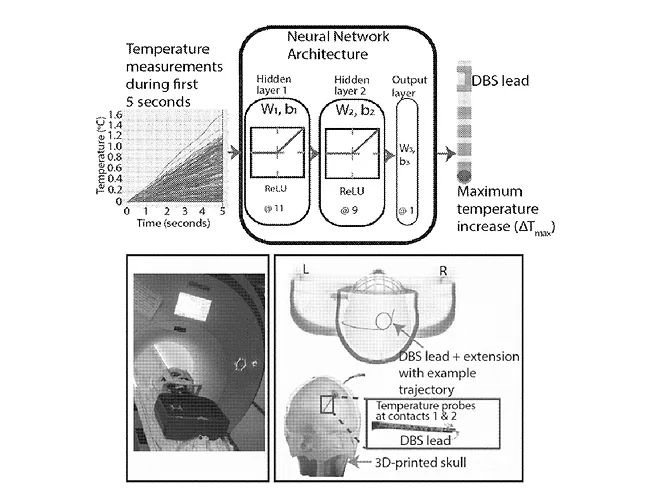
A recent patent application from Laleh Rad, associate professor of Biomedical Engineering and Radiology at Northwestern University, describes the use of machine learning for real-time risk assessment of magnetic resonance imaging in patients with conductive implants for whom tissue heating from radiofrequency excitation fields remains a major concern.
On the heels of U.S. FDA approval for Neurophet Aqua, an updated version of its artificial intelligence (AI)-based magnetic resonance imaging analysis software for the brain, Neurophet Inc. is preparing for an IPO in 2025 and expansion into U.S. and European markets.
Researchers from Johns Hopkins University have filed for protection of their Optimal Target Identification via Modelling of Arrhythmogenesis technology – a method that builds a model of a patient’s heart from a cardiac MRI.
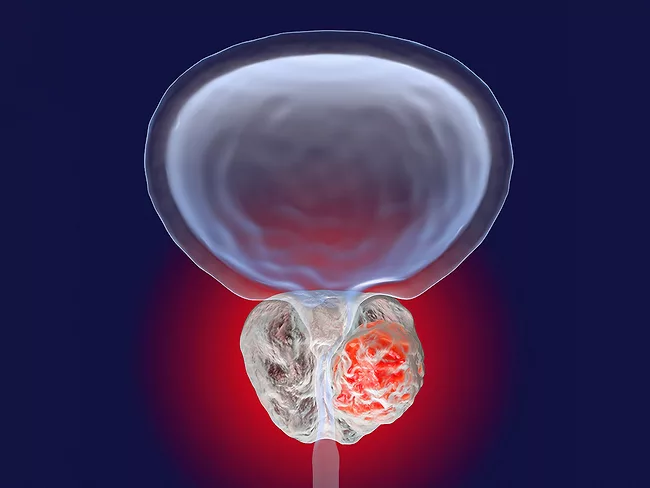
Results from a meta-analysis of magnetic resonance imaging (MRI)-guided adaptive radiation for prostate cancer by radiation oncologists from the Dana Farber Cancer Institute demonstrated the treatment reduces complications while comparing well to standard approaches. The study was published in Cancer.
The neonatology unit at Bonn University Hospital (UKB) in Germany conducted the world’s first study of portable magnetic resonance imaging at the bedside on children undergoing extracorporeal membrane oxygenation (ECMO) therapy. This procedure involves oxygenating the blood outside the body. The 10-strong neonatology team demonstrated that it is safe and feasible to perform portable MRI at the bedside in this patient population.
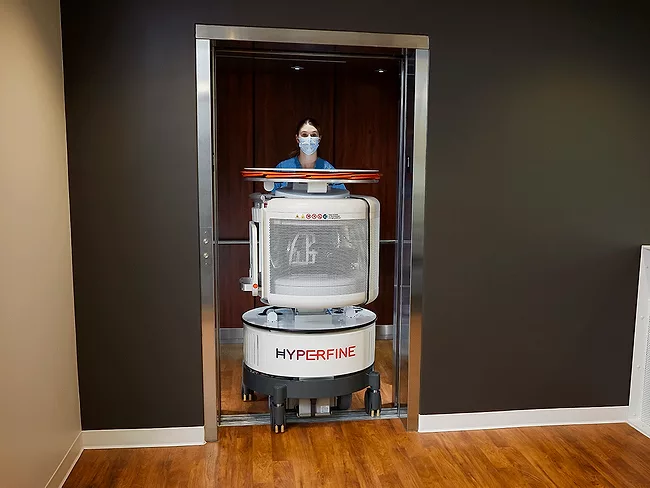
The U.S. FDA granted 510(k) clearance to Hyperfine Inc. for improved artificial intelligence (AI)-powered software for its Swoop portable magnetic resonance imaging (MRI) device. The company launched the new software this week.
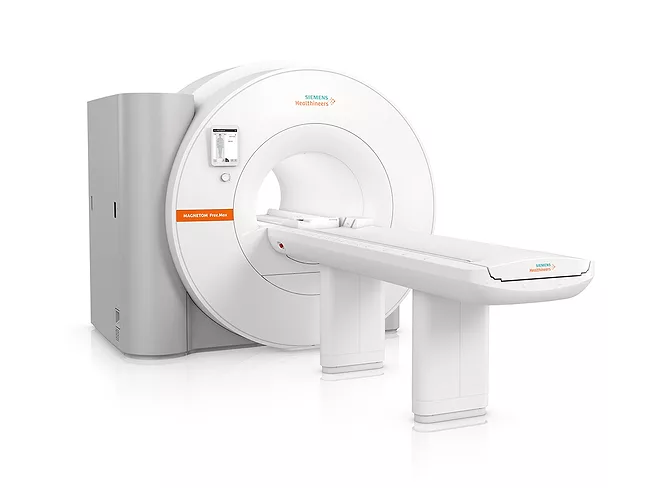
In the season of college bowl games, two long-time rivals are vying for another title, the right to claim being the first to install Siemens Healthineers AG’s Magnetom Free.Max magnetic resonance imaging (MRI) system. Both the Ohio State University and the University of Michigan said they were first in the U.S. to put in the recently approved system.
The FDA cleared Hyperfine Research Inc.’s advanced image reconstruction technology using deep learning for its portable magnetic resonance imaging device, Swoop. The bedside MRI unit’s artificial intelligence application received clearance in January and is used with deep learning to improve image quality and diagnostic value. Hyperfine and Liminal Sciences Inc., which share a founder in serial entrepreneur Jonathan Rothberg, are both combining with special purpose acquisition company Healthcor Catalio Acquisition Corp. to go public in a deal valued at $580 million. The companies reported on Nov. 29 that the Securities and Exchange Commission declared the registration statement on form S-4 for the combination to be effective and the SPAC’s shareholders will vote on the transaction on Dec. 21.