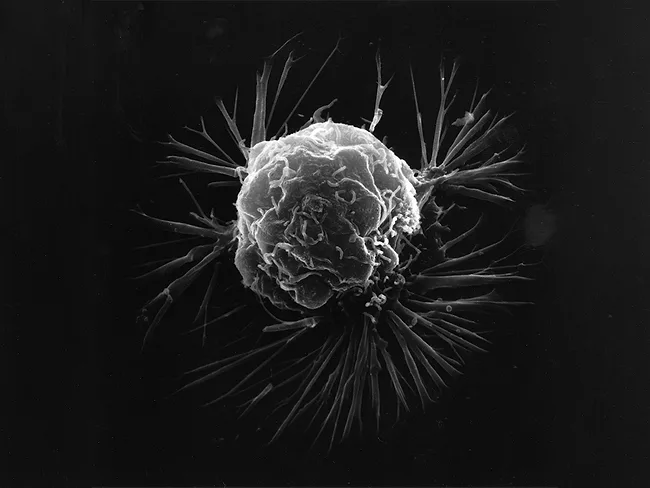
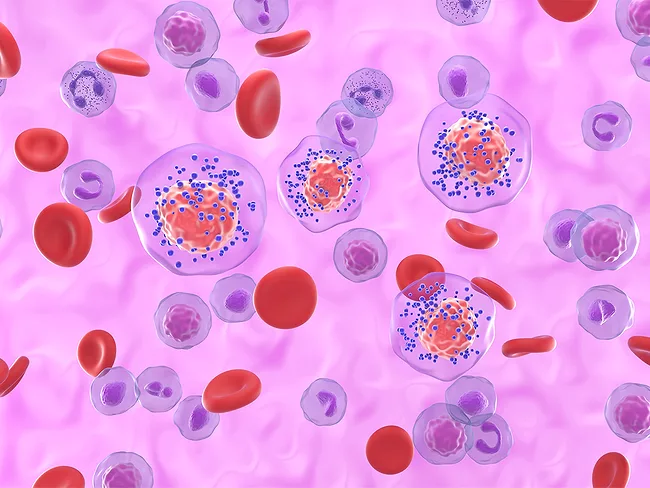
Researchers at Theramir Ltd. presented preclinical proof-of-concept data for a new extracellular vesicle (EV) platform engineered to deliver miR-885-5p (EVmiR885-5p), targeting leukocyte-specific protein-1 (LCP-1)-mediated cytoskeletal remodeling in triple-negative breast cancer (TNBC) models.
Antibody-drug conjugate (ADC) specialist Ona Therapeutics SL has closed an oversubscribed series B at $86.6 million, as clinical development of the lead program ONA-255 in advanced treatment-resistant breast cancer gathers steam.
Mammogen Inc. raised $30 million in equity financing in a series A round to support the clinical advancement and commercialization of its RNA-powered molecular diagnostics platform. The company’s lead product is Gentru-breast, a blood-based assay designed to detect molecular signatures associated with breast cancer from a simple blood draw.
Minneapolis-based Celcuity Inc. was like the Rolling Stones at the 2026 American Society of Clinical Oncology annual meeting. The company reported positive phase III data for its pan-PI3K/mTORC1/2 inhibitor gedatolisib, but Celcuity (NASDAQ:CELC) couldn’t get any satisfaction from investors who sent shares down 25.7%, or $31.54, to $91.42 on June 2, 2026.
Iovance Biotherapeutics Inc. has received IND clearance from the FDA for IOV-5001, a next-generation interleukin-12 (IL-12)-tethered tumor-infiltrating lymphocyte (TIL) therapy.
Kolon Life Science Inc. is developing KLS-3021, a next-generation oncolytic vaccinia virus designed to express the PH20, IL-12 and PD-1-Fc transgenes to mediate receptor-independent tumor cell killing and enhance antitumor immune responses.
Showing a significant efficacy signal in a phase II trial, Relay Therapeutics Inc.’s zovegalisib (RLY-2608) achieved a 60% volumetric response in patients with PIK3CA-driven vascular anomalies (VAs). The isoform-selective PI3Ka inhibitor is in late-stage clinical trials with various combinations for P13Ka-mutated, HR+/HER2- advanced breast cancer, with VAs representing a second indication for which Leerink Partners analyst Andrew Berens forecasts $2.8 billion in peak revenues.
Researchers at the School of Pharmacy and Biomolecular Sciences from the Royal College of Surgeons in Ireland and collaborating institutions have detailed the design, synthesis and biological evaluation of a new series of triazine-based multitarget inhibitors aimed at dual inhibition of PI3K and HDAC for breast cancer therapy.
Work at Blueprint Medicines Corp. to identify a selective and potent CDK4 degrader led to the identification of BLU-448, with minimal activity against CDK6 for treating HR+/HER2- breast cancer.