Tikva Allocell Pte. Ltd. has closed an $8 million series A financing to support its development of engineered, allogeneic cell therapies for adult and pediatric patients with solid tumors.
In breast cancer, dysregulated Hippo signaling results in activation of the YAP/TAZ-TEAD transcriptional complex, which induces a broad oncogenic transcriptional program. This gene expression network promotes tumor cell proliferation, survival, invasion and metastatic dissemination, while also contributing to resistance to anticancer therapies. Researchers from Harbin Medical University reported the preclinical characterization of M-511-0965, a YAP-TEAD4 inhibitor, in models of triple-negative breast cancer (TNBC).
Researchers from Wuhan University and collaborators reported the synthesis and preclinical characterization of NCP07, a novel ERα PROTAC degrader designed to treat endocrine therapy-resistant tumors.
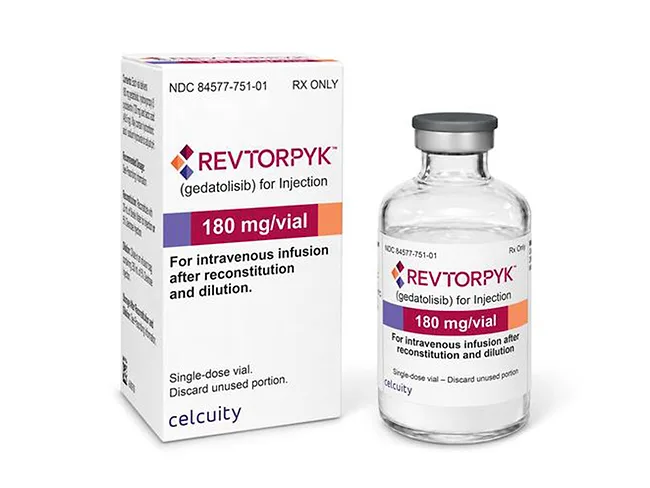
For the second time in two months, Celcuity Inc. failed to generate investor excitement despite disclosing positive news, this time following the U.S. FDA approval of Revtorpyk (gedatolisib) in a subset of breast cancer patients, marking the firm’s first foray into the commercial space and introducing a new treatment option for patients. Wall Street instead focused on an unanticipated launch delay, sending shares of Celcuity (NASDAQ:CELC) down 17.6% to close July 15 at $91.51.
Astex Pharmaceuticals Ltd. has entered into an exclusive, worldwide research collaboration and license agreement with Genentech Inc., a member of the Roche Group, to identify small-molecule drug candidates with selective inhibitory activity as potential treatments for breast cancer.
Researchers at Theramir Ltd. presented preclinical proof-of-concept data for a new extracellular vesicle (EV) platform engineered to deliver miR-885-5p (EVmiR885-5p), targeting leukocyte-specific protein-1 (LCP-1)-mediated cytoskeletal remodeling in triple-negative breast cancer (TNBC) models.
Antibody-drug conjugate (ADC) specialist Ona Therapeutics SL has closed an oversubscribed series B at $86.6 million, as clinical development of the lead program ONA-255 in advanced treatment-resistant breast cancer gathers steam.
Mammogen Inc. raised $30 million in equity financing in a series A round to support the clinical advancement and commercialization of its RNA-powered molecular diagnostics platform. The company’s lead product is Gentru-breast, a blood-based assay designed to detect molecular signatures associated with breast cancer from a simple blood draw.
Minneapolis-based Celcuity Inc. was like the Rolling Stones at the 2026 American Society of Clinical Oncology annual meeting. The company reported positive phase III data for its pan-PI3K/mTORC1/2 inhibitor gedatolisib, but Celcuity (NASDAQ:CELC) couldn’t get any satisfaction from investors who sent shares down 25.7%, or $31.54, to $91.42 on June 2, 2026.