Antiverse Ltd. has announced the close of a $9.3 million series A financing. The funding will support expansion of the company’s proprietary AI antibody design platform, accelerate development of its internal therapeutic pipeline, and advance lead antibody programs toward in vivo efficacy studies.
Cystic fibrosis (CF) is an autosomal recessive genetic disorder caused by mutations in the CF transmembrane conductance regulator (CFTR) gene. Researchers from Sorbonne University and Hôpital Trousseau developed a targeted approach based on antisense oligonucleotides as a way to improve CF management.
Cystic fibrosis (CF) is a genetic disorder affecting around 90,000 people worldwide. It is commonly caused by the ΔF508 mutation in the cystic fibrosis transmembrane conductance regulator (CFTR) gene, which results in a misfolded CFTR protein that is subsequently ubiquitinated and degraded.
Montse Rosa Therapeutics Inc. has developed a molecular glue degrader named MRT-2359 that selectively degrades the translation termination factor ERF3A.
Carbon Biosciences Inc. has presented data on a parvovirus-based vector that restores full-length cystic fibrosis transmembrane conductance regulator (CFTR) gene for treating cystic fibrosis.
Researchers from Sionna Therapeutics Inc. presented preclinical efficacy data on first-in-class NBD1 stabilizers and their use in combination with complementary modulators to correct cystic fibrosis transmembrane conductance receptor (CFTR) assembly.
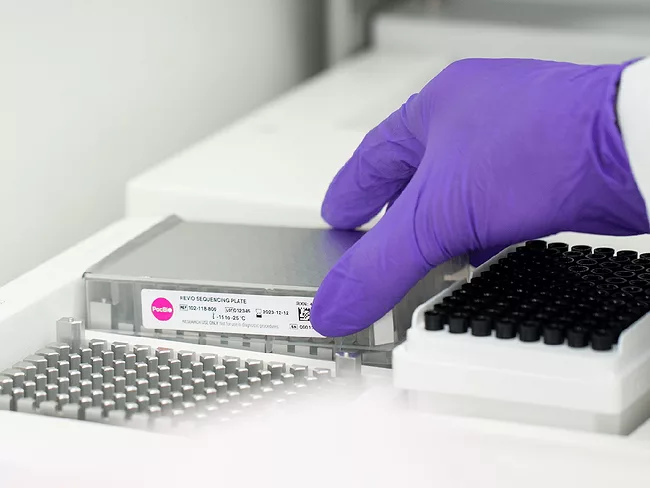
Up to 71% of people carry at least one pathogenic variant that could contribute to development of a heritable disorder in offspring, but until now, prospective parents often had to undergo multiple tests to understand their risks. Pacific Biosciences of California Inc. (Pacbio)’s expanded Puretarget portfolio provides a quicker and more streamlined solution as it covers all challenging tier 3 genes identified in the American College of Medical Genetics technical standard.
Idorsia Pharmaceuticals Ltd. has divulged macrocyclic compounds acting as cystic fibrosis transmembrane conductance regulator (CFTR) modulators reported to be useful for the treatment of cystic fibrosis.
Billiontoone Inc.’s Unity Fetal Risk screen identifies fetuses at high risk for cystic fibrosis (CF), a study published in Journal of Cystic Fibrosis found.
A tangle of DNA can look like a knotted ball in the cell nucleus. However, the genetic machinery has a complex and regulated structure. Its long repetitive sequences also seemed to have no function. They were called junk DNA, although they were not. The same happened with proteins and low-complexity domains, disordered chains of amino acids that were poorly understood. Nevertheless, that protein noise has turned into music for the 2025 Lasker Awards. These prizes have recognized the work of scientists who were able to see order in chaos.