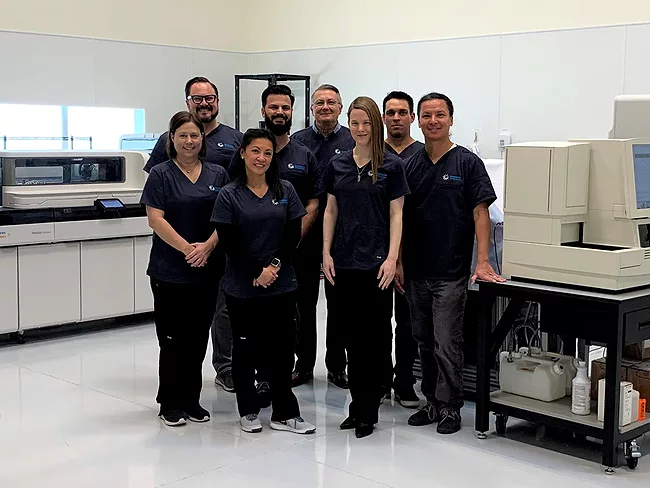
News from Truvian Health Inc. that its benchtop blood testing platform can deliver results similar to those generated by central laboratory is promising for the diagnostic sector still coming to terms with fraudulent claims from companies such as Theranos Inc. and Arrayit Corp. that their various technologies were able to run an array of tests with just a few drops of blood.
The conviction and sentencing of Elizabeth Holmes and Sunny Balwani of Theranos Corp. might be seen as an example of retribution for testing technology that didn’t exist and thus endangered patients, but that perception doesn’t stand up to scrutiny.
The epic rise and fall of Elizabeth Holmes, founder of Theranos Inc., will preoccupy the world of business for decades to come, but this story has also left a large footprint in the world of clinical diagnostics. David Stein, CEO of Babson Diagnostics Inc., of Austin, Texas, told BioWorld that investors are a bit more wary than usual because of the Theranos saga, forcing test developers to be more rigorous in test development and more transparent with investors about a test.
Making routine diagnostic blood tests less invasive, easier, cheaper and more accessible is a worthy goal. But achieving it has eluded many, including former unicorn startup Theranos that boasted it had achieved precisely that but then was later exposed as a fraud. Established med-tech player Becton, Dickinson and Co. (BD) and Babson Diagnostics Inc. have established a long-term strategic partnership to bring laboratory quality, small-volume blood collection into the retail pharmacy setting.
FDA warning letters to device makers have been conspicuous in their paucity in recent years, but they have been surfacing with greater frequency over the past few months.