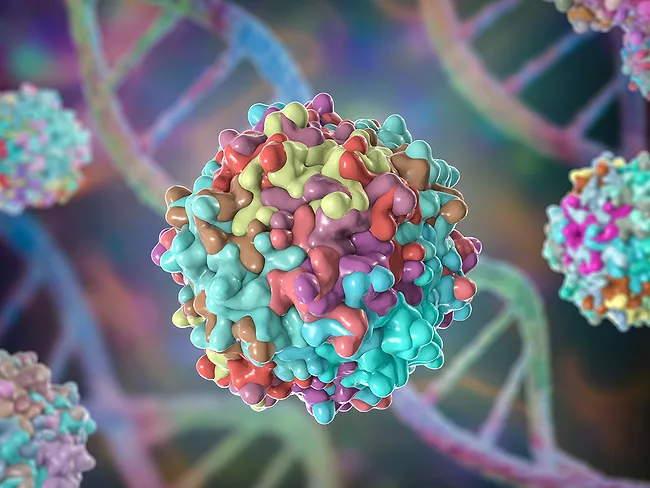
Généthon, a nonprofit laboratory created by the AFM-Téléthon, has reported its exclusive, worldwide licensing agreement with Askbio Inc., a subsidiary of Bayer AG, for the use of a patented component of AB-1009, under development by Askbio, for the treatment of Pompe disease.
Askbio Inc., a subsidiary of Bayer AG, has received IND clearance from the FDA for AB-1009, an AAV gene therapy being developed for the treatment of late-onset Pompe disease.
Biomarin Pharmaceutical Inc. followed up its May takeover of Inozyme Pharma Inc. with a much larger agreement to acquire Amicus Therapeutics Inc. for $14.50 per share in an all-cash transaction, tipping the equity-value scale about $4.8 billion.
Pompe disease is a disorder caused by deficiency of the lysosomal acid α-glucosidase (GAA) enzyme, which leads to the accumulation of glycogen within the lysosomes, overall in skeletal and cardiac muscle.
Pompe disease is caused by a deficiency in the lysosomal enzyme acid α-glucosidase (GAA) that leads to accumulation of glycogen in the lysosomes, mainly seen in skeletal and cardiac muscles. Researchers from Duke University have developed a new murine model of Pompe disease, which recapitulates human infantile-onset disease. This model harbors the c.1826dupA mutation in the murine Gaa gene, which resembles the human GAA c.1826dupA (p.Y609*) mutation seen in infantile-onset Pompe disease.
At this week’s WORLDSymposium meeting, researchers from M6P Therapeutics Inc. reported on the preclinical efficacy of M-021, a novel enzyme replacement therapy (ERT) that co-expresses recombinant GAA with a bicistronic vector encoding N-acetylglucosamine-1-phosphotransferase (PTase; S1-S3).
Researchers from Maze Therapeutics Inc. presented the discovery and preclinical characterization of MZ-101 as a potential candidate for the treatment of Pompe disease and other glycogen storage disorders.
Sanofi SA backed out of its $750 million effort to advance Maze Therapeutics Inc.’s oral Pompe disease candidate, MZE-001, after the U.S. FTC filed a federal lawsuit to block the deal, claiming the Paris-based firm was seeking to eliminate a nascent competitor.
John Crowley, a longtime industry executive whose story inspired a 2010 Hollywood movie, has been tapped for the role of president and CEO of the Biotechnology Innovation Organization (BIO), effective March 4, 2024, taking over from Rachel King, another longtime executive who has served as BIO’s interim CEO since October 2022.
After a nearly year-long delay pegged to COVID-19 travel restrictions, the U.S. FDA has approved Amicus Therapeutics Inc.’s Pompe disease drug, introducing competition for Sanofi SA’s standard-of-care treatment and anticipating blockbuster sales. The combination of Pombiliti (cipaglucosidase alfa-atga) and Opfolda (miglustat) 65-mg capsules was approved for adults with late-onset Pompe disease, who weigh at least 40 kg and who are not improving on their current enzyme replacement therapy.