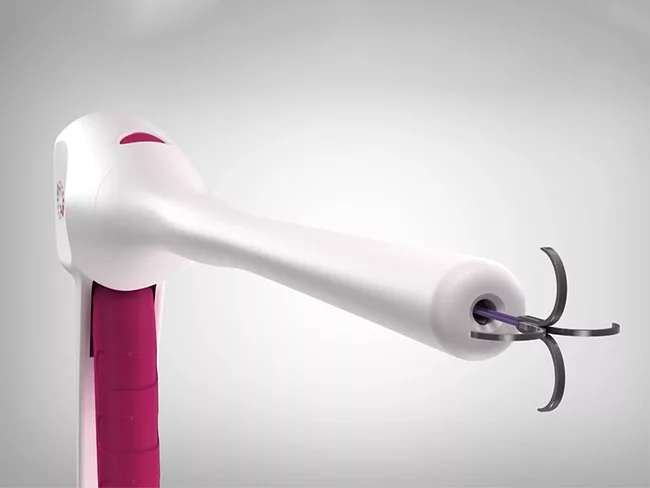
The €5.5 million (US$6 million) Escala Medical Ltd. recently received from the European Innovation Council will help the company expand its operations as it looks to officially launch its Apyx device in the U.S. later this year, CEO and founder Edit Goldberg told BioWorld. Already FDA-cleared, Apyx offers incision-free pelvic organ prolapse (POP) treatment to the women suffering from the often painful and debilitating condition.
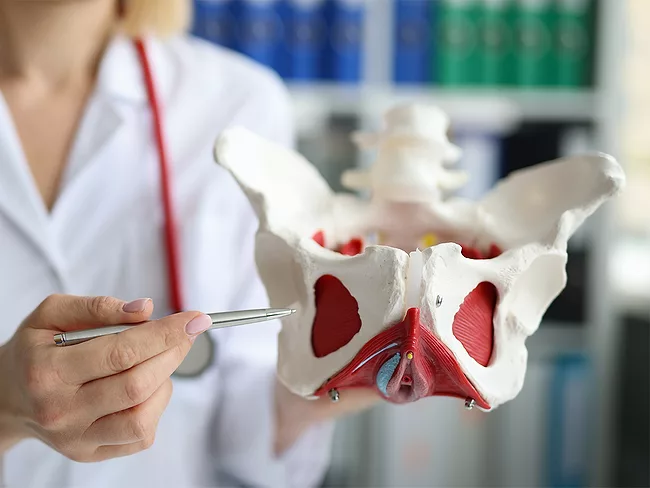
The U.S. FDA has given the green light to a pelvic organ prolapse (POP) repair device developed by Misgav, Israel-based Escala Medical Ltd. The mesh-free, non-surgical repair system is designed to anchor sutures to ligaments of the pelvic floor in an incision-free procedure. Escala, which is a portfolio company of Israeli government franchised incubator Trendlines Group Ltd., believes the device will help the 1 in 5 women in the U.S. affected by POP.
TORONTO – Femtherapeutics Inc. is combining artificial intelligence-driven machine learning and 3D design to manufacture a device for relieving urinary incontinence and discomfort in women suffering pelvic organ prolapse. The custom-made pessary is intended to support vaginal tissues displaced because of the condition, replacing conventional pessaries that company officials said can result in irritation and penetrate soft tissues causing bleeding.
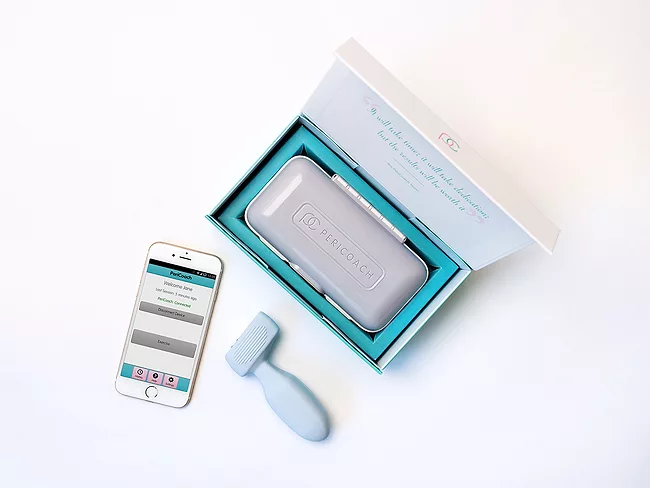
PERTH, Australia – Analytica Ltd. signed a joint venture agreement with Hebei Nacol Bio-Technology Co. Ltd. and Shijiazhuang Biosphere Pty Ltd., of Hebei Province, China, to manufacture and distribute its Pericoach device for urinary incontinence in China, Macau, Hong Kong and Taiwan.