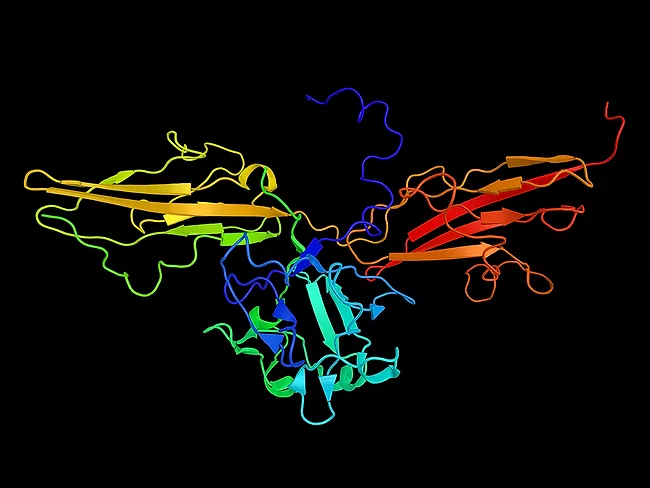
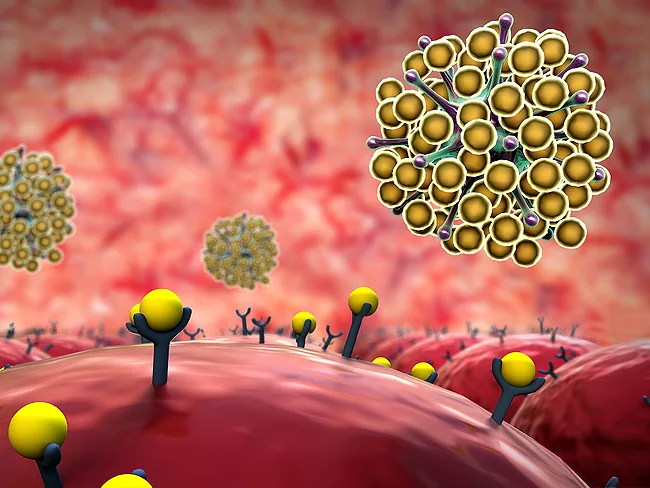
Tyra Biosciences Inc. has disclosed new indazole compounds acting as fibroblast growth factor receptor (FGFR) inhibitors. They are reported to be useful for the treatment of cancer and developmental disorders.
Tyra Biosciences Inc. recently presented the design and preclinical characterization of TYRA-200, an oral small-molecule FGFR1/2/3 tyrosine kinase inhibitor (TKI) that shows high potency against all common mutant forms of FGFR2 and holds potential for the treatment of cancers driven by FGFR2 alterations.
Hepatocellular carcinoma (HCC) is an aggressive disease that accounts for 80%-90% of all primary liver cancers. Previous findings have shown fibroblast growth factor 19 (FGF-19) to be overexpressed in up to 30% of HCC cases, exerting its oncogenic effect through its receptors fibroblast growth factor receptor 3 (FGFR3) and FGFR4.
Despite an outcome that TD Cowen analyst Tyler Van Buren called ”fantastic,” shares of Tyra Biosciences Inc. (NASDAQ:TYRA) closed Oct. 25 at $21.93, down $6.68, or 23%, as Wall Street digested new phase I/II data with FGFR3 inhibitor TYRA-300 in metastatic urothelial cancer from the Surf301 phase I/II study in progress.
Hypochondroplasia (HCH) is a skeletal dysplasia similar to achondroplasia (ACH) but with milder features, that affects particularly the ossification of proximal long bones of arms and legs. Around 70% to 80% of cases of HCH are caused by N540K alterations in the FGFR3 gene. At the recent 6th Annual Achondroplasia & Skeletal Dysplasia Research Conference, researchers from Tyra Biosciences Inc. presented preclinical proof-of-concept data of TYRA-300, an oral FGFR3-selective inhibitor in a model of HCH.
A rare pediatric disease designation for its achondroplasia treatment and a subsequent $200 million private placement boosted shares of Tyra Biosciences Inc. on Feb. 2 by 29.3%.
Four other companies want to replicate Biomarin Pharmaceuticals Inc.’s recent success as they seek approvals to treat the rare but most prevalent genetic form of dwarfism, achondroplasia. The U.S. FDA approved the sNDA for injectable Voxzogo (vosoritide), fibroblast growth factor receptor 3 (FGFR3) inhibitor from Biomarin on Oct. 20.
Tyra Biosciences Inc. is expanding development of TYRA-300 into achondroplasia based on promising preclinical results from a study conducted in collaboration with the Imagine Institute. A specific mutation in fibroblast growth factor receptor 3 (FGFR3) causes over 97% of achondroplasia.
Tyra Biosciences Inc. has described indazole compounds acting as fibroblast growth factor receptors (FGFR) inhibitors reported to be useful for the treatment of cancer.
Inhibition of emerging polyclonal on-target acquired resistance mutations remains a critical unmet need in the treatment of fibroblast growth factor receptor 2 (FGFR2)-driven tumors. In the current study, researchers from Tyra Biosciences Inc. presented the preclinical characterization of a novel FGFR1/2/3 inhibitor, TYRA-200, being developed for the treatment of cancer.