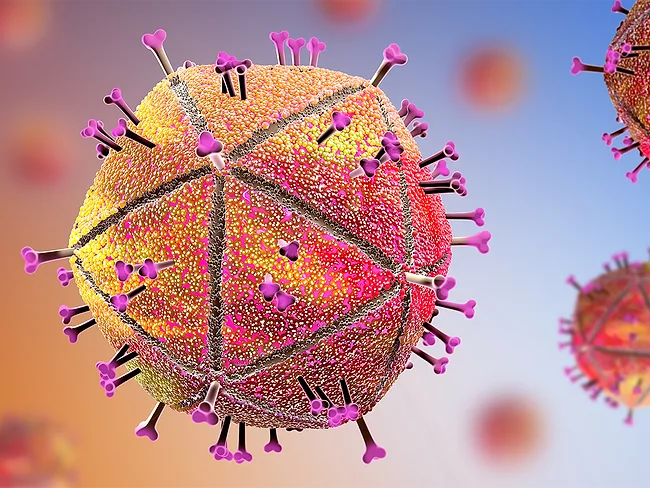
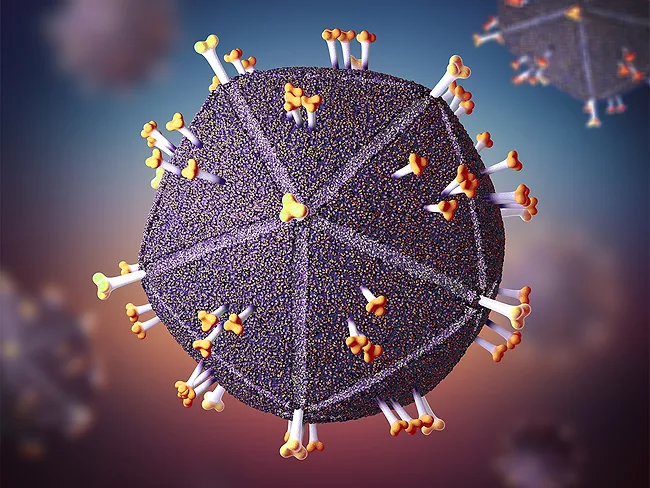
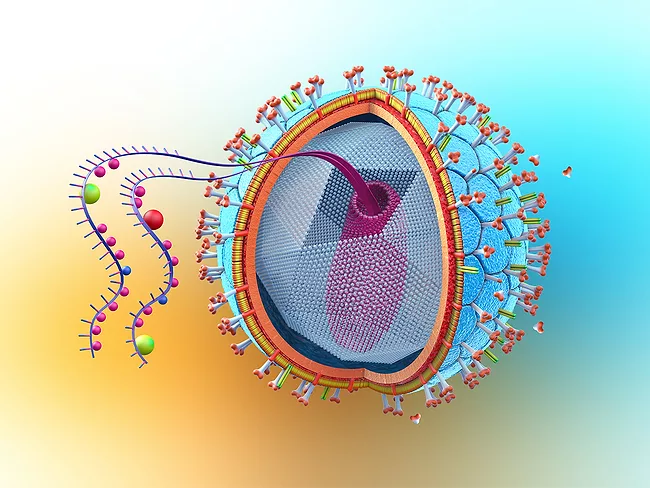
A designed chimeric virus induced broadly neutralizing antibodies against the macaque equivalent of HIV. The strategy works in two steps: first it uses an envelope protein with a mutation that reduces the glycan shield that makes it invisible to the immune system, and then it exposes the part of the protein most likely to generate these antibodies capable of blocking many variants of the virus. The macaques developed potent and diverse antibodies with this approach, which pave the way for the development of an HIV-1 vaccine.
A designed chimeric virus induced broadly neutralizing antibodies (bNAbs) against the macaque equivalent of HIV. The strategy works in two steps: first it uses an envelope protein (Env) with a mutation that reduces the glycan shield that makes it invisible to the immune system, and then it exposes the part of the protein most likely to generate these antibodies capable of blocking many variants of the virus. The macaques developed potent and diverse antibodies with this approach, which pave the way for the development of an HIV-1 vaccine.
A new vaccination strategy designed to induce antibodies that recognize the apex of the HIV Env protein uses Env trimers displayed on liposomes to increase their density and orient them correctly. This presentation enhanced apex-focused antibody responses in macaques, and the monoclonal antibodies isolated after immunization showed binding modes and structural features resembling human broadly neutralizing antibodies (bNAbs), indicating that the vaccine can steer the antibody response toward this vulnerable site.
The use of DNA scaffolds could mark a turning point in HIV vaccine design. Scientists at Scripps Research and the Massachusetts Institute of Technology (MIT) have created a new vaccine platform based on DNA origami, a material that the immune system does not recognize as a threat, avoiding unwanted responses.
Advances in antiretroviral therapy (ART) now allow people living with HIV to lead normal lives with undetectable and nontransmissible levels of the virus in their blood. Yet that reality is limited to those with access to treatment. More than 40 million people worldwide live with HIV, with over a million new infections and hundreds of thousands of deaths each year, underscoring that major challenges remain.
In vaccine development, one might think that targeting multiple epitopes increases the likelihood of improving outcomes. However, when several immunogens are administered together, the immune system does not always generate antibodies against all of them. Two parallel studies have overcome this challenge by using multiple simultaneous immunogens against HIV, effectively triggering various types of broadly neutralizing antibody (bnAb) precursors in two different preclinical animal models.
The National Institute of Allergy and Infectious Diseases (NIAID) has awarded a 5-year $20.8 million grant to a multi-institutional team led by Weill Cornell Medicine investigators for advanced preclinical development of a promising experimental HIV vaccine.
Researchers from the California Institute of Technology and collaborating institutions have developed a novel HIV vaccine candidate, a new germline-targeting Env SOSIP trimer called 3nv.2, that is designed to elicit antibodies targeting three key epitopes on the HIV envelope protein.
Immuno Cure Biotech Ltd. is collaborating with Pharmajet Inc. to evaluate the safety and immunogenicity of its HIV therapeutic DNA vaccine, Icvax, delivered via Pharmajet's innovative Tropis needle-free injection system.
Immuno Cure Biotech Ltd. is collaborating with Pharmajet Inc. to evaluate the safety and immunogenicity of its HIV therapeutic DNA vaccine, Icvax, delivered via Pharmajet's innovative Tropis needle-free injection system.