At the recent International Stroke Conference, researchers from VST Bio Corp. and Yale University presented preclinical data regarding VB-001, a monoclonal antibody that targets syndecan 2 (SDC2) and is also known as VST-002.
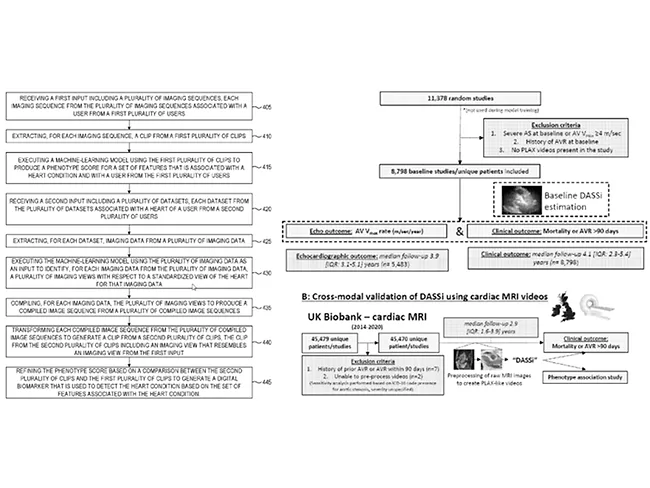
Researchers from the Yale University filed for protection of a multi-modal approach to predict the progression risk of a heart condition using artificial intelligence algorithms applied to cardiovascular videos.
Researchers have altered the genetic code in a strain of Escherichia coli, reducing the number of stop codons from three to one and assigning the freed-up stop codons to nonstandard amino acids. They reported on the recoded bacterium, which they named OCHRE, in Nature on Feb. 5, 2025.
Researchers from Northwestern University and Yale University have presented new preclinical data for KL-50, a small molecule under investigation for the treatment of glioblastoma. KL-50 was designed to fluoro-ethylate DNA bases, resulting in DNA inter-strand cross-links and subsequent DNA damage that triggers DNA mismatch repair (MMR)-independent apoptosis.
Researchers at Bioventures LLC and Yale University have disclosed dual inhibitors of bromodomain-containing protein 4 (BRD4; HUNK1) and histone deacetylase (HDAC) reported to be useful for the treatment of cancer and psoriasis.
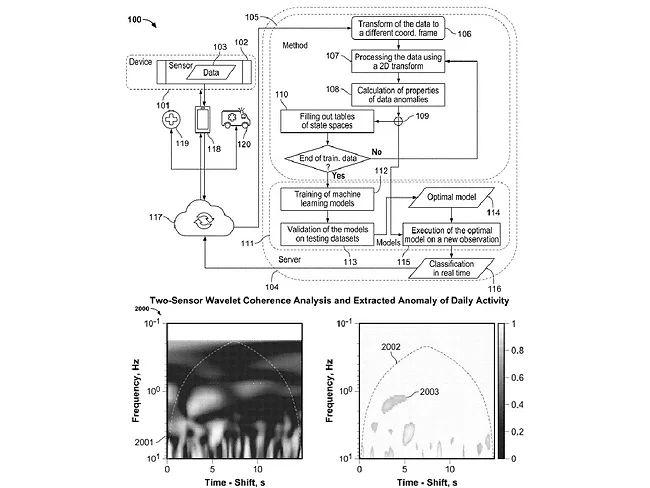
In what represents its first patenting, Alva Health Inc. has been granted protection for a method for detecting stroke from falls using a combination of wearable motion sensors and artificial intelligence.
On March 4, 2024, several groups of scientists discussed the challenges of investigating the effects of HIV in the central nervous system (CNS) at the oral abstract session on neuropathogenesis of HIV held during the 31st Conference on Retroviruses and Opportunistic Infections (CROI), in Denver. A cure for HIV will require eliminating the virus in all its reservoirs, those tissues where HIV remains latent but retains the capacity for reactivation and replication. However, despite antiretroviral therapy (ART), the virus could continue to replicate continuously at a low level in some reservoirs, including the CNS.
On March 4, 2024, several groups of scientists discussed the challenges of investigating the effects of HIV in the central nervous system (CNS) at the oral abstract session on neuropathogenesis of HIV held during the 31st Conference on Retroviruses and Opportunistic Infections (CROI), in Denver. A cure for HIV will require eliminating the virus in all its reservoirs, those tissues where HIV remains latent but retains the capacity for reactivation and replication. However, despite antiretroviral therapy (ART), the virus could continue to replicate continuously at a low level in some reservoirs, including the CNS.
Yale University has identified compounds reported to be useful for the treatment of dry age-related macular degeneration (AMD), Fuchs endothelial corneal dystrophy, cataract, glaucoma and keratoconus.
Evotec SE and Novo Nordisk A/S have announced the launch of Lab En2, a translational drug discovery accelerator that aims to advance early research from academic institutions into novel therapeutics.