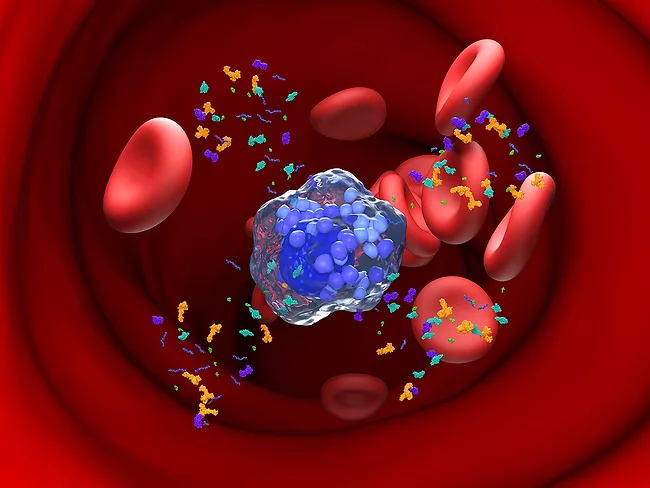
Despite the success of traditional viral-based CAR T-cell therapies against several blood malignancies, their efficacy remains limited against solid tumors. Non-viral engineering of CAR T cells using electroporation or lipid nanoparticle delivery of CAR-encoding mRNA achieves high but transient CAR expression, highlighting the limitations of current preclinical models for evaluating mRNA-based CAR T cells.
Opioid use disorder (OUD) remains a significant public health crisis, with over 5 million people diagnosed in the U.S. in 2023 and more than 80,000 fatal overdoses involving opioids each year. Current FDA-approved medications for OUD target the micro-opioid receptor, but these treatments are still associated with high relapse rates during abstinence.
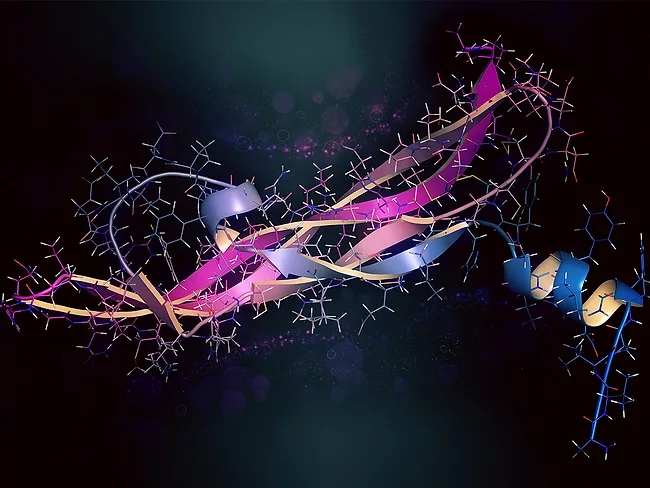
A peptide with a dual mechanism of action – it dissolves the bacterial membrane and activates the immune system – could be an effective weapon against microorganisms that have evolved ways to evade antibiotics, as superbugs do. Scientists at the University of Pennsylvania (UPenn) have designed stable synthetic peptides that activate mast cell receptors, which are cells involved in the innate and adaptive immune response. This dual approach eliminates bacteria and recruits neutrophils to finish the job.
Investigators from the University of Pennsylvania have presented data regarding the relationship of angiopoietin-2 (ANG2) and its prognostic impact on traumatic brain injury (TBI). The ANG2 plasmatic levels were measured in patients with TBI (n=362), orthopedic injury controls (n=89) and healthy controls (n=64).
Several lung conditions, such as acute lung injury, require the targeted delivery of pharmacological agents to the lower lung. However, the administration of complex biologics, such as anti-inflammatory cytokine mRNA, to the injury site in the lower lungs is particularly challenging, frequently leading to poor specificity and uneven distribution.
Marengo Therapeutics Inc. has entered into a multiyear research collaboration in oncology and autoimmune diseases with University of Pennsylvania Perelman School of Medicine. The research collaboration will provide deeper insights into the mechanism of action of Marengo’s selective dual T-cell agonists in oncology.
Scientists at St. John’s University, The University of Pennsylvania and Université de Montréal have identified poly(ADP-ribose) polymerase 1 (PARP-1; ARTD1) inhibitors reported to be useful for the treatment of cancer, Lewy body dementia, amyotrophic lateral sclerosis, Alzheimer’s disease and Parkinson’s disease.
In a recently published study, researchers from the University of Pennsylvania and collaborators aimed to identify compounds with high affinity to α-synuclein aggregates and high selectivity toward pathological α-synuclein compared to other brain targets.
A gene therapy based on an enhanced lipid nanoparticle (LNP) loaded with vascular endothelial growth factor (VEGF) mRNA could be developed for the treatment of preeclampsia, according to a study in mice in which it alleviated maternal hypertension until the end of gestation and improved fetal health. Preeclampsia is a disease that affects 3% to 5% of pregnant women, who suffer from hypertension and proteinuria, elevated levels of protein in the urine, during pregnancy.
Clostridioides difficile is traditionally isolated from healthcare facilities' inpatients, but it is increasingly being identified in people who have not recently been hospitalized and is more and more found in community settings. Investigators from Perelman School of Medicine at University of Pennsylvania developed an mRNA-LNP vaccine with promising results in preventing and controlling C. difficile infection.