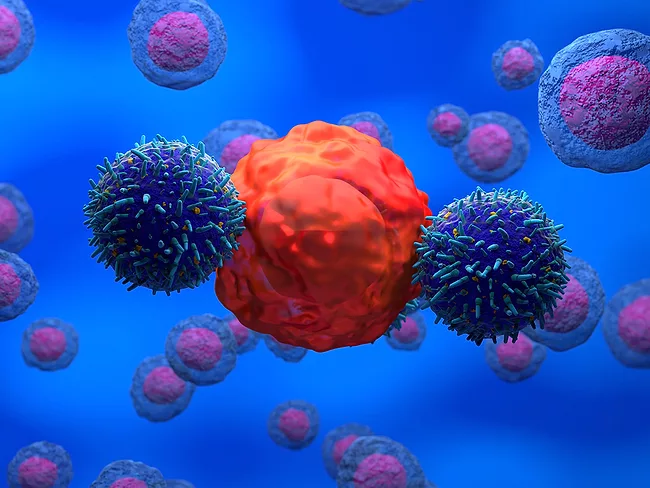
Two papers published in the July 1, 2026, issues of Nature and Nature Cancer have reported on preclinical and early clinical data with glycoprotein nonmetastatic melanoma protein B (GPNMB)-targeting CAR T cells in two separate solid tumor types.
Some proteins embedded in the structure of prions may have antimicrobial activity, according to a study led by scientists at the University of Pennsylvania. An AI analysis of millions of fragments from prion-related proteins has revealed more than a thousand peptides that disrupt bacterial membranes and reduce infection in animal models, suggesting these proteins could be an unexpected source of new antibiotics.
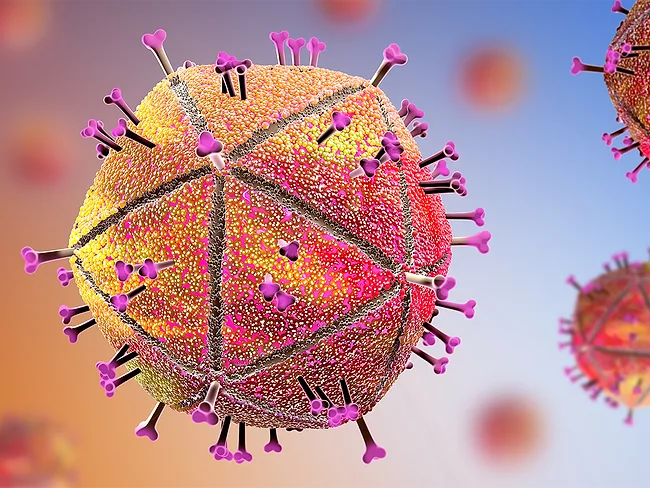
A designed chimeric virus induced broadly neutralizing antibodies against the macaque equivalent of HIV. The strategy works in two steps: first it uses an envelope protein with a mutation that reduces the glycan shield that makes it invisible to the immune system, and then it exposes the part of the protein most likely to generate these antibodies capable of blocking many variants of the virus. The macaques developed potent and diverse antibodies with this approach, which pave the way for the development of an HIV-1 vaccine.
A new mRNA and lipid nanoparticle (mRNA-LNP) platform could selectively reprogram in vivo cytotoxic effector T cells (Teff), the cells responsible for eliminating infected or tumor cells. To achieve this, scientists at the University of Pennsylvania conjugated LNPs with fractalkine, a molecule that binds to the CX3CR1 receptor, which is a marker of Teff cells. Using this strategy, the researchers delivered an mRNA encoding new proteins such as IL‑2 or human CD62 L‑selectin, opening the door to temporarily reprogramming these cells within the body, both in the blood and in lymphoid tissue, where they reside and become activated.
A new mRNA and lipid nanoparticle (mRNA-LNP) platform could selectively reprogram in vivo cytotoxic effector T cells (Teff), the cells responsible for eliminating infected or tumor cells. To achieve this, scientists at the University of Pennsylvania conjugated LNPs with fractalkine, a molecule that binds to the CX3CR1 receptor, which is a marker of Teff cells. Using this strategy, the researchers delivered an mRNA encoding new proteins such as IL‑2 or human CD62 L‑selectin, opening the door to temporarily reprogramming these cells within the body, both in the blood and in lymphoid tissue, where they reside and become activated.
A designed chimeric virus induced broadly neutralizing antibodies (bNAbs) against the macaque equivalent of HIV. The strategy works in two steps: first it uses an envelope protein (Env) with a mutation that reduces the glycan shield that makes it invisible to the immune system, and then it exposes the part of the protein most likely to generate these antibodies capable of blocking many variants of the virus. The macaques developed potent and diverse antibodies with this approach, which pave the way for the development of an HIV-1 vaccine.
A study involving a small cohort of women who have received womb transplants has cast fresh light on how the immune system shapes pregnancy outcomes, opening up new avenues of research into implantation failure, preeclampsia and preterm birth. Using an array of single cell analyses, scientists at the University of Alabama at Birmingham (UAB) studied the composition and gene expression profiles of immune cells in tissue samples from five women who had received womb transplants.
A study involving a small cohort of women who have received womb transplants has cast fresh light on how the immune system shapes pregnancy outcomes, opening up new avenues of research into implantation failure, preeclampsia and preterm birth.
Phenylketonuria (PKU) is an autosomal recessive disorder that results in decreased metabolism of the amino acid phenylalanine. Untreated PKU can lead to intellectual disability, seizures, behavioral problems and mental disorders. This metabolic disease is caused by mutations in the phenylalanine hydroxylase (PAH) gene, resulting in patients’ inability to convert phenylalanine.