Another day, another two multibillion-dollar deals with Asian companies, this time involving Dizal Pharmaceutical Co. Ltd. and its EGFR inhibitor for lung cancer, as well as Innovent Biologics Inc. and its anti-CD40L antibody for a chronic fibroinflammatory condition.
Astrazeneca plc has added a dual PDE3/4 inhibitor candidate to its chronic obstructive pulmonary disease (COPD) portfolio via a deal worth up to $2.1 billion with Chia Tai Tianqing Pharmaceutical Group Co. Ltd., a Sino Biopharmaceutical Ltd. subsidiary.
Another day, another two multibillion-dollar deals with Asian companies, this time involving Dizal Pharmaceutical Co. Ltd. and its EGFR inhibitor for lung cancer, as well as Innovent Biologics Inc. and its anti-CD40L antibody for a chronic fibroinflammatory condition.
A federal jury was wrong when it determined that Astrazeneca plc should pay Wyeth, a Pfizer Inc. unit, $107.5 million in damages for infringing two cancer patents, the U.S. Court of Appeals for the Federal Circuit said in a recent precedential decision.
The U.S. SEC reached a settlement with Weiguo Zhai resolving insider trading charges related to Astrazeneca plc’s $1.1 billion acquisition of Icosavax Inc. in 2023.
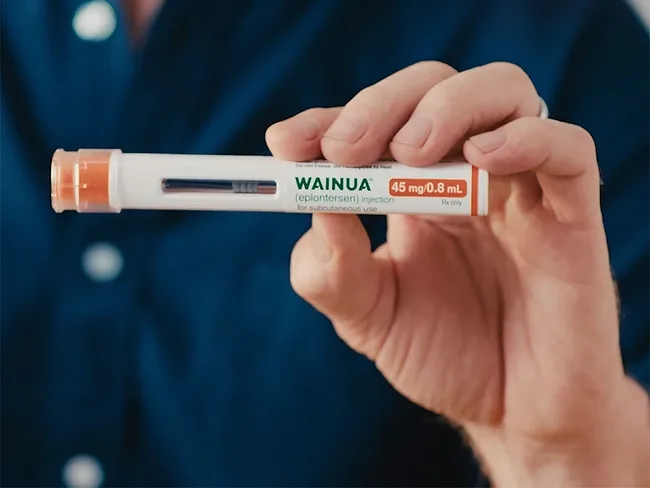
The synergy – or lack of it – between knockdown drugs and stabilizers in treating transthyretin (TTR)-mediated amyloid cardiomyopathy (ATTR-CM) became one of the topics for debate in the aftermath of the phase III fizzle with gene silencer Wainua (eplontersen), advanced by Astrazeneca plc and Ionis Pharmaceuticals Inc.
News of the unexpected phase III failure of the gene silencing drug Wainua (eplontersen) in the treatment of transthyretin-mediated amyloid cardiomyopathy sent Astrazeneca plc’s shares (NYSE:AZN) down $10.88 to close July 9 at $178.40.
Astrazeneca plc has added a dual PDE3/4 inhibitor candidate to its chronic obstructive pulmonary disease (COPD) portfolio via a deal worth up to $2.1 billion with Chia Tai Tianqing Pharmaceutical Group Co. Ltd., a Sino Biopharmaceutical Ltd. subsidiary.
Astrazeneca plc has returned to China’s CSPC Pharmaceutical Group Ltd. for another discovery collaboration, this time in a deal worth up to $1.77 billion to use CSPC’s siRNA drug discovery platform and extrahepatic targeted delivery technology to develop small nucleic acid drug candidates.
Astrazeneca plc has returned to China’s CSPC Pharmaceutical Group Ltd. for another discovery collaboration, this time in a deal worth up to $1.77 billion to use CSPC’s siRNA drug discovery platform and extrahepatic targeted delivery technology to develop small nucleic acid drug candidates.