If U.S. sectoral tariffs on biopharmaceuticals become a reality and most country-by-country tariffs on other medical products resume, manufacturers may have to rethink their use of U.S. free trade zones to turn foreign-sourced active pharmaceutical ingredients and other components into finished products for the U.S. market.
Fibroblast activation protein (FAP) is a serine protease, the expression of which increases with pathogenic fibroblasts in the fibrotic liver during metabolic dysfunction-associated steatohepatitis (MASH) and might induce fibrosis by cleaving several proteins that regulate extracellular matrix turnover and metabolism, including α2-antiplasmin (α2-AP) and fibroblast growth factor 21 (FGF21). Astrazeneca plc recently presented new results on their research regarding their oral small-molecule FAP inhibitor, AZD-2389, as a candidate drug for treating MASH.
Astrazeneca plc is investing heavily in China, signing two R&D deals, worth up to about $8 billion in up-front payments and milestones combined, with Chinese companies Harbour Biomed Ltd. and Syneron Bio, establishing a joint venture with Shenzhen Kangtai Biological Products Co. (Biokangtai) for vaccines, and creating a new R&D center in Beijing through another $2.5 billion investment.
In a deal that could reach nearly $2 billion, Jiangsu Hengrui Pharmaceuticals Co. Ltd. has licensed a small molecule for treating cardiovascular disease to Merck & Co. Inc., dropping the China-based company into a space with lots of competitors in varying stages of development.
Astrazeneca plc is investing heavily in China, signing two R&D deals, worth up to about $8 billion in up-front payments and milestones combined, with Chinese companies Harbour Biomed Ltd. and Syneron Bio, establishing a joint venture with Shenzhen Kangtai Biological Products Co. (Biokangtai) for vaccines, and creating a new R&D center in Beijing through another $2.5 billion investment.
CEPI is partnering with Astrazeneca plc to advance VHH-based multispecific antibodies targeting influenza, while Harbour Biomed Ltd. has entered into a global strategic collaboration with Astrazeneca to discover and develop next-generation multispecific antibodies for immunology, oncology and other diseases.
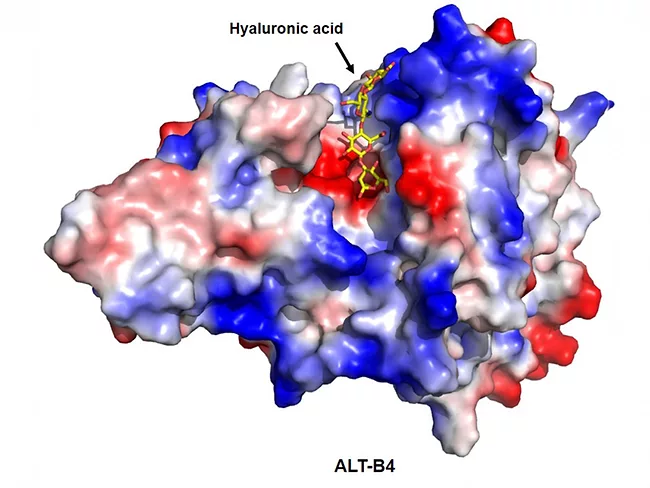
Alteogen Inc. signed its first billion-dollar partnership this year for ALT-B4 technology through two separate contracts with Astrazeneca plc’s U.K.- and U.S.-based Medimmune subsidiaries worth up to $1.35 billion combined.
Alteogen Inc. signed its first billion-dollar partnership this year for ALT-B4 technology through two separate contracts with Astrazeneca plc’s U.K.- and U.S.-based Medimmune subsidiaries worth up to $1.35 billion combined.
A new multi-omics approach to unpicking how noncoding gene variants influence the development of common chronic diseases has identified tens of thousands of instances where variants have an impact on gene expression levels and gene splicing, the post-transcriptional modification that allows one gene to code for multiple proteins.
While the U.S. has historically led the global pharmaceutical industry by pursuing both continual innovation and high quality, those strengths could become areas of weakness in times of political uncertainty, according to PA Consulting expert Andy Prinz.