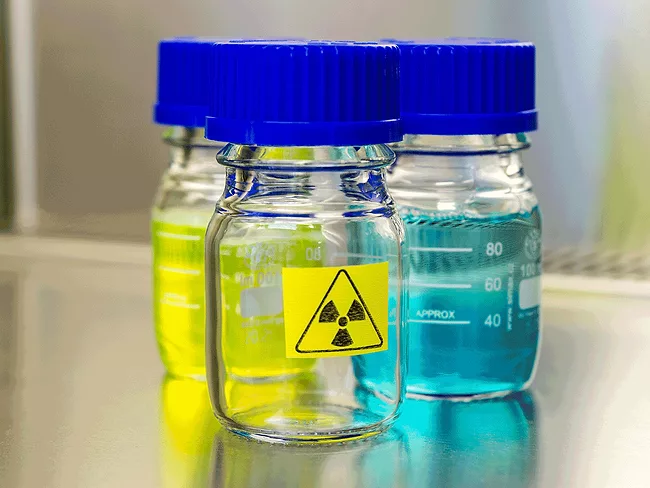
The radiopharma field has garnered increasing attention in recent years due to big-ticket deals like Bayer AG's $2.9 billion acquisition of Algeta ASA and Novartis AG's nearly $6 billion spent on buying Advanced Accelerator Applications SA and Endocyte Inc. As a result, competition is ratcheting up and pipelines are exploding with new combinations of different drugs. The global radiopharmaceuticals market was estimated to be valued at $6.7 billion in 2020, a number expected to reach $11.5 billion by 2027, according to a 2022 William Blair report.
The possibilities of cures for cancer and other tough-to-treat diseases and the ability to further personalize medicine are creating a lot of excitement about the future of radiopharmaceuticals as both therapy and diagnostics. To reach that future, industry and researchers will have to overcome a lot of challenges, not the least of which stem from the multiple government agencies involved in regulating the source material, development, distribution and use of radioactive drugs and devices.
The radiopharma field has garnered increasing attention in recent years due to big-ticket deals like Bayer AG's $2.9 billion acquisition of Algeta ASA and Novartis AG's nearly $6 billion spent on buying Advanced Accelerator Applications SA and Endocyte Inc. As a result, competition is ratcheting up and pipelines are exploding with new combinations of different drugs. The global radiopharmaceuticals market was estimated to be valued at $6.7 billion in 2020, a number expected to reach $11.5 billion by 2027, according to a 2022 William Blair report.
The big idea behind radiopharmaceuticals is taking the hallmarks of two cancer therapies – radiology and chemotherapy – and merging them, and this is what makes the technology a disrupter.
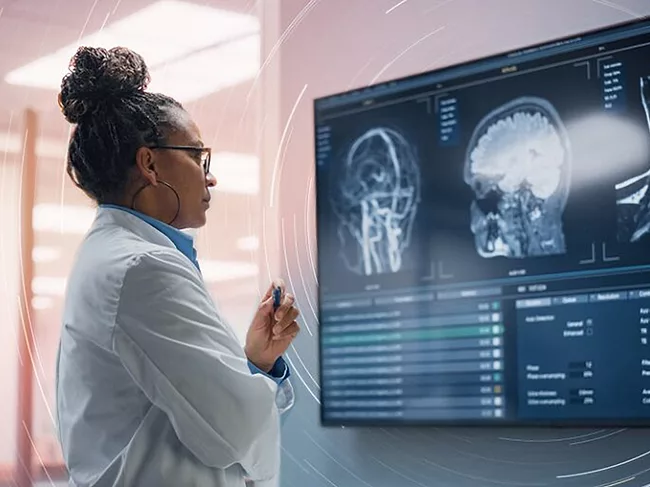
As artificial intelligence becomes more central to clinical radiology workflows, Deepc GmbH will use the €12 million (US$13 million) it recently raised in its series A round to develop additional features within its Deepcos radiology artificial intelligence (AI) platform to allow for faster and more accurate diagnoses.
Bayer AG acquired Blackford Analysis Ltd., a British developer of artificial intelligence systems that help make diagnoses using medical images in the U.K. and U.S. The companies did not disclose any financial details. “This deal is part of our strategy to drive innovation in radiology, including the development and adoption of AI within the workflow, with the goal of ultimately improving patient care and advance our position in digital medical imaging,” Stefan Oelrich, a board member at Bayer AG and president of Bayer’s pharmaceutical division, told BioWorld.
After shelving it for the past decade, the EU Parliament this week adopted a directive forcing large publicly listed companies to break the glass ceilings that have allowed a men-only mentality to thrive in corporate boardrooms across much of Europe. The so-called Women on Boards Directive, formally adopted Nov. 22, will require EU-based public companies to have women in at least 40% of their nonexecutive director posts or 33% of all director posts by the end of June 2026. Companies with fewer than 250 employees will be exempt.