Homerun success of Novo Nordisk A/S’ semaglutide, which recently became the U.S.’s biggest blockbuster drug, is serving as an “inflection point” for obesity therapeutics and fueling the drive for new and improved therapies, speakers said at Bio Korea 2024 on May 8.
In the wake of Novo Nordisk’s semaglutide nabbing the title of the U.S.’s biggest blockbuster drug, it’s little surprise that Amgen Inc.’s obesity candidate, Maritide (maridebart cafraglutide), hogged the stage during the firm’s first-quarter earnings call after market close May 2, with company executives touting promising phase II data and a differentiated profile, sending shares of Thousand Oaks, Calif.-based Amgen (NASDAQ:AMGN) up nearly 12% to close May 3 at $311.29.
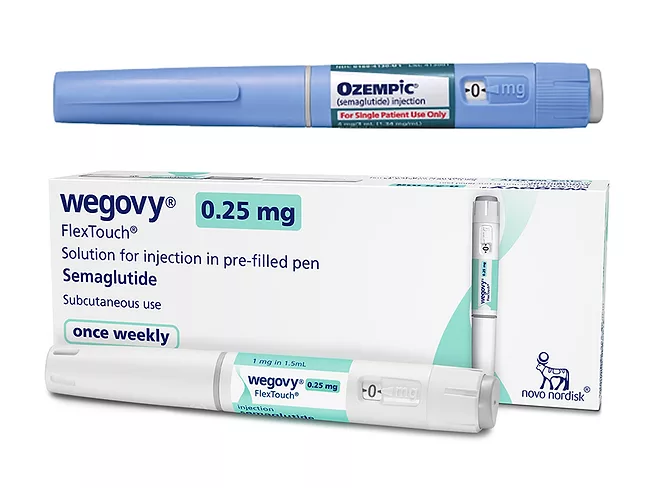
There was a time not that long ago when Merck & Co. Inc.’s Keytruda (pembrolizumab), with its multiple cancer indications, was seen as the heir apparent to Humira’s title of the biggest blockbuster drug. Not anymore. That title now belongs to Novo Nordisk A/S’ semaglutide, approved as Ozempic in 2017 to treat diabetes and as Wegovy in 2021 to help with weight loss.
Follow-on biologic makers in China have been working to capitalize on looming patent cliffs of blockbuster biologics. Advancing biosimilars of denosumab (Prolia/Xgeva; Amgen Inc.) and semaglutide are the latest examples.
Follow-on biologic makers in China have been working to capitalize on looming patent cliffs of blockbuster biologics. Advancing biosimilars of denosumab (Prolia/Xgeva; Amgen Inc.) and semaglutide are the latest examples.
Following the U.S. FDA’s March 11 approval of Novo Nordisk A/S’ glucagon-like peptide 1 receptor agonist, Wegovy (semaglutide), to reduce the risk of major adverse cardiovascular events such as heart attack and stroke, the Centers for Medicare & Medicaid Services (CMS) has issued guidance ensuring coverage.
Wegovy (semaglutide) has racked up another indication. The U.S. FDA approved the injectable for reducing risk of major adverse cardiovascular events such as death, heart attack or stroke and for long-term weight management. The approval expands the drug’s potential. The mighty glucagon-like peptide 1 receptor agonist from Novo Nordisk A/S was already approved for those age 12 and older who are obese and for some overweight adults with weight-related problems.
The demand for semaglutide, a GLP-1 drug, and other popular prescription weight-loss drugs is adding to the U.S. FDA’s regulatory load as more and more companies are offering unapproved knockoffs of the products directly to consumers. The FDA posted two warning letters Feb. 13 – to Miami-based US Chem Labs and a New-York company, Synthetix Inc. doing business as Helix Chemical Supply – citing the companies for misbranding unapproved semaglutide and tirzepatide, also a GLP-1 drug, by marketing them on the Internet, along with claims about their therapeutic benefits.
As Novo Nordisk A/S has struggled with supply of its GLP-1 drug Wegovy (semaglutide), its controlling shareholder, Novo Holdings A/S, has agreed to acquire global contract development and manufacturing organization Catalent Inc. and its more than 50 global sites for $63.50 per share in cash, about $16.5 billion.
If there is one therapeutic area for which numerous biopharma companies and investors have shown increasing amounts of interest in 2023, it is obesity through follow-on glucagon-like peptide-1 receptor agonists, as well as combination and solo efforts with other potential mechanisms. Analysts have suggested the obesity market (which includes overweight individuals) could grow to more than $50 billion by 2030. At least.