From local drug discovery to global innovation, economic uncertainty is taking a toll on China’s innovative biotech system, forcing local companies to weather unpredictable storms, investors said during the Chinabio Partnering Forum in Shanghai in September.
From local drug discovery to global innovation, economic uncertainty is taking a toll on China’s innovative biotech system, forcing local companies to weather unpredictable storms, investors said during the Chinabio Partnering Forum in Shanghai in September.
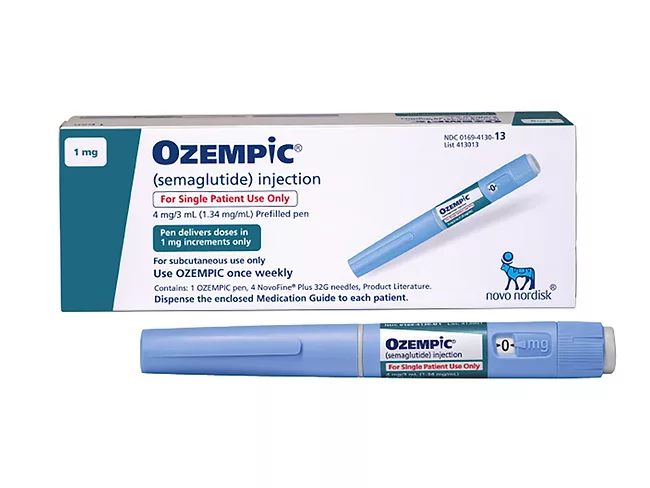
2024 was another banner year for GLP-1 receptor agonists (GLP-1RAs) on multiple fronts. They continued to expand into new indications, and provide their developers with both rich remuneration and scientific acclamation. There are now seven approved GLP-1RAs. Commercially, the most successful one so far is semaglutide, sold under the brand name Wegovy or Ozempic depending on the indication.
2024 was another banner year for GLP-1 receptor agonists (GLP-1RAs) on multiple fronts. They continued to expand into new indications, and provide their developers with both rich remuneration and scientific acclamation. There are now seven approved GLP-1RAs. Commercially, the most successful one so far is semaglutide, sold under the brand name Wegovy or Ozempic depending on the indication.
The Danish Medicines Agency is to ask the EMA’s pharmacovigilance committee to investigate a potential increased risk of an acute eye condition in diabetic patients being treated with the glucagon-like peptide-1 receptor agonist Ozempic (semaglutide).
Peptidream Inc. has released promising results from preclinical testing of its oral myostatin inhibitors, administered in combination with semaglutide, in a mouse model of obesity.
The European Commission approved Novo Holding A/S’ acquisition of Catalent Inc., a global contract development and manufacturing organization expected to help Novo Nordisk A/S keep up with increasing demand for its GLP-1 drug, Wegovy (semaglutide).
Although head-to-head results on tolerability were missing from the company’s data release, Eli Lilly and Co. said its U.S. FDA-approved weight-loss drug Zepbound (tirzepatide) beat the also-cleared Novo Nordic A/S compound Wegovy (semaglutide) in a phase IIIb study comparing the two.
Hangzhou Jiuyuan Gene Engineering Co. Ltd. raised HKD$485.4 million (US$62.38 million) in a November 28 IPO on the main board of the Hong Kong Stock Exchange (HKEX:2566).
Hangzhou Jiuyuan Gene Engineering Co. Ltd. raised HKD$485.4 million (US$62.38 million) in a November 28 IPO on the main board of the Hong Kong Stock Exchange (HKEX:2566).