Making them an antibiotic of last resort, the U.K.’s Medicines and Healthcare Products Regulatory Agency introduced new restrictions on the use of fluoroquinolones due to the risk of potentially long-term or irreversible side effects.
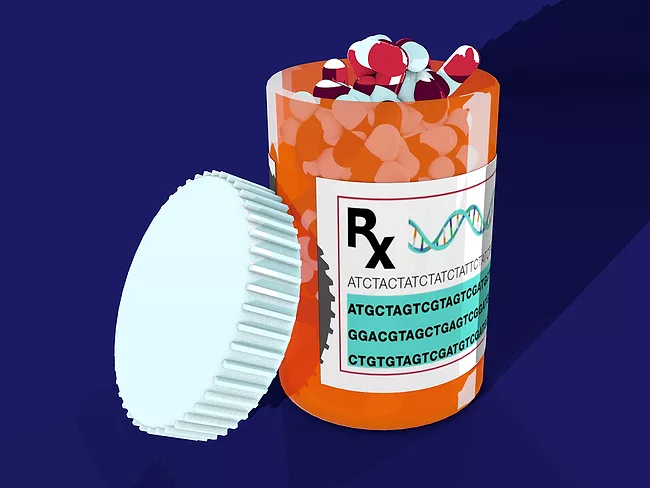
A landmark, real-world study in the U.K. has demonstrated that combining whole genome sequencing with clinical data enabled tailored cancer treatment and improved outcomes. At one health care center, having DNA sequence data led to changes from usual standard of care in 25% of cases. “Mostly, [patients] got into clinical trials; some got medicines they wouldn’t have got. Others avoided medicines because their genetic make-up suggested that if they were exposed to the medicines, they would be at risk of harm,” said Mark Caulfield, professor of clinical pharmacology at Queen Mary University of London, who is co-author of a paper outlining the findings in Nature Medicine, Jan 11, 2024.
A catastrophe was averted over the weekend of March 11-12, 2023, when the U.K. government and the Bank of England orchestrated the rescue of the U.K. arm of Silicon Valley Bank, after its U.S. parent was shut down by the receiver. While that saved dozens of small biotechs with large deposits at the bank, it signified the fragile economic environment during the year, compounded by wider geopolitical frictions, with a market described by Chris Hollowood, CEO of Syncona Investment Management, as “the worst in my career.”
The U.S. FDA put out a safety warning Nov. 28 that antiseizure drugs levetiracetam and clobazam can cause a rare but serious hypersensitivity drug reaction that may start as a rash but can progress to injure internal organs. In addition, U.K. health care providers are being told to get a plan in place now to implement the first phase of the Medicines and Healthcare products Regulatory Agency’s new regulatory measures to reduce the risks of valproate, a treatment for epilepsy and bipolar disorder.
The long-running row over the U.K. voluntary scheme that controls the national drugs budget has been settled, in what the industry is describing as a “tough deal.” Under the scheme there is an annual cap on total sales of branded drugs to the National Health Service, with sales over the agreed limit reimbursed via a levy. In 2022, pharma companies paid back £2 billion (US$2.5 billion) in rebates on total sales of £14 billion. In the new five-year agreement, the allowed annual increase in sales will be 2% in 2024, the same as across the current scheme from 2019 – 2023, but it will then increase to 4% by 2027.
Researchers have for the first time used human neural stem cells to print 3D brain tissues that mimic the architecture of the brain’s outer layer, the cerebral cortex. This breakthrough technique, developed by a team from the U.K.’s University of Oxford, could one day be used to provide tailored repairs to the millions of people who suffer from severe brain injuries, for which there is no effective treatment.
The U.K. Medicines and Healthcare Products Regulatory Agency (MHRA) has converted its regulatory sandbox for artificial intelligence (AI) into a full-fledged program dubbed the AI-Airlock, described as a regulatory-monitored virtual area in which industry can “generate robust evidence for their advanced technologies.” MHRA said it is focused on ensuring that AI products are available in the U.K. “before they are available anywhere else in the world,” a sign that national economic competitiveness is fostering a regulatory willingness to deal with uncertainty about this class of products.
The U.K. National Institute for Health and Care Excellence (NICE) is offering provisional coverage for digital health technologies for specialist weight-management services as part of its early value assessment (EVA) series.
Researchers have for the first time used human neural stem cells to print 3D brain tissues that mimic the architecture of the brain’s outer layer, the cerebral cortex. This breakthrough technique, developed by a team from the U.K.’s University of Oxford, could one day be used to provide tailored repairs to the millions of people who suffer from severe brain injuries, for which there is no effective treatment.
With an eye on making the U.K. more attractive for clinical trial research, the Medicines and Healthcare products Regulatory Agency took a step Oct. 12 to overhaul its clinical trials regulations by reducing the approval time for the lowest-risk studies.