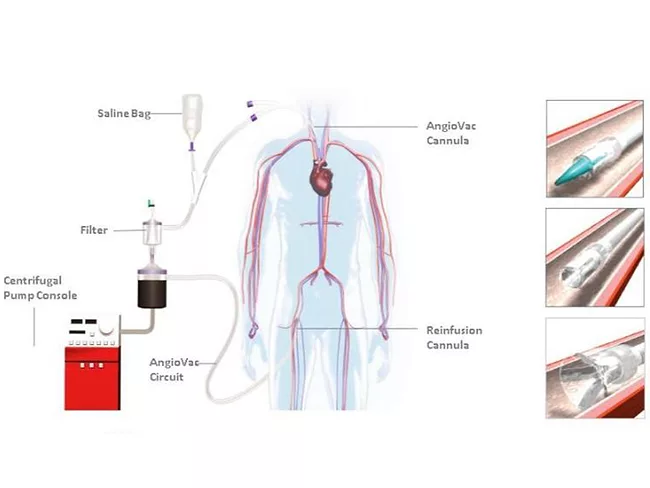
Lush vegetation is great for a gardener, but alarming for a cardiologist. For them, the news that Angiodynamics Inc. received U.S. FDA breakthrough device designation for its Angiovac system to remove vegetation from the right heart is surely cheering. Right heart vegetations--masses of fibrin, platelets and infectious pathogens--are indications of serious infective endocarditis.
The Biden administration recently announced an extension of the comment period for a request for information on harmonization of cybersecurity regulation, a proposal that could conflict with FDA regulation of medical device cybersecurity.
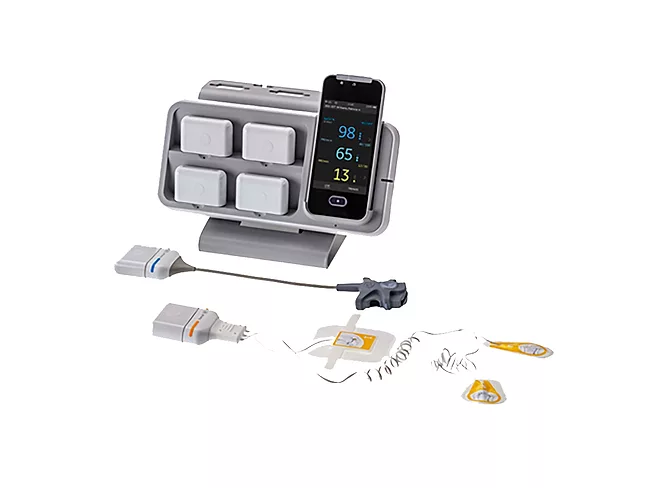
A timely discharge from the hospital requires that a lot of things go just right, and GE Healthcare just scored a win from FDA for its Portrait vital signs monitoring system that offers wireless, wearable tracking of oxygenation, pulse and respiration rate. GE said this system allows patients to be mobile during those first few critical hours post-surgery while providing non-stop vital sign tracking, a development that may allow clinicians to intervene more quickly when problems arise and thus help the patient recover and head home without setbacks.
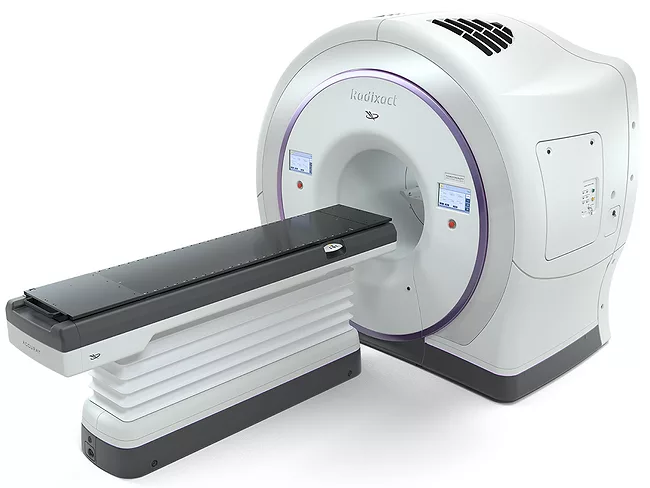
Accuray Inc. offered a classic good news-bad news set-up for investors on Wednesday, with a notable FDA 510(k) clearance balanced by a miss on fourth quarter revenue and projections for fiscal year 2024 significantly below consensus expectations. Still, the takeaway is generally positive, with several strong catalysts expected to build momentum for the company in the coming year and much of the underperformance attributable to foreign exchange headwinds that have plagued many med-tech companies.
The U.S. FDA’s final guidance for premarket submissions for device software functions serves as a much needed overwrite of a badly outdated policy but includes some significant changes over the legacy guidance. There are also a few changes between the 2021 draft and the 2023 final guidance, however, such as a call for more details about how software anomalies were discovered and what a root cause analysis would suggest about the origin of the anomaly.
The debate in the U.S. over the process by which the Medicare program covers new medical technologies has intensified over the past three years and the debate has now spilled onto the pages of the Journal of the American Medical Association. An article in JAMA asserts that only 44% of a group of 64 novel devices had achieved meaningful coverage and reimbursement milestones within a median of 5.7 years after FDA market authorization, adding yet more pressure on the legislative and executive branches to act to deal with what device makers characterize as the med-tech valley of death.
Premature babies face challenges in the neonatal intensive care unit (NICU) as their heart, lungs and neurological system continue to develop outside the womb. Roughly half of neonates born at 26 weeks to 28 weeks gestation experience respiratory distress. These infants often need extra oxygen and help breathing, as well as constant monitoring to ensure oxygen is absorbed and carbon dioxide (CO2) is dispelled. To that end, Etiometry Inc. received FDA clearance for its IVCO2 Index, a software tool for use in monitoring risk of hypercapnia in NICU patients weighing less than 2 kg.
The U.S. FDA unveiled a proposal to once again reshuffle its operations, this time with a greater degree of emphasis on the function of the Office of Regulatory Affairs (ORA). Tim Philips, a consultant with Gardner Law and a former member of the FDA, told BioWorld that while these changes will likely yield some useful efficiencies, they might also dilute some of the more useful interaction between industry and FDA, a loss that may be keenly felt when it comes to matters such as FDA inspections.
During the week of July 24, 2023, the FDA published several notifications of potentially elevated risks associated with medical devices, including a recall of a delivery sheath for the Amplatzer device by Abbott Laboratories. The agency also announced that Abiomed Inc. will provide a correction for the instructions for use (IFUs) for the Impella because of an issue seen when implanting the left ventricular assist device in patients with transcatheter aortic valve replacement (TAVR) devices.
In its first untitled letter in more than a year, the U.S. FDA’s Office of Prescription Drug Promotion (OPDP) took Xeris Biopharma Holdings Inc. to task for two webpages promoting the company’s Recorlev.