Creative Balloons GmbH has changed its name to Advanced Medical Balloons GmbH and is bringing its fecal management system, Hygh-tec, to the U.S. market after receiving clearance from the U.S. FDA. Hygh-tec is a microscopically thin polyurethane balloon catheter system which enables reliable, sealed access to the colon preventing fecal leakage from patients in intensive care units.
A subcommittee of the U.S. House Ways and Means Committee met to review the status of policies for novel medical devices and drugs, but a partisan rift was immediately evident at the hearing. House Democrats were generally in favor of more drug price negotiation power for the federal government and opposed to immediate Medicare coverage of breakthrough medical devices while Republicans generally steered in the opposite direction, suggesting that drug and device makers should not expect clear legislative sailing over the course of the 118th Congress.
An increasing number of European med-tech companies are first seeking regulatory approval from the U.S. FDA because of the growing backlog and frustrations with requirements under the new regulatory framework of the EU Medical Device Regulation (MDR), which has been described as “not working.”
The regulatory record for successful replacements of the human meniscus is thin, but the latest attempt came up short as a U.S. FDA advisory committee voted 6-2 that the benefits of the Nusurface device by Active Implants LLC did not present an acceptable benefit-risk ratio. The device is commercially available in both the European Union and in Israel, however, suggesting that Memphis, Tenn.-based Active will not give up on the massive U.S. market, which offers a patient population that will undergo a tsunami of total knee replacements in the decades ahead unless a solution for the epidemic of cartilage degeneration can be found.
Citing significant concerns of bacterial contamination, the FDA urged consumers and health care providers to stop using specific lots of SD Biosensor Inc.’s Pilot COVID-19 At-Home Tests, which were distributed by Roche Diagnostics Systems Inc. The agency warned that direct contact with the contaminated liquid solution could pose safety issues as well as impair the test’s performance.
In a draft guidance released May 2, the U.S. FDA provided recommendations for sponsors, investigators and other stakeholders for implementation of decentralized clinical trials (DCTs) to advance research in medical devices, drugs and biologics. This week’s announcement responds to the Food and Drug Omnibus Reform Act, signed into law late last year, which required the agency to “issue or revise draft guidance that includes recommendations to clarify and advance the use of decentralized clinical studies to support the development of drugs and devices.”
Elidah Inc. expanded its line of U.S. FDA-cleared, over-the-counter devices to reduce or eliminate urinary incontinence in women with the launch of Elitone Urge for urge incontinence. The device is a muscle stimulator that can be worn under clothes as the user goes about her day and rebuilds muscle tone.
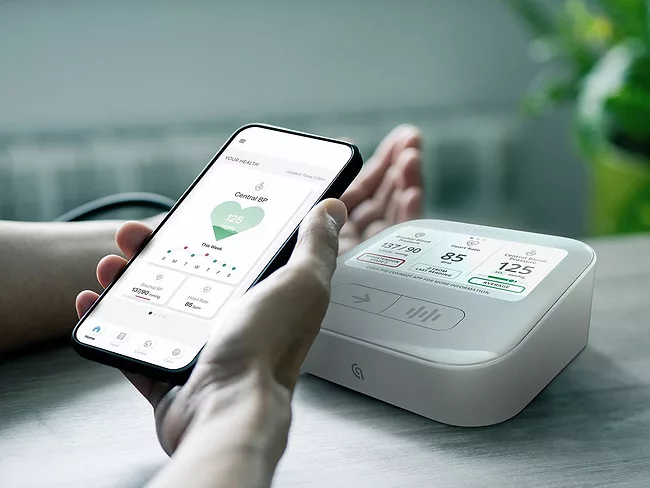
Cardiex Ltd. won U.S. FDA clearance for its Conneqt Pulse vascular biometric monitor. According to the digital health and wearables company, the device is the first in the world to provide measurements of both brachial blood pressure in the arm and central blood pressure in the heart and aorta, as well as arterial waveform analysis and other clinically relevant vascular biomarkers, outside the hospital, research institutions or clinical trial sites.
Ultromics Ltd. has been granted a U.S. FDA breakthrough device designation for its artificial intelligence (AI)-enhanced platform to aid early diagnosis of cardiac amyloidosis. Echogo Amyloidosis uses AI to analyze echocardiograms and detect the presence of cardiac amyloidosis, using a single commonly acquired ultrasound view of the heart. The platform was developed with the support of Janssen Biotech Inc., part of the Janssen Pharmaceutical Companies, a unit of Johnson & Johnson.
Regulatory harmonization is perhaps highest on the regulatory wish list of medical device manufacturers, but the FDA’s device center has tamped down expectations of a medical device single review program. Jeff Shuren, director of the Center for Devices and Radiological Health (CDRH) said the agency will release a strategic plan later this year for regulatory harmonization, but declined to offer any details other than to state that differences in risk classification schema are not as significant a source of drag on harmonization as may commonly be believed.