As new and ongoing drug shortages in the U.S. limit patients’ access to essential medicines and life-saving cancer treatments, the blame largely has fallen on increased demand, quality problems, the supply chain and lack of transparency in that chain.
Since accelerated approvals first began to be granted in 1992, their pace for cancer indications has increased dramatically but a revolution in science has made it tough for the U.S. FDA to find its balance.
The U.S. FDA has awarded Locate Bio Ltd. a breakthrough device designation for its Ldgraft spine fusion product for the treatment of degenerative disk disease, paving the way to the first in human study later this year.
Artivion Inc. (formerly Cryolife Inc.) received U.S. FDA premarket application (PMA) approval of its Perclot absorbable hemostatic system and promptly sold the product line to Baxter International Inc., in keeping with the terms of an agreement announced in July 2021. Artivion will begin shipping Perclot product to Baxter following receipt of a milestone payment of $18.75 million in cash, of which $4.5 million will go to Artivion’s former partner Starch Medical Inc.
The U.S. FDA granted clearance to two tests developed by Thermo Fisher Scientific Inc. to predict preeclampsia, Brahms PIGF plus Kryptor and Brahms sFlt-1 Kryptor. Both had previously received breakthrough designation. Preeclampsia, a hypertensive disorder, is the leading cause of maternal and fetal mortality and morbidity across the globe.
Amsterdam-based Royal Philips NV has posted the data from the complete set of third-party testing of the polyester-based polyurethane (PE-PUR) sound abatement foam used in its first-generation CPAP and other devices, and the news is not good for the U.S. FDA. These third-party evaluations have concluded that the foam used in these first-generation devices is unlikely to exert any “appreciable harm” to patients, a conclusion that runs directly counter to the FDA’s implicit argument about the foam.
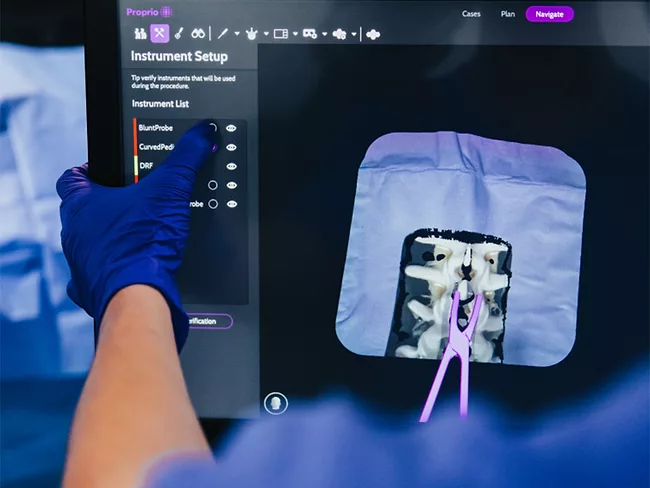
A surgical navigation platform developed by Proprio Inc., that is intended to replace traditional surgical technologies which produce harmful radiation and can impede surgical workflow, won U.S. FDA 510 (k) clearance.
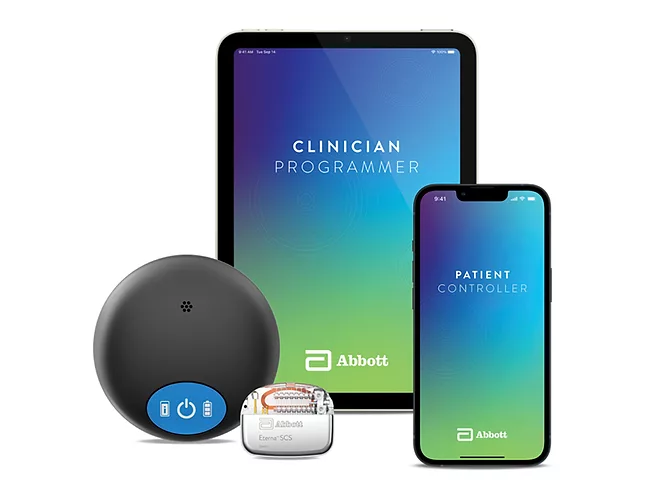
Abbott Laboratories received U.S. FDA approval for an expanded indication for its spinal cord stimulator (SCS) devices to include treatment of chronic back pain for individuals who have not had or are ineligible for back surgery. The FDA based its decision on the positive results from the DISTINCT study which showed that 85.2% of patients implanted with the SCS devices achieved significant reduction in back pain compared to 7.1% of those who received conservative medical management.
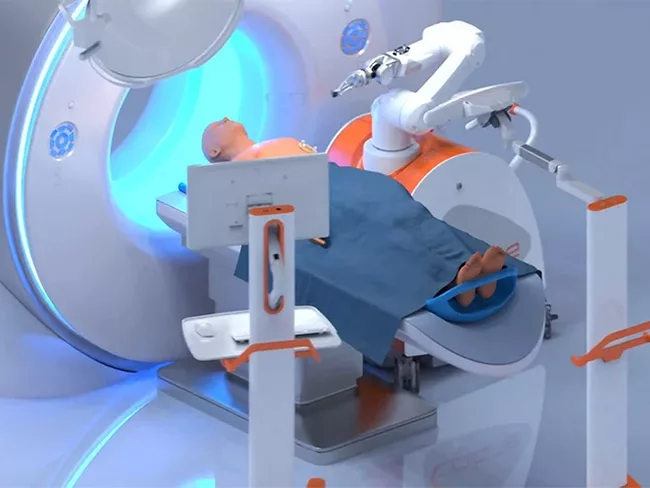
Quantum Surgical SAS has obtained an extension to the FDA authorization covering its Epione robot, which can now treat abdominal cancers. “This decision now allows physicians to treat all abdominal tumors at an early stage and will ramp implementation of our Epione robotics solution in the U.S.,” said Bertin Nahum, CEO and co-founder of Quantum Surgical. Marketed in Europe and the U.S., the Epione robot has already been used to treat more than 150 patients with liver or kidney cancer.
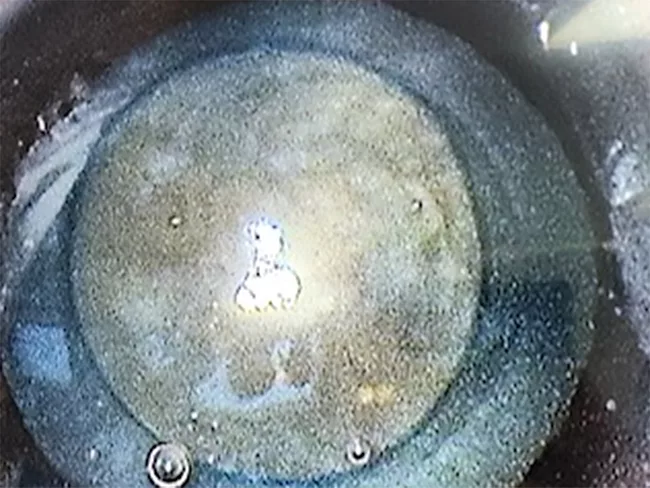
Centricity Vision Inc. received U.S. FDA clearance for technology designed to integrate with modern phacoemulsification or “phaco” systems that use ultrasound energy to emulsify the eye's native internal lens during cataract surgery. Centricity’s new Zeptolink interocular lens (IOL) positioning system is used in conjunction with phaco systems to surgically remove the natural lens of the eye as the first step in cataract surgery.