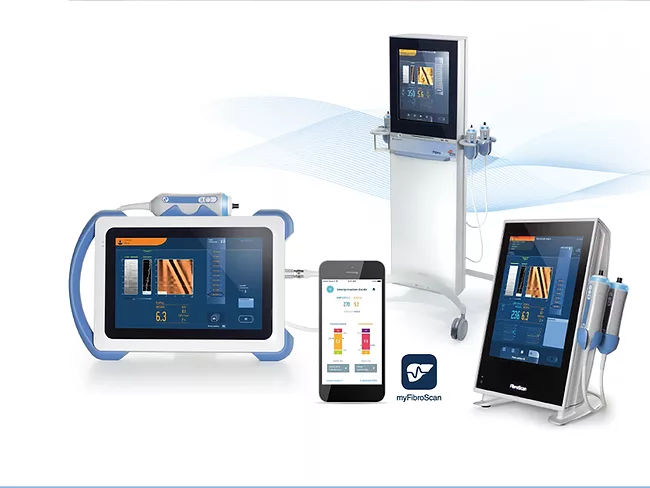
Echosens SA obtained clearance from the U.S. FDA to expand the indications for screening with its Fibroscan system. The approval removes contraindications for pregnancy and active implant and includes patients with confirmed or suspected liver disease. It designates Fibroscan as a noninvasive aid for clinical management, diagnosis and monitoring of adult and pediatric patients with liver diseases. The age has been removed as the first selection probe and exam-type step.
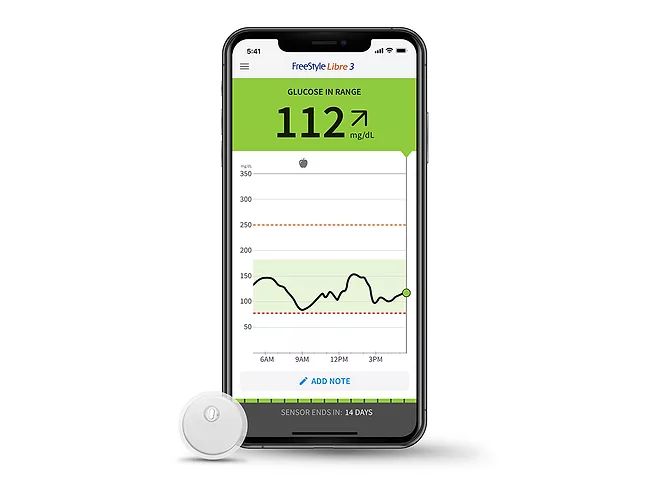
Batteries used in medical devices don’t always perform as expected, but Abbott Laboratories has issued an advisory to users of its Freestyle glucose monitoring systems in connection with overheating of the batteries used in the device’s readers, a problem the company said is not related to the batteries themselves. Abbott Park, Ill.-based Abbott has received reports of battery swelling and overheating in the reader unit, but advised users that use of non-Abbott charging cables seems to drive the risk of such episodes, urging users to stick with the USB charging cables that came with the readers.
The U.S. FDA has wrapped up an October 2015 draft guidance for animal studies for medical devices, which prompted some lengthy responses from stakeholders concerned about some unique terms, such as device “handling.” Despite industrial opposition to the inclusion of that term, the final guidance retains the term handling and defines it in part as the manner in which the device “responds to the demands of the operator,” a term that may or may not be encompassed by the FDA’s overarching policy for human factors engineering.
The U.S. FDA has issued a guidance on when to file a new 510(k) for a class II device that has undergone significant modification, but that doesn’t mean everyone in the device business is paying attention. The FDA hit Synovo Production Inc., of Fullerton, Calif., for a number of violations of the Quality System Regulation (QSR), but also alleged that the manufacturer/specification developer made a number of modifications to its femoral resurfacing cup for hip implants without a new regulatory filing, leading the agency to direct the company to immediately cease production of the device.
The U.S. FDA has been working for some time to develop less clunky regulatory mechanisms for digital health products, but Jeff Shuren, director of the agency’s Center for Devices and Radiological Health, has been touting a voluntary alternative pathway (VAP) as a modernized approach to premarket review.
The granting of breakthrough device designation from the U.S. FDA to Pixium Vision SA for its Prima system was a boon for the company as its share price jumped more than 300% following the news. The price increase was “validation from the public market and investors” that the Prima system, for dry age-related macular degeneration (AMD), has the potential to get regulatory approval, Lloyd Diamond, CEO of Pixium, told BioWorld.
More than four years after it was given the authority to do so, the FDA is requiring manufacturers of opioid painkillers dispensed in outpatient settings to make prepaid mail-back envelopes available to pharmacies and other dispensers as part of their risk evaluation and mitigation strategy (REMS).
Developers of artificial intelligence (AI) and machine learning (ML) algorithms have found themselves returning repeatedly to the U.S. FDA for seemingly modest updates to their products, a problem that may soon be relieved by an FDA draft guidance on predetermined change control for AI and ML. However, Brad Thompson of Epstein, Becker & Green, P.C., told BioWorld that the terms of the draft “hugely increases the burden on developers to plan ahead” in order to obtain that postmarket relief from repeated 510(k) filings, a concession that device manufacturers and software developers may be more than willing to make.
The U.S. FDA’s December 2022 draft guidance for human factors (HF) information in medical device premarket filings is a complete do-over of a previous draft guidance from 2016, but the reaction from industry has been anything but cheerful. Several observers, including the Medical Device Manufacturers Association (MDMA), hammered the new draft guidance for its introduction of the concept of a critical task due to the expansive effect that would have on the need for human factors studies for medical devices.
The U.S. FDA reported yet another recall of intra-aortic balloon pumps made by Datascope Corp., an unfortunate development for patients in need of these devices that are still on the FDA’s list of devices that are in short supply. While no injuries or deaths have been reported in connection with the coiled connector cables that prompted the recall, the need to replace these cables could further crimp units needed to sustain patients during cardiac surgery procedures.