Countries in the Asia Pacific (APAC) region have an opportunity, or a time-limited “gap,” to become leaders on the global biotechnology stage, panelists at the Bio Asia 2025 conference said in Singapore Sept. 9.
Europe was a bigger counterpart to China in pharmaceutical dealmaking than the U.S. last year, speakers at Chinabio Partnering Forum said April 23, and the trend is likely to continue in 2025 with the shuttering of U.S. capital and volatility ailing global markets.
Europe was a bigger counterpart to China in pharmaceutical dealmaking than the U.S. last year, speakers at Chinabio Partnering Forum said April 23, and the trend is likely to continue in 2025 with the shuttering of U.S. capital and volatility ailing global markets.
China is deepening its regulatory reforms of drugs and devices to foster a globally competitive innovation ecosystem to transform China from a major pharmaceutical manufacturer into a global pharmaceutical powerhouse.
China is deepening its regulatory reforms of drugs and devices to foster a globally competitive innovation ecosystem to transform China from a major pharmaceutical manufacturer into a global pharmaceutical powerhouse.
As investors and industry alike try to read the tea leaves of what the upcoming change in administrations holds for the U.S., speculation abounds about what Trump 2.0 will mean for the biopharma and med-tech spaces.
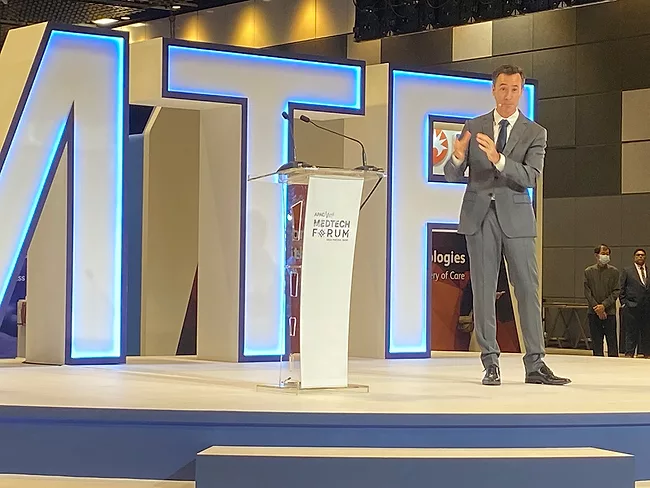
A decade ago, when Asia Pacific Medical Technology Chairman (APACMed) John Collings was running a medtech business in China, he was flying high with multiple rounds of investment under his belt and preparing to launch two new technologies, but the company hit a regulatory hurdle that delayed the launch and he found himself grappling for answers, he told the APACMed Forum held Sept. 5 in Singapore.
To take clinical trial innovation to the next level, the U.S. FDA’s Center for Drug Evaluation and Research (CDER) is opening the CDER Center for Clinical Trial Innovation. The center, known as C3TI, “will be a central hub within CDER to support the implementation of innovative approaches to clinical trial design and conduct,” said Kevin Bugin, CDER’s lead for C3TI and deputy director of operations in the Office of New Drugs.
Anvisa launched a pilot program to help Brazilian biopharma startups navigate the regulatory path from the initial phases of product development. In addition to providing regulatory support, the goal of the program is to accelerate the process of drug innovation in the country.
Body: The U.K.’s Medicines and Health Care Products Regulatory Agency (MHRA) has a program designed to facilitate more rapid market access for medical devices of urgent need, and now the agency has put money into the policy.