Wysa Ltd.’s artificial intelligence-based digital therapy received FDA breakthrough device designation for adults with chronic musculoskeletal pain, depression and anxiety. The device delivers cognitive behavioral therapy (CBT) via a digital companion or conversational agent on a smartphone.
Cybersecurity remains a pressing issue for medical technology, in part because there are new, small companies jumping into this space seemingly every day. However, there is a shortage of talent in cybersecurity, something that Dan Lyon, director of cybersecurity at Boston Scientific Corp., of Marlborough, Mass., said will not ease soon due to a lack of interest among colleges and universities in providing curriculum and degrees in this area.
With cancer treatment success rates rising, the field of precision oncology is poised to grow as clinicians aim to move treatment from a one size fits all approach to personalized treatment regimens. Israeli startups including Oncohost Ltd., Nucleai Ltd. and Gina Life Diagnostics Ltd. are part of an emerging wave of companies utilizing artificial intelligence (AI) and machine learning (ML) techniques to personalize the future of cancer diagnostics.
Be’er Sheva, Israel-based Dia Imaging Analysis Ltd. has partnered with technology conglomerate Intel Corp. to accelerate the analyzing time of its artificial intelligence (AI)-based cardiac ultrasound software. Dia said Intel’s Open Vino toolkit will optimize the processing time of its Lvivo Seamless solution by over 40%.
Investors showed some love to French remote patient monitoring and cardiac data startup Implicity SAS, contributing $23 million to the company’s series A financing round. New investors Crédit Mutuel Innovation and Bpifrance led the round with support from BNP Paribas Development and returning seed investors Serena, Xange and Karista.
Blackrock Neurotech LLC has acquired spatial computing software startup Mindx Corp. to advance full-stack brain-computer interface (BCI) products. As part of the transaction, Mindx’s augmented reality (AR) and artificial intelligence (AI) technology will be integrated with Blackrock’s BCI hardware.
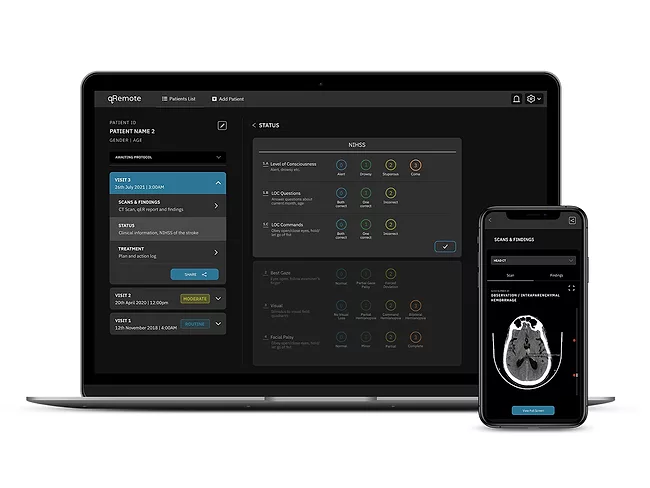
Health tech firm Qure.ai Technologies Private Ltd. has secured a $40 million investment from investors including Novo Holdings and Healthquad to expand its portfolio of automated artificial intelligence (AI)-based imaging diagnostics. The company’s suite of technologies incorporates deep learning and AI to interpret radiology images such as X-rays, CTs, and ultrasounds in less than a minute.
Roche Diagnostics International Ltd. is joining forces with Bristol Myers Squibb Co. (BMS) to develop two new digital pathology algorithms to support cancer assay use in clinical trials. Roche Digital Pathology will create an artificial intelligence (AI) based image analysis algorithm to assist pathologists in interpreting the company’s FDA-approved Ventana D-L1 (SP142) assay for urothelial carcinoma patients. BMS will use the algorithm to generate biomarker data from clinical trial samples.
Zeta Surgical Inc. has raised $5.2 million in seed funding to improve the accuracy and safety of image-guided surgical procedures through its Zeta neurosurgical navigation platform. Zeta CEO Jose Maria Amich told BioWorld the funding will also advance a non-invasive ultrasound system for imaging the brain and help complete initial clinical studies for its FDA approvals application.
Rather than focus on making one drug at a time, Creyon Bio Inc. is taking its more than $40 million in seed and series A financing to build its platform to understand the genetic roots of disease and then create precision medicines. Creyon is creating datasets to engineer RNA-based and single-stranded oligonucleotide-based medicines (OBMs) in addition to DNA and RNA editing systems. Those datasets are tailored to deliver models that create OBMs that are safe and effective for treating both common diseases and rare diseases.