The scientific establishment has launched a fight back against the Trump administration and the slew of executive orders that threaten to dismantle research funding, with a warning that the next month could be critical for the future of U.S. science.
The scientific establishment has launched a fight back against the Trump administration and the slew of executive orders that threaten to dismantle research funding, with a warning that the next month could be critical for the future of U.S. science.
“This current administration is like nothing that we've seen before,” said a managing partner of a global venture capital firm who spoke to BioWorld on the condition of anonymity. “President Trump’s first term was bad,” he said, “but nobody knows what’s coming.” “This is truly nationalism at its worst, because he won on the campaign [largely] to protect American jobs, claiming that Americans have been unfairly treated.” And it's not just China, he said, but India and other countries will also likely be affected.
The immediate implementation of the U.S. NIH’s guidance to cut indirect costs included in its grants to 15% was quickly halted late Feb. 10 when a federal district judge granted a nationwide temporary restraining order in two separate challenges to the cuts that were to go into effect that day on all existing and new NIH grants.
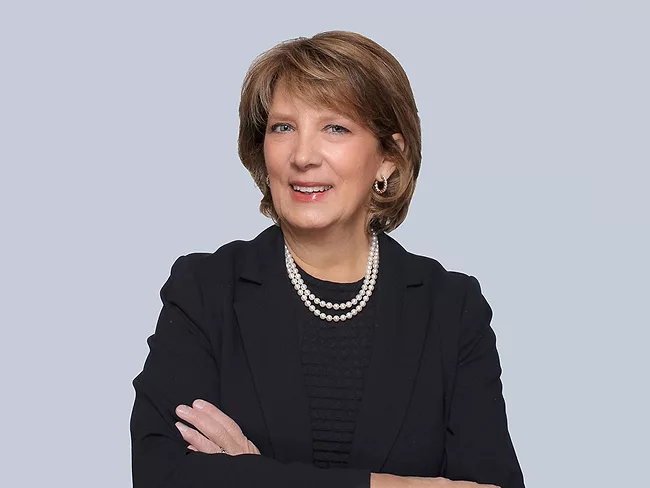
Cognition Therapeutics Inc. evolved from the work of a neuroscientist and a chemist working in the San Francisco Bay area, seeking out targets to block the effects of Alzheimer’s disease. Since the company’s 2007 inception, it has received close to $200 million in U.S. NIH grant funding. Investors often tell CEO Lisa Ricciardi, who joined the company in 2020: “’That’s because you have a relationship with the FDA.’ Well, no. It’s because it’s competitive” and the company’s research has met the muster. “You have to apply two or three times. … It’s with rigor that these results are generated and that we’re able to get more funding.”
From Feb. 10, the U.S. NIH is to cut the amount of its grants that go to indirect costs, in a move it says will save $4 billion per annum, but which scientists say will hit breakthrough biomedical research. The NIH announced the cut on Friday, Feb. 7, saying there would be a flat rate of 15% for indirect costs, such as running laboratories, buying and maintaining equipment, data processing and storage, across all of its grants. That compares to an average rate historically of between 27% and 28%, the NIH said.
“This current administration is like nothing that we've seen before,” said a managing partner of a global venture capital firm who spoke to BioWorld on the condition of anonymity. “President Trump’s first term was bad,” he said, “but nobody knows what’s coming.” “This is truly nationalism at its worst, because he won on the campaign [largely] to protect American jobs, claiming that Americans have been unfairly treated.” And it's not just China, he said, but India and other countries will also likely be affected.
The second Trump administration already left a large footprint on the administrative state as it took on trading nations with tariffs that affect device makers. Among these controversies is the question of whether gender should be included in regulatory considerations, such as in the case of a recent update on a 2014 guidance that has been removed from the device guidance webpage.
To say that European investors are optimistic about the outlook for the med-tech sector in 2025 is an understatement. A couple of companies are already listed on public markets, acquisitions have been undertaken and med-tech players with cash-rich balance sheets are on the hunt.
President Donald Trump’s penchant for tariffs as a negotiating tool was on full display when he slapped a 25% tariff on products coming from Mexico and Canada – which may already been suspended in the case of Mexico. The actual impact of the tariffs on med tech is nonetheless tough to gauge due in no small part to the prospect that manufacturers will simply pass on at least part of the tariff to its customers in the U.S.