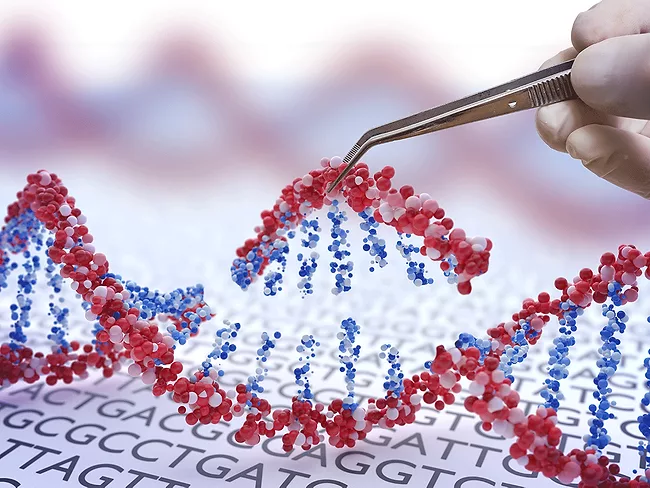
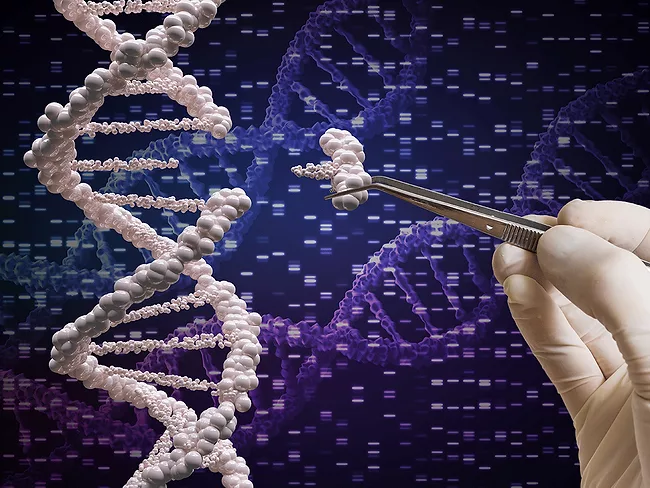
Programmable genome insertion of long DNA sequences, useful for both gene therapy and basic research, commonly relies on cellular responses to double-strand breaks (DSBs) using programmable nucleases, such as CRISPR-Cas9, for induction of repair pathways such as non-homologous end joining (NHEJ). To overcome the current limitations of gene integration approaches, scientists from the Massachusetts Institute of Technology and colleagues developed a new strategy based on advances in programmable CRISPR-based gene editing, such as prime editing, together with the application of precise site-specific integrases.
Increased payload capacity for gene therapies, off-the-shelf genome-engineered allogeneic cell therapies, reduced cost of goods and faster bioprocesses, are promised by “big DNA” specialist Replay Holdings LLC. The newco arrived with a $55 million seed round and having assembled a portfolio of technologies for writing and delivering large pieces of DNA.
Brain-wide genome editing via a single systemic dose of modified adeno-associated virus variants that cross the blood-brain barrier may represent a promising new approach for the development of disease-modifying treatments for familial Alzheimer's disease.
LONDON – The World Health Organization (WHO) is to set up a channel for confidential reporting of illegal, unregistered, unethical or unsafe human genome editing research, as part of a new governance framework it is proposing to develop.
Advances lately in the genome-editing space include Beam Therapeutics Inc. publication in The CRISPR Journal details of its work with inlaid base editors, which the firm is applying in the BEAM-102 program for sickle cell disease. IBEs’ predictable, shifted editing window lets researchers go after disease-causing mutations that canonical base editors cannot reach, Beam said, and do the job with high efficiency and few off-target effects on the genome. The hottest news due in the near-term future from the sector will spill from Intellia Therapeutics Inc., of Cambridge, Mass., which is due to roll out first-in-human data with a systemic CRISPR-based genome editing therapy, NTLA-2001, in hereditary transthyretin amyloidosis.
Genome editing startup Edigene Inc. has raised RMB450 million ($67 million) in a series B financing round to move two of its programs for blood diseases into clinical trials. The financing round was led by 3H Health Investment, and supported by Sequoia Capital China, Alwin Capital and Kunlun Capital. Previous investors such as IDG Capital, Lilly Asia Venture, Huagai Capital and Green Pine Capital Partners also joined the round.
Surprising no one, Jennifer Doudna and Emmanuelle Charpentier won the 2020 Nobel Prize in Chemistry “for the development of a method for genome editing,” that is, the CRISPR/Cas9 system.
Scribe Therapeutics Inc., another CRISPR-based genome editing firm out of the Jennifer Doudna stable, launched with $20 million in series A funding and a deal with Biogen Inc. in amyotrophic lateral sclerosis (ALS), which brings in another $15 million up front and up to $400 million in development and commercial milestones.
A team at the Broad Institute of Harvard and MIT has developed a genome editing method that could, in principle, correct 90% of the roughly 75,000 currently known genomic changes that are associated with genetic diseases.