TORONTO – Spino Modulation Inc., a subsidiary of Montreal-based med-tech company Spinologics Inc., has received breakthrough device designation for a vertebral body tethering (VBT) device to treat adolescent idiopathic scoliosis, one of three types of scoliosis that cause the spine to develop an abnormal curve.
The FDA granted breakthrough device designation for the Hyalex Cartilage System, a biomimetic materials platform designed to restore function and repair cartilage defects in the knee. The system, developed by Hyalex Orthopaedics Inc., combines two polymers that improve adhesion on one side and create a low-friction surface that protects the cartilage counterface on the other.
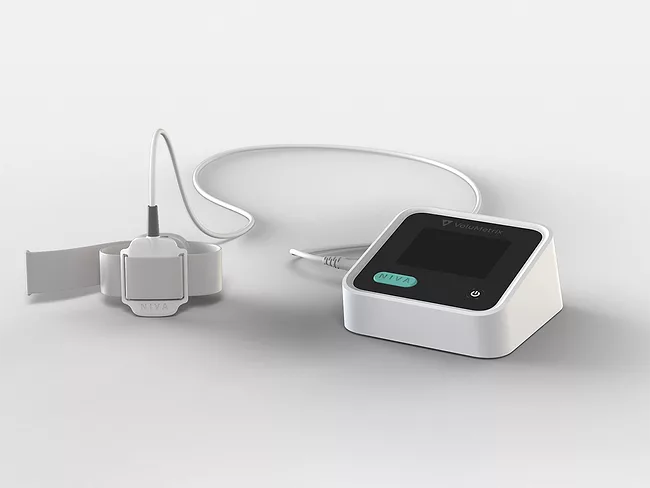
The FDA granted breakthrough device designation to Volumetrix LLC for its NIVAHF monitoring system for heart failure. The device is the first application of the company’s noninvasive venous waveform analysis (NIVA) technology, which captures and analyzes vital information about blood volume to assess patient status.
Imagine an orthopedic implant that not only accelerates bone healing but also captures data to support real-time clinical decisionmaking. That’s the vision of Intelligent Implants Ltd., whose Smartfuse system recently won FDA breakthrough device designation. The first indication is for lumbar spinal fusions.
The FDA has granted breakthrough device designation to Micro Interventional Devices Inc. (MID) for its Mia-T percutaneous tricuspid annuloplasty system. The company will enjoy increased communication with the agency and priority review as it pursues regulatory approval.
Woebot Labs Inc. got a bit of a pick-me-up with the FDA's decision to grant breakthrough device designation to the company's digital therapeutic for postpartum depression. The WB001 app combines cognitive behavioral therapy with interpersonal psychotherapy and an understanding of how postpartum depression affects interactions and daily life. The investigational treatment is designed as an eight-week, prescription-only intervention for women under a physician’s care.
The FDA’s breakthrough devices program encodes a number of policy objectives for the agency, but industry might see the program principally as a vector for faster time to market. However, Janice Hogan, partner at Hogan Lovells US LLP, said device makers might want to consider that the greater benefit is reducing regulatory uncertainty, not beating the typical FDA review clock.
Despite support from a wide range of stakeholders and bipartisan congressional support, the U.S. CMS has suspended implementation of the Medicare Coverage of Innovative Technology (MCIT) rule through Dec. 15, 2021. CMS argued that most of the approved or cleared breakthrough devices are already covered through existing payment mechanisms, but the delay opens the door to any one of multiple possible legislative solution, such as follow-on legislation to the 21st Century Cures Act.
Avenda Health Inc. has taken a page out of the breast cancer book with a new technology that offers very localized treatment of prostate tumors in a procedure the company refers to as a prostate cancer lumpectomy. The FDA granted breakthrough device designation to the product based on its potential to transform care for one of the most common cancers.
PERTH, Australia – The FDA granted Oncores Medical Pty. Ltd. breakthrough device designation for its quantitative micro-elastography (QME) imaging system. The hand-held imaging tool helps surgeons differentiate between cancerous and healthy tissue in real time at the point of surgery, and it could substantially improve outcomes in breast-conserving surgery (BCS) and reduce repeat operations for women with breast cancer.