The European Medicines Agency (EMA) has launched a pilot program to fast track breakthrough medical devices in the EU and get lifesaving technologies to patients sooner. The program will allow for companies to obtain scientific advice from the expert panels intended to support evidence generation and clinical development of their devices.
The force is with Field Medical Inc. as it celebrates the U.S. FDA’s decisions to grant breakthrough device designation (BDD) to its Fieldforce ablation system and to accept it into the agency’s Total Product Life Cycle Advisory Program pilot. Field Medical designed the Fieldforce pulsed field ablation catheter specifically to treat ventricular tachycardia. The BDD applies to its use in monomorphic scar-related VT.
In breaking news, Wave Neuroscience LLC received breakthrough device designation from the U.S. FDA for its magnetic electroencephalogram resonance therapy for adjunctive treatment of post-traumatic stress disorder (PTSD), making its technology the first medical device approved to treat the debilitating condition, the company said.
The pilot version of the U.S. FDA’s advisory program for breakthrough medical device life cycle management was initially limited to cardiovascular devices, but the agency has announced an expansion into other product areas. Going forward, orthopedic, radiological and ophthalmic devices will be eligible for the FDA’s Total Life Cycle Advisory Program, which will aid applicants in obtaining both faster and more trouble-free market access.
Better Therapeutics Inc.’s prescription digital therapeutic (PDT) received U.S. FDA breakthrough device designation for metabolic dysfunction-associated steatohepatitis (MASH), an advanced form of fatty liver disease that increases the risk of cirrhosis, liver failure and liver cancer but has few good treatments available.
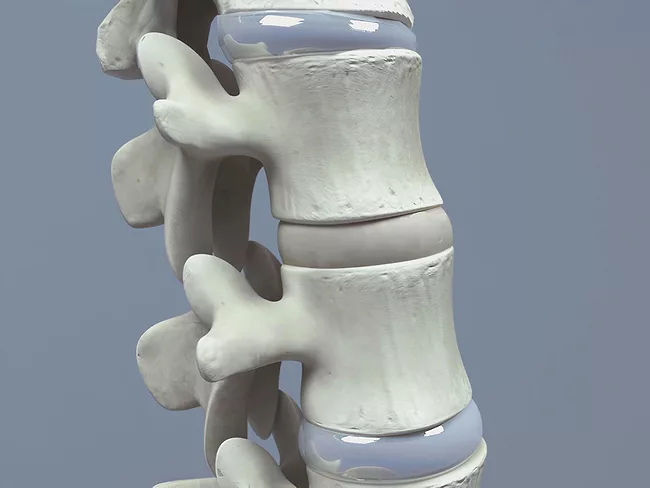
The U.S. FDA granted breakthrough device designation to CG Bio Co. Ltd.’s spine implantation device, Novosis putty, making it the first bone substitute material developed in South Korea to gain the agency’s priority support. Novosis putty, successor to CG Bio’s first generation Novosis Ortho, combines a bone-forming protein called recombinant human bone morphogenetic protein 2 (rhBMP-2; Nebotermin) with ceramic scaffolds to accelerate bone growth.
Renovos Biologics Ltd. was granted a U.S. FDA breakthrough device designation for its Renovite BMP-2 (bone morphogenetic protein-2) product, which is designed for interbody spinal fusion.
The U.S. FDA granted breakthrough device designation for CT-155, a prescription digital therapeutic co-developed by Boehringer Ingelheim GmbH and Click Therapeutics Inc. to treat the negative symptoms of schizophrenia. Designed as an adjunctive to pharmaceutical therapy for schizophrenia, among the most challenging mental health conditions to treat, the PDT is one of several products in the collaboration’s pipeline.
Inflammatix Inc. received U.S. FDA breakthrough device designation for its Triverity acute infection and sepsis test system, which produces three readouts that could help emergency physicians quickly determine the proper course of treatment.
Day Zero Diagnostics Inc. and Oxford Nanopore Technologies plc (ONT) joined forces to battle the leading cause of death in hospitals — sepsis. Combining Day Zero’s whole genome sequencing technology for pathogen identification and antimicrobial susceptibility analysis with Oxford’s nanopore-based molecular sensing technology, the companies aim to develop a diagnostic system that provides potentially life-saving identification and guidance on antimicrobial selection in mere hours.