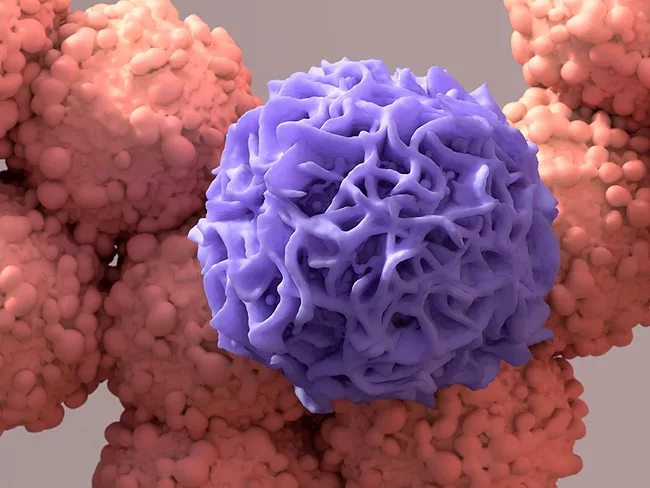
T cells do not have the last word in some breast cancers. According to a study from the University of Pittsburgh, the key to estrogen receptor positive (ER+) breast tumors are macrophages, not T cells, and targeting them could prevent immunotherapy failure in this type of cancer.
The controlled cell death process of apoptosis functions as the first step to any full recovery from injury or disease. In the second step of any recovery process, dead cells are cleared by efferocytosis, a process performed by phagocytotic cells like macrophages. Approximately 200-300 billion apoptotic cells are cleared daily by efferocytosis starting with the recognition of newly extracellular facing phosphatidylserine (PtdSer) by PtdSer-binding proteins present on phagocytotic cells.
A combination of radiation therapy and CD47 blockade induced an abscopal effect in animal studies even in animals that lacked T cells, researchers reported in the Nov. 21, 2022, online issue of Nature Cancer.
A combination of radiation therapy and CD47 blockade induced an abscopal effect in animal studies even in animals that lacked T cells, researchers reported in the Nov. 21, 2022, online issue of Nature Cancer. The findings are “the first demonstration of T-cell-independent abscopal response,” co-corresponding author Edward Graves told BioWorld. “We’re not trying to say that all abscopal responses are macrophage-mediated. There are plenty that require T cells,” Graves clarified. But “there is another avenue of abscopal responses that has not been reported. ... All the abscopal literature is about stimulating an adaptive response.”
Despite a huge amount of progress in the hot space CD47, there’s a large space beyond it to explore, according to DEM Biopharma Inc.’s CEO David Donabedian. The new company just raised $70 million to develop therapies targeting don’t eat me, hence DEM, and eat me signals on cancer cells and macrophages.
LONDON – Syncona Ltd. has unveiled its fifth cell therapy startup, Resolution Therapeutics Ltd., which arrives on the scene with a £26.6 million (US$35.6 million) series A to exploit the ability of macrophages to stimulate liver repair.
A study published in the Nov. 27, 2019, advance online issue of Nature manages a rare feat. It is both a vindication of and egg in the face for cardiac stem cell research.
A study published in the Nov. 27, 2019, advance online issue of Nature manages a rare feat. It is both a vindication of and egg in the face for cardiac stem cell research. The good news is that cardiac stem cell transplantation after a heart attack does improve heart function, although the effect is “mild,” Jeffery Molkentin told BioWorld.