Instead of waiting for Congress to come up with a solution to reduce drug prices, a trio of U.S. lawmakers told the U.S. Department of Health and Human Services (HHS) it needs to tackle drug prices with the tools it already has – compulsory licensing and march-in rights.
Regardless of the controversy swirling around the FDA’s accelerated approval of Biogen Inc.’s Alzheimer’s drug, Aduhelm, that U.S. approval is expected to open the door to more opportunities for Alzheimer’s treatments and diagnostics.
Regardless of the controversy swirling around the FDA’s accelerated approval of Biogen Inc.’s Alzheimer’s drug, Aduhelm, that U.S. approval is expected to open the door to more opportunities for Alzheimer’s treatments and diagnostics.
U.S. Rep. Carolyn Maloney (D-N.Y.) came out swinging against the biopharma industry’s innovation talking point July 8 when she released a House Oversight Committee staff report on U.S. drug prices and the games drug manufacturers play to delay competition.
The FDA’s recent release of documents related to its accelerated approval of Aduhelm (aducanumab) did little to reduce the controversy surrounding that decision and the U.S. pricing of Biogen Inc.’s Alzheimer’s drug.
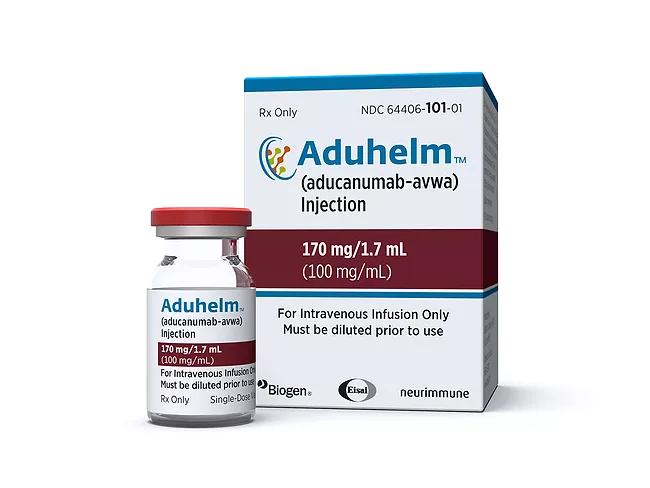
Biogen Inc.’s $56,000-a-year list price for its newly approved Alzheimer’s drug, Aduhelm (aducanumab), is sending tremors through the prescription drug pricing debate that could shift the epicenter of those discussions to drugs granted accelerated approval based on surrogate endpoints.
After delaying it twice, the U.S. Department of Health and Human Services (HHS) is proposing to rescind a Trump-era rule that would have given certain low-income patients insulin and injectable epinephrine products at the steeply discounted 340B rate.
Biogen Inc.’s pricing of its newly approved Alzheimer’s drug, Aduhelm (aducanumab), has made it the latest bull’s eye for lawmakers and advocacy groups targeting U.S. drug prices, especially given the controversy surrounding the drug’s approval, which has resulted in the resignation of three of the 11 members of the FDA’s Peripheral and Central Nervous System Drugs Advisory Committee.
Originally intended as a way to help provide health care to uninsured and underinsured Americans, the 340B program has mutated into a revenue stream that’s benefiting large U.S. hospital systems, contract pharmacies and even pharmacy benefit managers (PBMs) while contributing to higher drug prices for patients, according to stakeholders speaking at a May 26 Air 340B summit on the federal program.
The Institute for Clinical and Economic Review (ICER) will turn its magnifying glass on insurance companies as it evaluates how 15 of the largest U.S. payers cover 28 cost-effective prescription drugs.