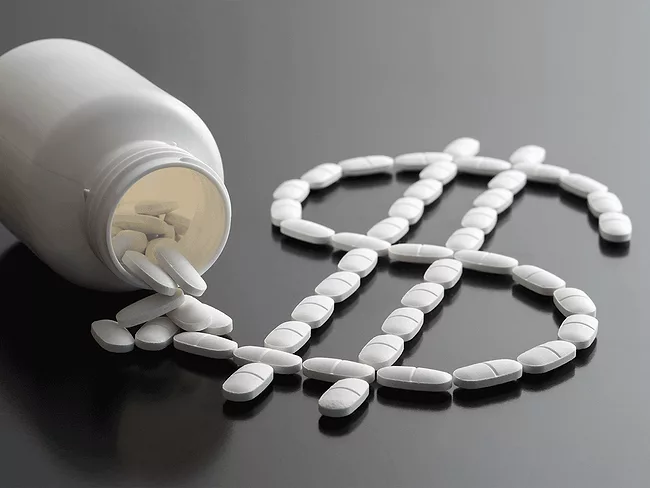
As expected, the U.S. House of Representatives passed, on a 220-207 party-line vote, a legislative package Aug. 12 that, for the first time, allows Medicare to directly negotiate some prescription drug prices, while imposing severe penalties and an excise tax on companies that refuse to negotiate or don’t comply with the government price.
As Democrats in the U.S. Senate rush to pass prescription drug pricing reforms through the reconciliation process this week, the nonpartisan Information Technology & Innovation Foundation (ITIF) is offering Japan’s experience with government price controls as a cautionary tale.
As Democrats in the U.S. Senate rush to pass prescription drug pricing reforms through the reconciliation process this week, the nonpartisan Information Technology & Innovation Foundation (ITIF) is offering Japan’s experience with government price controls as a cautionary tale. “Stringent drug price controls have significantly hampered the competitive and innovative capacity of Japan’s biopharmaceutical industry in recent decades, serving as a warning for U.S. policymakers considering introducing Medicare Part D drug price controls in 2022,” according to the ITIF.
Although Pfizer Inc. has the only drugs approved in the U.S. to treat a rare, progressive heart disease, the U.S. Court of Appeals for the Second Circuit agreed this week with the Department of Health and Human Services, and a lower court, that Pfizer’s proposed copay assistance program for middle-income Americans covered by Medicare would violate the federal Anti-Kickback Statute – even if the company has no “corrupt” intent.
The U.K.’s competition watchdog has found that a subsidiary of Pfizer Inc. and a generics firm jacked up the price of a life-saving epilepsy drug by up to 2,600%, fining them a total of £70 million (US$83.72 million). The Competition and Markets Authority’s decision is part of a long-running dispute against subsidiary Pfizer Ltd. and the generics firm Flynn Pharma Ltd.
The U.S. CMS released the draft Medicare hospital outpatient rule for calendar year 2023, a document that is replete with information on pass-through payment data for drugs and devices. However, the agency said that the Supreme Court’s ruling regarding rates for drugs covered under the 340B drug pricing program came too late in the annual cycle to be fully accounted for in the outpatient rule for 2023, and thus any such permanent adjustments will have to wait until the outpatient rule for 2024.
The revised Build Back Better bill Democrats in the U.S. Senate are looking to pass in the next few weeks could deliver savings of $18 billion to $24 billion per year from 2028 through 2031 through drug pricing reforms that include direct Medicare price negotiations, according to a Congressional Budget Office estimate.
A few weeks ago, the odds of the deeply divided U.S. Congress passing drug pricing reforms that would allow direct Medicare negotiation seemed pretty slim. But those odds improved significantly July 6 when Senate Democrats reached a compromise on their version of the pricing provisions included in the Build Back Better bill, H.R. 5376, passed by the House last November.
Following an investigation into Leadiant Group’s pricing of a rare disease drug, the Italian Competition Authority fined the privately held company about €3.5 million (US$3.76 million) May 31 for charging the Italian National Health Service excessive prices since 2017 for Chenodeoxycholic Acid Leadiant.
Pivotal in killing the Biden administration’s Build Back Better budget legislation, Sen. Joe Manchin (D-W.Va.) is now working to revive parts of it, including the provision that would require Medicare to directly negotiate prescription drug prices.