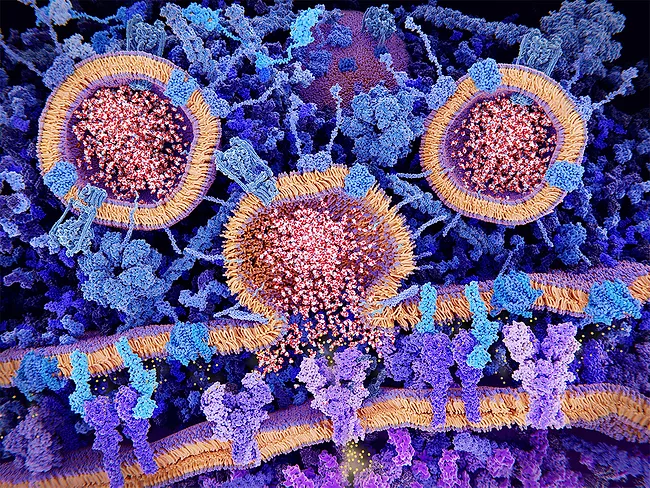
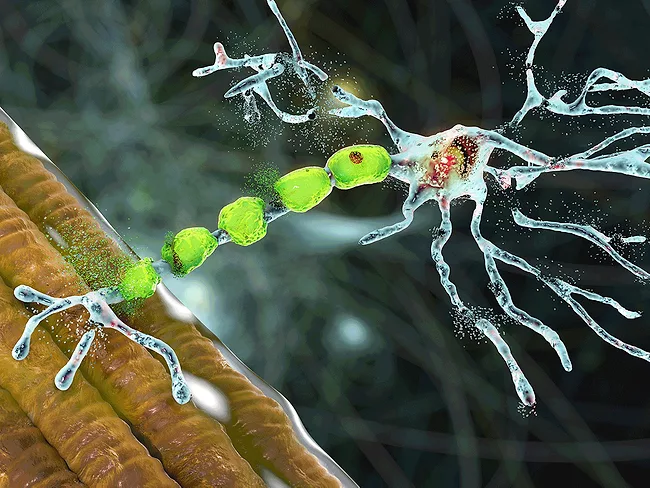
In cell and animal models of amyotrophic lateral sclerosis (ALS), the expression of toxic dipeptides in neurons led to changes in the extracellular matrix (ECM) as a protective response. The authors wrote that their findings, which appeared in Nature Neuroscience on Feb. 29, 2024, could suggest new strategies for how to approach ALS.
Tweaks made to the design of the phase III trial called Phoenix (vs. the narrowly positive phase II Centaur study) with Amylyx Pharmaceuticals Inc.’s amyotrophic lateral sclerosis (ALS) drug Relyvrio (sodium phenylbutyrate plus taurursodiol) didn’t work. Now, the Cambridge, Mass.-based firm is facing possible withdrawal of the treatment from the U.S. and Canada, where it’s known as Albrioza. Shares of Amylyx (NASDAQ: AMLX) closed March 8 at $3.36, down $15.61, or 82.3%, after the firm disclosed top-line results from Phoenix, a global, 48-week, randomized, placebo-controlled phase III effort with Relyvrio, also known as AMX-0035.
Amyotrophic lateral sclerosis (ALS) is a fatal disease characterized by the death of motor neurons in conjunction with neuroinflammation and deposition of protein aggregates, such as TDP-43, in these neurons and oligodendrocytes. Progranulin is a growth factor that is essential for neuron survival and a regulator of anti-inflammatory responses.
Pharmaust Ltd.’s monepantel met its primary safety endpoints and showed positive signals of potential efficacy in a phase I trial in patients with motor neuron disease (MND)/amyotrophic lateral sclerosis (ALS). With these results, the company will now progress to a pivotal phase II/III trial by midyear, Pharmaust CEO Michael Thurn told BioWorld.
Pharmaust Ltd.’s monepantel met its primary safety endpoints and showed positive signals of potential efficacy in a phase I trial in patients with motor neuron disease (MND)/amyotrophic lateral sclerosis (ALS). With these results, the company will now progress to a pivotal phase II/III trial by midyear, Pharmaust CEO Michael Thurn told BioWorld.
Researchers from Macquarie University have detailed the discovery of a novel gene therapy vector targeting pathological TAR-binding protein 43 (TDP-43), CTx-1000, as a potential therapeutic candidate for the treatment of amyotrophic lateral sclerosis (ALS) and frontotemporal dementia (FTD) – two diseases characterized by cytoplasmic deposition of the nuclear TDP-43.
The discovery of a complex formed by two types of ion channels in neurons has allowed researchers from Heidelberg University to develop an inhibitor that stopped motor neuron degeneration in amyotrophic lateral sclerosis (ALS) in mouse models and human brain organoids.
Myrobalan Therapeutics Inc. has been awarded a $400,000 grant from the ALS Association to support the advancement of its colony-stimulating factor 1 receptor (CSF-1R) inhibitor for the treatment of amyotrophic lateral sclerosis (ALS).
Acurastem Inc. has raised nearly $7 million in grant funding from the National Institutes of Health (NIH) and the Department of Defense (DoD) to advance research in amyotrophic lateral sclerosis (ALS) and frontotemporal dementia.